Voice AI
Amazon Silently Kills Alexa Voice Switching for Older Echo AUX Jacks
Selma Ortiz · 16h ago · 4 min read
Apple dropped a three-minute panic attack to introduce HomeView. It claims a communal smart display can tame domestic chaos, but the reality is messier.

By Selma Ortiz, Product and labs writer · Reported off The Verge
Tests every model on ugly, real calls. Writes reviews vendors dread.
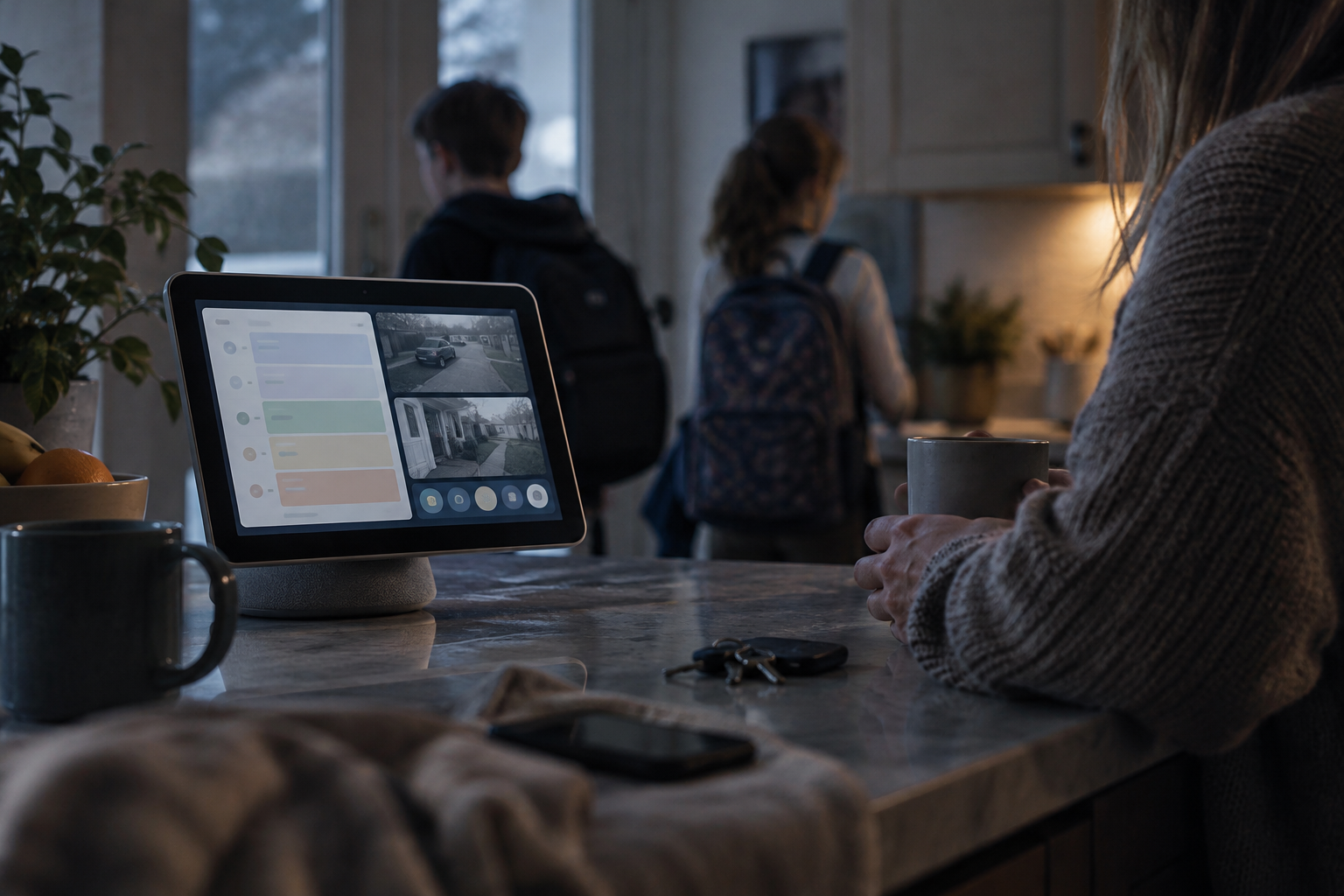
Apple spent years telling you that the future of personal technology was an expensive headset strapped to your face in an empty, sterile room. On October 13, 2026, the company threw that entire aesthetic out the window. During its Welcome Home event, Cupertino introduced HomeView, its first dedicated countertop smart display. To sell it, Apple dropped a three-minute commercial that feels less like a Silicon Valley product showcase and more like a domestic nervous breakdown.
The spot tracks a family of five through the absolute carnage of getting out the front door. A father burns French toast at the stove. A mother misplaces her keys while they sit inside her own jacket pocket. A teenage boy shoots whipped cream straight from the can into his mouth. Siblings bicker over the thermostat. An impromptu FaceTime call from the grandparents hijacks the room in the middle of the scramble. Finally, the entire household congregates around the HomeView screen to watch live outdoor camera footage of the teenage daughter slipping away with a secret boyfriend nobody knew existed.
It is three minutes of screaming, clutter, and unwashed dishes. It is also an aggressive attempt to convince consumers that a desktop terminal belongs on the kitchen island. To make the commercial work visually, Apple even relied on a little cinematic carpentry: the set designers visibly bored a hole directly through the center of the kitchen counter just to conceal the power cord.
The commercial is chaos, and it marks a sharp departure from Apple's signature white-void minimalism.
Alongside the HomeView hardware, Apple slipped out an updated Apple TV 4K outfitted with integrated microphones. That tweak allows users to issue voice commands to Siri across the living room without hunting down a remote control. Together, the two devices represent Apple's sudden realization that homes have communal spaces, and that personal iPhones do not solve every domestic friction point.
For a decade, the smart display market belonged almost entirely to Amazon and Google. Amazon flooded kitchens with the Echo Show. Google offered the Nest Hub. Both companies treated these devices as loss leaders, slashing prices to park digital voice assistants near the refrigerator. Both companies also ran into the same wall: customers mostly used them as overpriced egg timers, photo albums, and weather stations.
Apple held back. It gave consumers the HomePod, an audio-first speaker that relied entirely on voice input through a version of Siri that regularly stumbled over basic household queries. If you wanted visual feedback in the Apple ecosystem, you had to pull out an iPhone or an iPad. Apple assumed the individual handset was the only computing screen a consumer ever needed.
That strategy had an obvious blind spot. Handsets are private. A family kitchen is intensely public. When parents want to coordinate departures, school rides, and grocery lists, five people staring down at private notifications creates silence, not coordination. The Welcome Home event was Apple's formal admission that a shared household requires a shared surface.
Consider the hardware baseline Apple established at the event:
By dropping these products in late 2026, Apple is entering a category that competitors have largely neglected in recent years. Amazon bogged down its Echo displays with sponsored content and recipe advertisements. Google let its Nest smart home hardware stagnate while it reorganized its assistant teams. Apple saw an opening to pitch clean industrial design and tightly integrated ecosystem software to families fed up with ad-bloated alternatives.
The ad split observers down the middle. Viewers without children found the three-minute short abrasive and confusing. Tech analyst Benedict Evans pointed out the fundamental flaw in the narrative: the screen sitting on the counter does not actually resolve any of the chaos depicted on screen. When the grandparents dial in unannounced, the countertop screen does not smooth over the friction; it simply broadcasts the intrusion to the entire kitchen at the worst possible moment.
Parents, on the other hand, reacted like someone had finally pointed a mirror at their actual lives. CNET editor at large Bridget Carey defended the commercial immediately, stating that it mirrored her household mornings and stood out as the most realistic portrayal Apple has ever produced. The mess, the screaming, and the misplaced gear struck a nerve with consumers exhausted by tech ads set in immaculate, dust-free architectural showcases.
Still, industry veterans spotted the technical absurdities. Jen Tuohy, a senior smart home reviewer and mother of teenagers, highlighted the commercial's central fiction:
The most unrealistic part of the video is that no one is holding an iPhone.
That observation cuts to the heart of the product's premise. In the commercial, family members interact with the room and look at the shared display. In reality, modern teenagers do not abandon their individual handsets to stand together around a shared kitchen tablet. Furthermore, the plot point where a teenager checks a private message from a boyfriend on an open kitchen monitor strains credulity. No teenager alive trusts communal software privacy enough to broadcast personal communications in front of their siblings.
Now Apple has to convince buyers to actually purchase the hardware and find a place to plug it in. Kitchen counters are premium real estate. They are cluttered with air fryers, coffee makers, and cutting boards. Unless homeowners plan to follow Apple's lead and drill structural holes through their kitchen cabinetry, they will have to contend with power cords draped across food preparation areas.
The real battle, however, is behavioural. Apple is asking families to replace an ingrained habit—checking an individual phone screen—with a centralized appliance. The company's argument is that a communal screen makes households more present with one another. It is an appealing philosophical position, but consumer hardware rarely changes human nature. If families simply leave their iPhones on the table while ignoring the countertop display, HomeView will join the Echo Show in the expensive kitchen-gadget graveyard.
Then there is the Siri factor. The inclusion of built-in far-field microphones on the new Apple TV 4K confirms that Cupertino wants voice AI to act as the ambient operating system of the living room and kitchen. For that vision to succeed, Siri has to function reliably in an environment filled with sizzling pans, blaring televisions, and shouting teenagers. A smart display that mishears a command or fails to differentiate between a father's voice and a son's request quickly becomes an expensive paperweight.
Apple spent three minutes celebrating the messy, ungovernable reality of family life. Turning that reality into a hardware sales pitch is clever advertising. Turning it into a frictionless software experience on a kitchen counter is an entirely different problem. If HomeView cannot cut through the morning noise, parents will go right back to looking at their own phones.
Apple is trying to drag Siri out of individual pockets and plant it firmly on the kitchen counter. For a decade, Amazon and Google owned ambient domestic voice computing because Apple treated Siri as an accessory tied to personal glass. By building dedicated displays and embedding microphones into living room streaming boxes, Cupertino is making a defensive pivot. It wants to control the ambient voice layer of the household before generative voice agents make personal screens irrelevant for mundane domestic chores.
Reported off The Verge. Original reporting and analysis by Selma Ortiz for Vox Roboti.
HomeView is Apple's first dedicated smart display, designed for communal kitchen use and smart home management.
Apple introduced the device on October 13, 2026, during its Welcome Home product event.
Yes. Apple added integrated microphones to the Apple TV 4K hardware so users can speak directly to Siri.
A family of five navigates lost keys, thermostat fights, French toast, and an unexpected video call on one kitchen screen.
He argued the hardware fails to solve any of the domestic friction depicted across the commercial.
CNET editor at large Bridget Carey defended the spot as an accurate reflection of real family mornings.
Apple pitches it as a shared screen to reduce personal handset use, though critics remain skeptical.
Selma Ortiz · 16h ago · 4 min read

Cass Iverson · 2d ago · 5 min read

Selma Ortiz · 2d ago · 5 min read