
Voice AI
Flesh-Eating Screwworms Cross into Arizona as Domestic Pets Take the Hit
Cass Iverson · 2d ago · 5 min read
Amazon just disabled hands-free line-in switching on four classic Echo models, forcing owners back into phone menus to use copper audio cables.

By Selma Ortiz, Product and labs writer · Reported off Engadget
Tests every model on ugly, real calls. Writes reviews vendors dread.
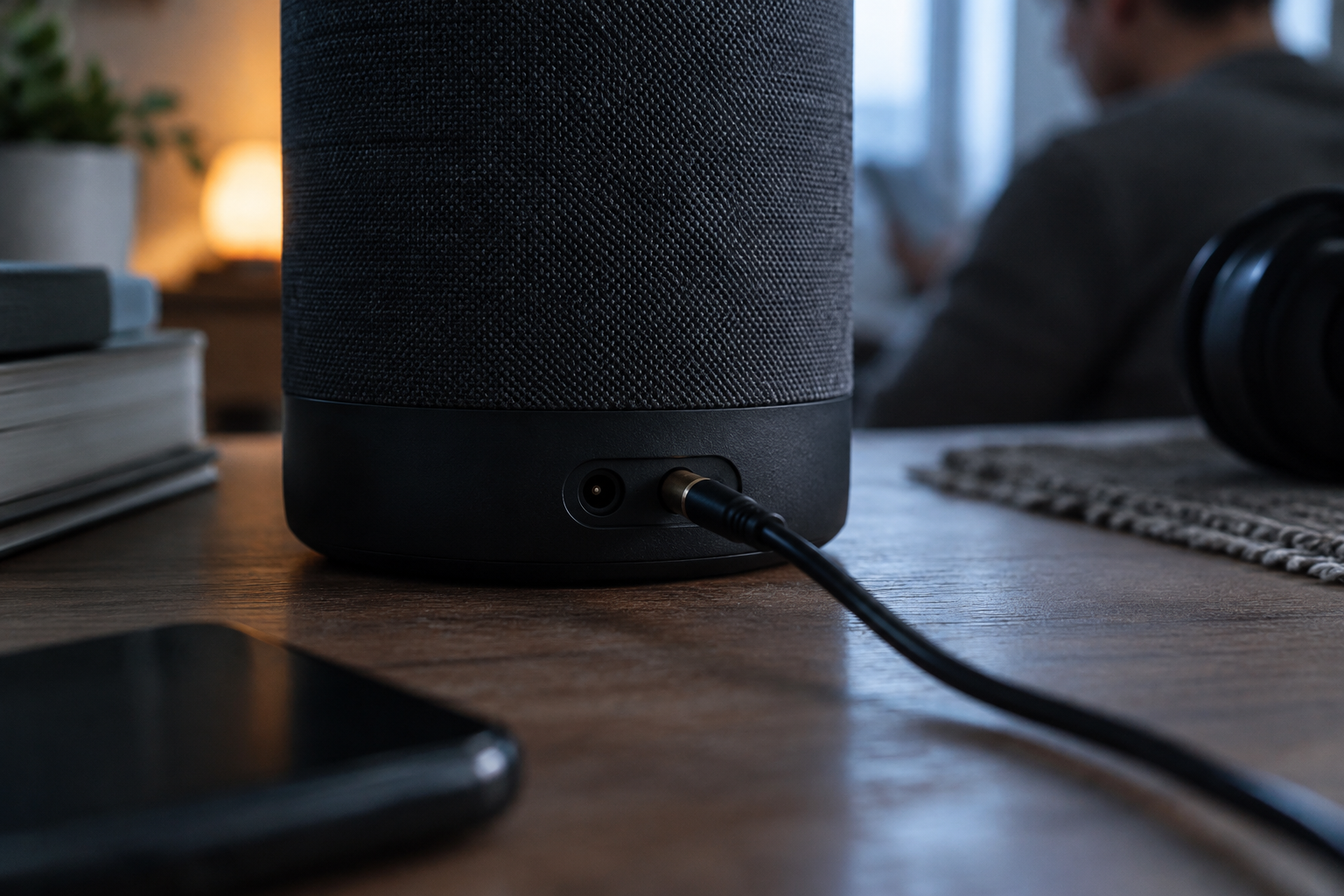
Amazon just broke one of the most useful party tricks on its older smart speakers. If you own a second-generation Echo Plus from 2018, a third-generation Echo from 2019, an original 2019 Echo Studio, or a fourth-generation spherical Echo from 2020, your voice no longer controls the 3.5mm auxiliary jack.
Commands like "Alexa, play from line in" and "Alexa, set AUX input" are dead. They return nothing useful now. The news surfaced after an affected customer shared an official notification email with Ars Technica, prompting Amazon to admit the move publicly.
The physical copper socket still functions, but hands-free convenience is gone. To route external sound through that wired connection today, you must pull a phone from your pocket, launch the Alexa app, tap Devices, navigate to your speaker, find the AUX Audio section inside Settings, and manually tap Line In. On some builds, Amazon buried that control under the General sub-menu. If you bought a voice assistant to avoid staring at glass screens, you are out of luck.
For years, Amazon treated the 3.5mm audio jack as an engineering chameleon. Depending on the model sitting on your credenza, that tiny hole worked in two completely opposite directions.
That hardware versatility made older Echo devices unexpectedly great desktop tools. An original Echo Studio could take an analog feed from an early-2000s Sony CD changer over an RCA-to-3.5mm cable without touching an unreliable Bluetooth transmitter. You spoke a four-word sentence, the internal relays flipped, and physical media played through Amazon's premium drivers. You controlled track selection on the CD player itself, while Alexa handled port selection at the driver level.
Then Amazon decided maintaining those lines of voice code was no longer worth the cloud compute.
Amazon's public stance was predictable dismissiveness. A company spokesperson told The Verge that Amazon had proactively notified what it called:
"the very small number of customers"
who actively rely on spoken commands for auxiliary playback.
Amazon offered zero technical justification for dropping the capability. The company did not explain whether the natural language intent broke under modern Alexa software stacks, or whether pruning the parser saved maintenance budget on legacy hardware.
Power users who routed desktop audio, vinyl preamps, and retro disc players through their Echo hardware immediately pointed out the absurdity of the change. A smart speaker that refuses to switch its own inputs by voice ceases to be smart. Stripping speech controls from a voice-first gadget transforms an automated audio hub into an uncooperative plastic brick that demands manual app intervention.
This quiet removal exposes the central lie of ambient voice computing: you never truly own features managed by remote servers. The 3.5mm jack did not wear out. The physical solder joints inside your 2019 Echo Studio remain pristine. The internal switching circuitry still obeys digital instructions sent across your local network.
What changed is Amazon's central parser. Because voice interpretation happens inside Amazon Web Services rather than on local silicon, Amazon can amputate hardware utility on an eight-year-old device overnight. You do not get a firmware rollback option. You cannot decline a server-side software deprecation.
Modern hardware releases have spent years closing off these analog escape hatches. When Amazon launched the redesigned 2025 Echo Studio, the transition away from flexible auxiliary inputs continued in lockstep with the broader hardware ecosystem. By eliminating voice automation on legacy jacks, Amazon nudges users toward pure wireless streaming, where playback metrics are monitored, cloud-tethered, and monetized.
If you rely on an older Echo to monitor PC audio or spin vintage compact discs, leave the hardware plugged in. Your 3.5mm connection still functions as long as you tolerate opening the Alexa smartphone interface every time you swap sources.
Do not expect new hardware to restore this balance. Upgrading from a 2019 Echo Studio to a modern smart speaker almost guarantees losing line-in versatility. Modern voice gear prioritizes proprietary casting standards, locked-down Bluetooth profiles, and direct cloud streaming subscriptions over unmonitored analog cables.
For everyone else, the message is plain. If a smart speaker feature relies on Amazon interpreting your intent in the cloud, consider that feature rented, not purchased. Today, Amazon took the AUX command. Tomorrow, expect another low-volume voice routine to vanish quietly into the cloud.
When Amazon cuts voice commands for physical ports, it shows the danger of cloud-tethered hardware. The auxiliary jack still works, but Amazon remotely stripped hands-free operation to cut cloud maintenance. Legacy gear becomes less convenient overnight without user consent.
Reported off Engadget. Original reporting and analysis by Selma Ortiz for Vox Roboti.
Yes. The physical 3.5mm jack still functions. You just cannot switch to it using Alexa voice commands anymore.
The second-generation Echo Plus (2018), third-generation Echo (2019), original Echo Studio (2019), and fourth-generation Echo (2020).
Open the Alexa app, select Devices, pick your speaker, open Settings, and toggle AUX Audio to Line In.
Amazon did not give a technical reason. A spokesperson simply stated they notified the small number of customers using it.
No. Older Echo Dots only supported line-out, not line-in, and the fifth-generation Dot eliminated the 3.5mm port entirely.
No. Upgrading to newer devices means losing 3.5mm input functionality, as newer hardware models omit or restrict the port.
Cass Iverson · 2d ago · 5 min read

Selma Ortiz · 2d ago · 5 min read
Ray Dalton · 3d ago · 5 min read