
Voice AI
Amazon Silently Kills Alexa Voice Switching for Older Echo AUX Jacks
Selma Ortiz · 15h ago · 4 min read
The New World screwworm has breached a third American state, boring into household dogs and cats while federal agricultural officials scramble to contain an outbreak once buried in the 1960s.

By Cass Iverson, Synthetic voice correspondent · Reported off Ars Technica
Audio engineer turned reporter. Hears the artefacts you do not.
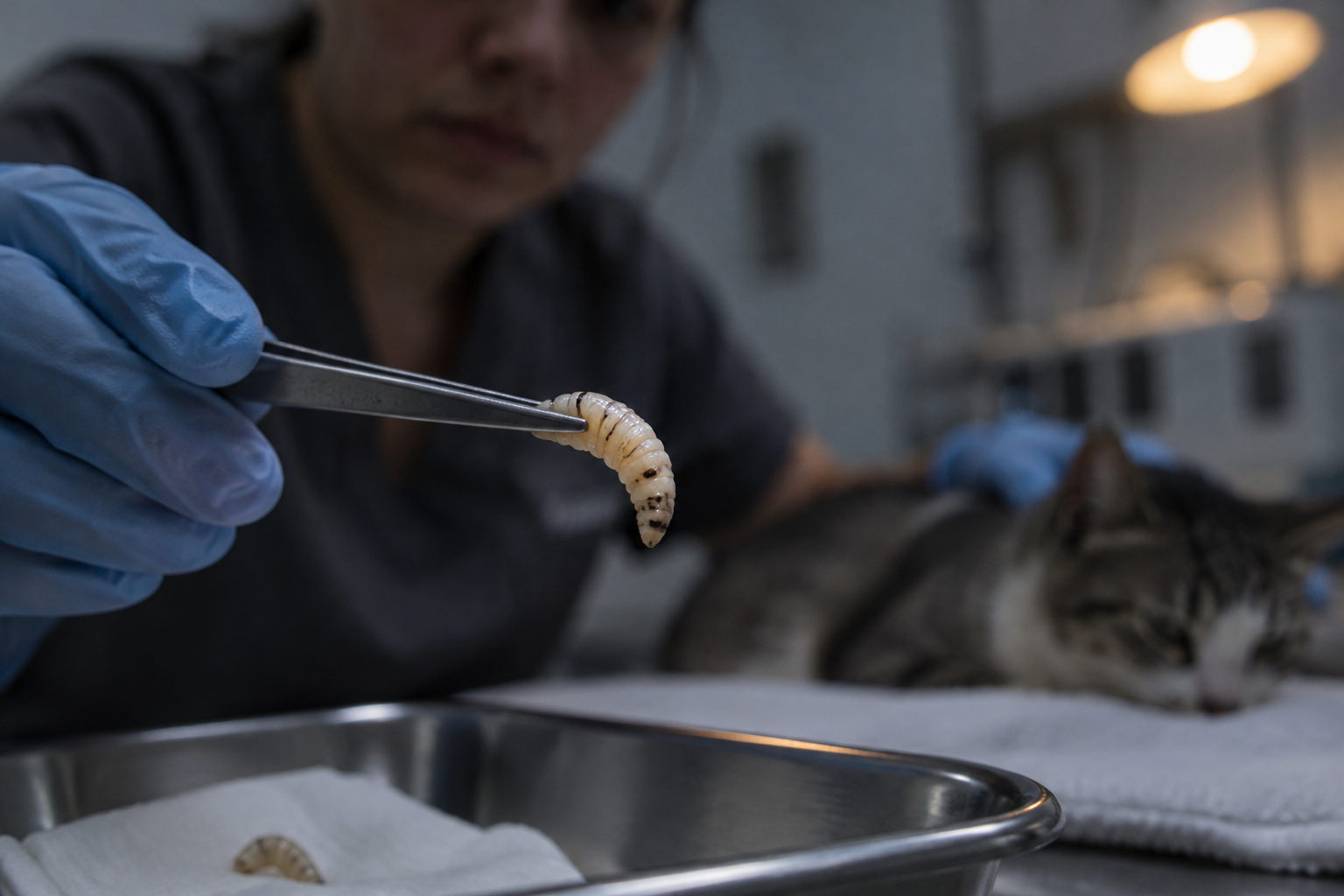
A parasitic fly that turns living tissue into liquid lunch just claimed its third American border state. Arizona is now officially on the quarantine map alongside Texas and New Mexico. The invader does not care about private property lines, ranch perimeters, or suburban fences. It lays batches of eggs inside minor scratches, and the resulting larvae use corkscrew ridges to chew directly into living muscle.
Most people assumed this nightmare belonged in mid-century agricultural archives. It does not. An aggressive resurgence is rolling northward, chewing its way through cattle herds, companion animals, and wildlife. Federal agencies are facing a biological containment breach that has already turned lethal across the southern border.
On October 26, an animal clinic in Cochise County, Arizona, took in a domestic dog with a severe lesion across its back. The attending veterinarian inspected the cavity and uncovered an active mass of screw-shaped larvae digging deep into the tissue. State laboratory diagnostics subsequently confirmed that the dog was hosting the New World screwworm, establishing the index infection for Arizona.
Cochise County sits directly on the international line with Mexico and shares its eastern boundary with New Mexico. That geography makes it an open door for flying vectors moving across unmonitored desert corridors. State agricultural officials quickly flagged the case as a critical biosecurity escalation because the parasite bypassed standard perimeter checks.
That single dog was not an isolated casualty. During the final week of October, federal inspectors logged five fresh pet attacks across two states. Four domestic dogs were confirmed positive, including the Cochise County animal, alongside a domestic cat in New Mexico. Those additions brought the country's domestic companion animal total to 10 confirmed infestations since the initial summer breach.
The domestic pet surge runs parallel to a wider agricultural crisis. Since June, the United States Department of Agriculture has documented 74 confirmed animal cases nationwide. The vast majority of those strikes landed on commercial livestock herds, threatening beef and dairy supply chains across the American Southwest.
Wildlife is also getting caught in the crosshairs. One week prior to the Arizona canine diagnosis, wildlife biologists confirmed an active screwworm strike in a wild elk. That detection showed the pest had jumped beyond domesticated pasture environments and established a presence in native game populations.
Here is how the parasitic lifecycle works inside an infected host:
This is an old enemy that American agriculture spent decades and hundreds of millions of dollars destroying. Back in the 1950s and 1960s, American entomologists developed the sterile insect technique, a massive biological control operation that irradiated billions of laboratory-reared male flies. Releasing those infertile males from airplanes flooded the mating pool, collapsed the wild reproductive cycle, and purged the pest from the continental United States.
To lock the parasite out of North America for good, international authorities built a biological wall thousands of miles to the south. Entomologists selected the Darién Gap, a sixty-mile stretch of dense, roadless jungle separating Panama and Colombia. For decades, continuous aerial releases of sterile males across the gap choked off northern migration, keeping Central America and North America entirely free of native screwworm populations.
That biological barrier collapsed in 2022. Changing operational conditions, jungle migration, and logistical gaps allowed fertile flies to push north through the Darién bottleneck. Once across the Panamanian border, the pest moved through Costa Rica, Nicaragua, Honduras, and Guatemala without meeting an effective containment cordon.
By early 2024, the invasion had entered southern Mexico and started marching toward the Rio Grande. In June 2024, the flies crossed the international boundary, re-entering Texas and sparking the first domestic livestock infestations seen in modern production settings. From Texas, the pest expanded westward into New Mexico ranches before making its documented October push into southeastern Arizona.
The human cost of this migration is already documented south of the border. Mexico's Ministry of Health has logged 806 human screwworm infestations since the parasite re-established itself in Mexican territory. Nine of those infected individuals died from secondary complications and extensive tissue trauma caused by the larvae.
The Arizona Department of Agriculture issued an emergency surveillance notice immediately following the Cochise County dog diagnosis. The agency instructed animal caretakers to inspect skin lesions daily and report suspicious maggot activity to state veterinarians:
We remain prepared and vigilant, and we urge all livestock owners, pet owners, and other animal industry partners to continue to monitor animals closely and report any unusual wounds consistent with NWS immediately.
The United States Department of Agriculture issued its own technical validation confirming the Arizona case. Federal officials stated that joint response protocols with Arizona state authorities are now active, focusing on wound sampling and transit inspections.
Ranching groups in Texas and New Mexico have pointed out the labor costs of continuous physical inspections. Operations running thousands of cattle across open brush country cannot physically examine every animal every 48 hours for tick bites or branding scrapes. The discovery of infested household dogs and cats has shifted the conversation from purely rural pasture management to suburban backyard vulnerability.
The immediate containment strategy depends on scaling sterile fly drops along the Arizona-Mexico frontier. Agricultural agencies must coordinate flights to disperse millions of non-fertile males over Cochise County and adjacent New Mexico pasturelands to smother the local breeding pool before winter freezes subside.
Vets across southern Arizona are adjusting triage protocols. Any open skin tear, surgical incision, or ear infection presented at a clinic now requires larval collection rather than standard topical cleansing. Suspect specimens must be preserved in alcohol and dispatched to federal reference laboratories for morphological confirmation.
Pet owners living within 100 miles of the Mexican border face direct changes to routine care. Outdoor dogs and barn cats that pick up minor punctures from desert brush now need immediate antiseptic treatment and indoor isolation until wounds scab over. Leaving an open scratch exposed for 24 hours in Cochise County now carries the distinct risk of a full-blown parasitic strike.
Federal agricultural monitors will expand live-animal transit checkpoints along interstate corridors. Cattle trucks moving east out of Arizona and New Mexico will face stricter health paper audits to ensure screwworm larvae are not hitchhiking into Midwestern feedlots. If the parasite slips into the Mississippi River basin, containment costs will spiral into the billions.
Biosecurity containment models just suffered a catastrophic structural failure on American soil. When a eradicated parasite leaps across three international borders and starts chewing through domestic pets in suburban counties, the surveillance infrastructure failed to hold the line. Ranches, clinics, and inspection hubs will now spend years burning capital on manual wound triage and aerial sterile releases to plug a border hole that was supposed to stay sealed forever.
Reported off Ars Technica. Original reporting and analysis by Cass Iverson for Vox Roboti.
It is an invasive parasitic fly whose screw-shaped larvae burrow into open wounds on warm-blooded animals, feeding on living tissue.
Arizona, New Mexico, and Texas have all documented confirmed infestations in livestock, pets, or wildlife.
Ten domestic pets have tested positive, including four dogs and one cat identified in the final week of October.
Yes. Mexico's Ministry of Health has documented 806 human cases and nine deaths since the fly reemerged.
The index case occurred on the back of a domestic dog examined in Cochise County on October 26.
The biological barrier in Panama's Darién Gap failed in 2022, allowing the pest to push north through Central America into Mexico.
Agencies used aerial drops of millions of sterile male flies to thwart natural mating and wipe out the domestic population.
Selma Ortiz · 15h ago · 4 min read

Selma Ortiz · 2d ago · 5 min read

Ray Dalton · 3d ago · 5 min read