Voice AI
Amazon Silently Kills Alexa Voice Switching for Older Echo AUX Jacks
Selma Ortiz · 15h ago · 4 min read
Amazon is rolling Alexa+ into its Prime membership while pricing standalone access at an absurd twenty bucks a month. Here is the real play behind the bundle.

By Ray Dalton, Editor-in-chief · Reported off Engadget
Runs the desk. Allergic to demos that only work on stage.
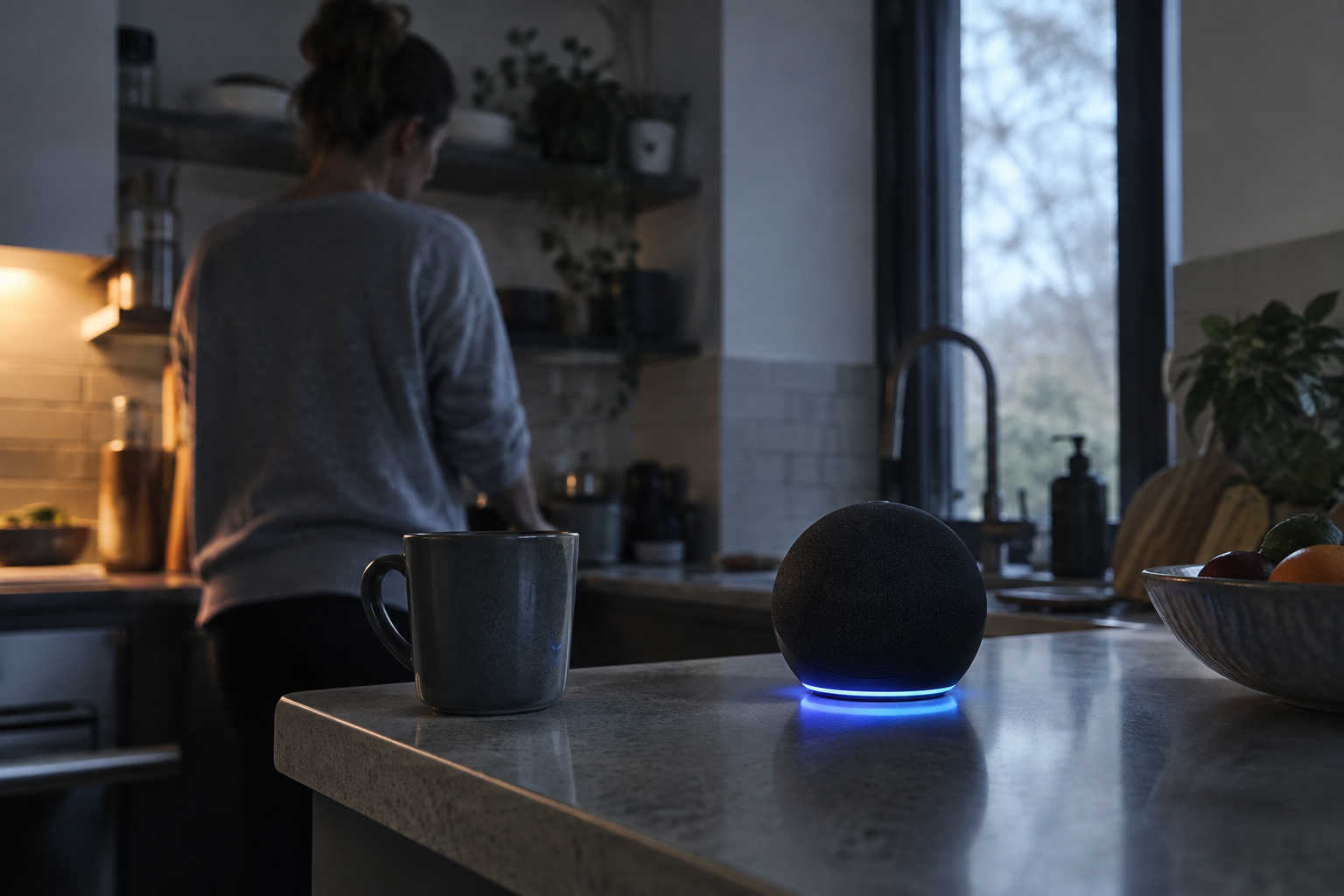
Amazon spent a decade selling you plastic pucks at a loss to sit on your kitchen counter. Now Andy Jassy wants you to rent the software running inside them.
The retail giant rolled its upgraded generative AI assistant, Alexa+, directly into standard Amazon Prime memberships at no extra charge. If you refuse to pay for Prime, Amazon will gladly sell you Alexa+ as a standalone monthly subscription for $19.99. Compare that to Amazon Prime itself, which runs $14.99 each month or $139 for an entire year. The math is not an accident. Amazon is penalizing anyone who tries to treat Alexa as a bare utility rather than a gateway into its broader retail funnel.
Amazon quietly altered the terms of engagement for every Echo owner in North America. Full access to the revamped, LLM-driven Alexa+ system is now live for verified Prime members across the United States and Canada. Getting the upgrade requires nothing more than barking the phrase "Alexa, upgrade to Alexa plus" at your nearest smart speaker.
Hardware boundaries are expanding alongside the software. In August 2026, Amazon pushed access out to its video hardware roster, including Fire TV streaming sticks, Fire TV Cube units, and Amazon Ember television sets. The system also runs natively across Amazon's updated tablet portfolio, the Amazon Music mobile application, and inside standard mobile apps distributed through Apple's App Store and the Google Play Store.
For non-Prime holdouts, Amazon created a deliberately hostile price point. The standalone charge of $19.99 a month costs $5 more than a full Prime subscription that already includes two-day shipping, Prime Video, Amazon Music, and cloud storage perks. Amazon also drew a hard line against lower-tier accounts. Customers holding stripped-down subscriptions like Prime Video-only or Free Shipping-only memberships cannot use Alexa+ without jumping up to the standard tier.
Anyone curious about testing the software without entering credit card details gets shoved toward alexa.com or the bare smartphone app. Those web and mobile interfaces provide a restricted, text-only chat window that Amazon caps based on usage volume. If you want the voice agent to answer open-ended queries from your kitchen counter without arbitrary cutoffs, you pay the Prime toll.
Amazon first introduced Alexa+ in 2025 to salvage an assistant division that had burned billions of dollars without generating direct revenue. The original version of Alexa relied on rigid, hard-coded intent recognition. It could set a seven-minute pasta timer or report the temperature in Cleveland. Try asking it three sequential questions without repeating the wake word, and the system collapsed into confusion.
To rebuild the engine, Amazon abandoned its homegrown legacy stack. The modern Alexa+ architecture runs on dual rails: foundation models sourced from Anthropic combined with Amazon's proprietary Amazon Nova model family. Amazon claims this hybrid backbone lets the software coordinate operations across tens of thousands of individual APIs and smart home appliances simultaneously.
The internal mechanism relies on modular software blocks that Amazon calls experts. Each expert operates as an isolated collection of custom instructions, back-end APIs, and data-retrieval systems tuned for single subject areas. Instead of relying on one massive, monolithic model to guess what you want, Alexa+ routes incoming voice prompts through specific functional pipelines:
Amazon positions these third-party connections as agentic AI. The pitch is simple: you make a casual remark from your sofa, and the software handles the rest. In Amazon's scripted marketing universe, Alexa+ books a table for four, hails a car to get you there, purchases two concert tickets, and schedules dessert to arrive at your front door when you return. In the real world, coordinating four external corporate APIs without an error remains a technical high-wire act.
Amazon executives are doing their best to frame Alexa+ as an indispensable domestic butler. Daniel Rausch, Amazon's Vice President of Alexa and Echo, told TechRadar that the assistant's expert architecture allows it to absorb personal context over extended periods. To prove the point, Rausch highlighted how the software tracks his personal obsession with the New York Yankees, tailoring sports updates and background details to match his historical habits.
To keep the software from sounding like a sterile teleprompter, Amazon added four switchable vocal personalities:
Yet early adopters are not convinced the charm offensive works. Users report widespread execution flaws, specifically around functional memory. The assistant frequently forgets constraints established two sentences prior, forcing owners to repeat baseline instructions. When tech reviewer Cherlynn examined an early preview of the system last year, she found the assistant undeniably capable in bursts, but plagued by erratic, frustrating execution.
The bot oscillates between acting like an overly chatty neighbor who refuses to leave your porch and a deaf digital clerk who needs you to re-read your order three times.
Latency remains another sore point across community forums. Older Alexa routines fired instantly because they operated on local triggers or simple cloud lookup tables. Alexa+ routes audio through heavy cloud-based LLMs, introducing noticeable dead air between a spoken prompt and an audible response. When an AI assistant takes four seconds just to turn off a bedside lamp, the novelty wears thin fast.
Amazon is using North America as a test pen before pushing this pricing model across global territories. While complete access remains confined to the United States and Canada, Amazon opened gated early-access programs across ten additional markets: the United Kingdom, Germany, France, Italy, Spain, Austria, Brazil, Mexico, Australia, and India. Each regional variant operates under distinct functional restrictions based on local language models and domestic API partnerships.
The immediate business objective has nothing to do with software perfection. It has everything to do with Prime churn. By tethering Alexa+ to its $139 annual membership, Amazon gives households one more reason not to cancel their retail perks when subscription fatigue hits.
Consumers curious about testing the waters can request a 30-day promotional trial via amazon.com/alexaplus, while existing hardware owners can inspect the settings menus inside the updated Alexa app to toggle between the four conversational tones. The standalone $19.99 monthly tier will likely see negligible consumer adoption, which is precisely what Amazon wants. The sticker price exists only as an anchor to make the $14.99 Prime subscription look like a bargain.
Hardware margins on smart speakers died years ago. By bundling generative voice into Prime and pricing standalone access at an unreasonable $19.99, Amazon turned voice AI into customer-retention duct tape. Competitors selling standalone voice agents cannot match this subsidy structure. Amazon does not need Alexa+ to turn an independent software profit; it just needs the bot to stop you from cancelling your shipping membership.
Reported off Engadget. Original reporting and analysis by Ray Dalton for Vox Roboti.
Yes. Standard Amazon Prime members in the United States and Canada get full access at no additional charge.
A standalone subscription costs $19.99 per month. That makes it $5 more expensive than a full monthly Prime membership.
Yes. Amazon added support for Fire TV sticks, Fire TV Cube units, and Amazon Ember televisions in August 2026.
The assistant uses a hybrid system combining large language models from Anthropic with Amazon's proprietary Amazon Nova model suite.
Say the phrase Alexa, upgrade to Alexa plus to your device, or register your account at alexa.com.
You can test a usage-capped, text-only version at alexa.com and inside the mobile app, or take a 30-day trial.
Full access is limited to the US and Canada. Early access programs run in the UK, Germany, France, Italy, Spain, Austria, Brazil, Mexico, Australia, and India.
Selma Ortiz · 15h ago · 4 min read

Cass Iverson · 2d ago · 5 min read

Selma Ortiz · 2d ago · 5 min read