
Voice Agents
Google Drops the Fitbit Edge and Tightens the Hardware Trap
Priya Raghunathan · 2d ago · 5 min read
Deepgram acquired Daily, the startup behind open-source framework Pipecat, uniting speech models with real-time transport infrastructure.

By Nina Falco, Front-desk beat reporter · Reported off TechCrunch AI
Sold answering services to dentists. Now she reports on them.
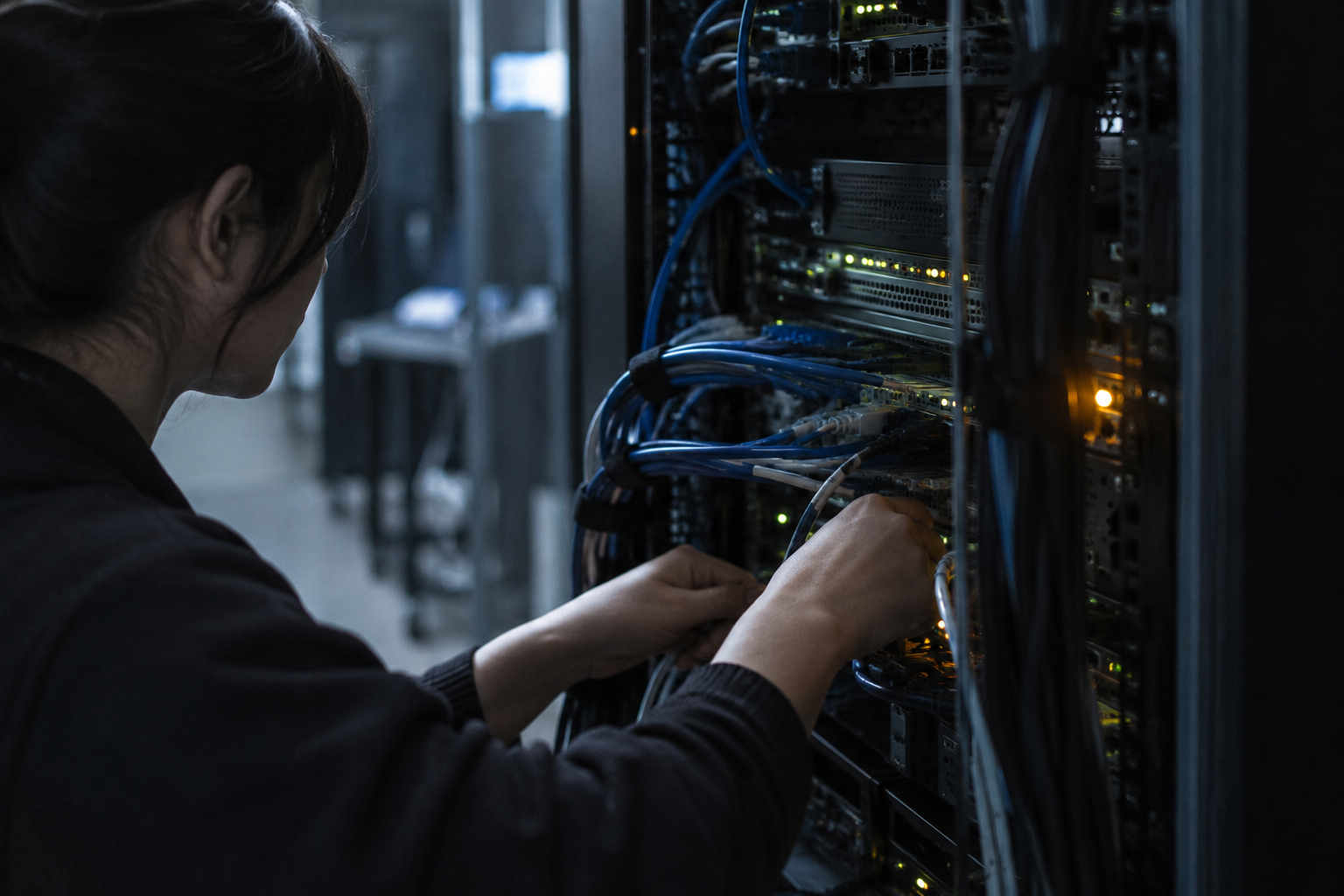
Building a voice agent looks straightforward until two people and a neural network try to speak at the same time. Then reality breaks your application. Audio packets drop. Network buffers stall. Your transcription engine lags behind, the language model takes half a second to output its first token, and your speech synthesizer cuts off the caller mid-sentence.
Deepgram knows this bottleneck well. That is why the speech-to-text powerhouse decided to buy its way out of the plumbing business.
Deepgram officially acquired Daily, the video and voice infrastructure provider that created and maintains Pipecat. Pipecat is the open-source orchestration framework developers use to stitch together real-time audio streams, speech models, language models, and voice synthesizers.
Neither company disclosed the financial terms of the buyout. The transaction unites two companies with significant venture backing:
Deepgram made one immediate commitment: Pipecat will remain free, open source, and vendor-neutral. The framework will not turn into a proprietary walled garden that forces engineers to call Deepgram APIs exclusively. The acquisition brings Daily's entire real-time network team inside Deepgram to handle the raw data pipes that sit beneath spoken artificial intelligence.
Alongside the purchase, the combined engineering outfit rolled out the Real-Time Context Standard. The new open protocol gives voice systems a standard method to pass acoustic cues, environmental conditions, and behavioral instructions between different models in an active pipeline.
Daily did not start as an artificial intelligence company. For years, the team focused on enterprise WebRTC infrastructure, selling APIs that powered standard video meetings and audio rooms. When GPT-4 launched, Daily co-founder Kwindla Kramer saw early experiments with machine-to-human speech and realized developers were hacking together broken tools.
Connecting a real-time call to an artificial intelligence model requires three distinct layers working in lockstep:
If any single component stumbles, the latency compounds. A delay of 400 milliseconds ruins the illusion of a conversation. If the caller interrupts, the entire pipeline must flush its audio buffer instantly or the robot talks over the customer.
To solve this, Daily built Pipecat. The framework handles the dirty work: audio transport, jitter buffers, endpointing, interruption detection, and the WebRTC connections necessary to keep latency inside human conversational thresholds.
Deepgram spent that same period climbing to the top of the speech-to-text sector. Their internal models deliver some of the fastest transcription speeds on the market. Yet owning the transcription engine only covers one leg of the stool. If the networking layer drops packets or the orchestration pipeline stalls, developers blame the speech provider. By buying Daily, Deepgram grabs the rails the models travel across.
The broader market spent the past two years funding this exact divide. Capital poured into model developers like ElevenLabs, Gradium, and Fish Audio. At the same time, specialized infrastructure outfits like LiveKit and Vapi raised significant funding rounds to build the orchestration backbones. Deepgram decided it could not afford to let an independent layer sit between its models and the developers writing production code.
Daily fielded multiple acquisition offers before agreeing to terms with Deepgram. Kramer noted that Scott Stephenson's stance on open source sealed the deal.
"Scott was super committed to Pipecat being open-source and vendor-neutral forever. I think there is both a personal commitment and commercial driver there. If you sit in the middle of an ecosystem that’s growing very fast, and have many parts of that ecosystem that are genuinely the best from your company, then everything being as open as possible is like a commercial advantage."
Stephenson argued that trying to lock down orchestration frameworks is a losing strategy for infrastructure vendors. Developers abandon toolkits the moment a vendor attempts to hold their stack hostage.
"We want to open up the ecosystem so everybody can build voice agents. It’s great if you’re using Deepgram models, but I want you to be using the best models for your use case. And if Deepgram notices that we have some ground to catch up on in a certain area for our own models and products, that’s great. We want you to use partners, and then we’ll also work on becoming better in those areas."
Kramer also pointed out that Pipecat was never intended to stop at pure voice interactions.
"We never thought about Pipecat as a voice toolkit. We thought about it as the toolkit we needed to build this new kind of AI-native software. Because of where we came from, we just always assumed real-time."
The real test for this deal rests on the newly minted Real-Time Context Standard. Today, voice pipelines suffer from severe context loss during the conversion from audio to text and back to audio. When a user whispers, standard speech recognition strips the acoustic nuance and hands plain text to the language model. The language model generates flat text, and the synthesizer reads it out at standard volume.
The Real-Time Context Standard attempts to fix this disconnect. The protocol defines structured metadata for:
If the standard gains industry adoption, Deepgram will control the default protocol for multimodal context exchange. That gives them enormous architectural influence, even if a team swaps out Deepgram's core transcription model for an alternative engine.
The acquisition also signals an inevitable collision with competitors like LiveKit and Vapi. Until now, Daily acted as a neutral transport utility. Deepgram, meanwhile, operated as a model provider. By combining the network with the models, Deepgram can optimize Pipecat specifically for its own speech engines while officially claiming neutrality.
Expect that dynamic to force competitive responses. Infrastructure platforms will look to acquire proprietary transcription and synthesis engines, while dedicated model builders will be pushed to ship their own turnkey orchestration clients. Voice AI is moving past the stage where startups can survive by selling an isolated API. You either own the full pipe from the user's microphone to the inference engine, or you find yourself at the mercy of the company that does.
Point solutions in voice technology are running out of runway. Selling pure transcription or voice generation leaves startups vulnerable to latency bottlenecks created elsewhere in the stack. Deepgram buying Daily proves that to deliver convincing, low-latency conversational agents, infrastructure providers must own the transport pipes alongside the intelligence layer. The race is no longer about who has the cleverest speech algorithm, but who controls the end-to-end network architecture.
Reported off TechCrunch AI. Original reporting and analysis by Nina Falco for Vox Roboti.
Priya Raghunathan · 2d ago · 5 min read

Devon Achebe · 4d ago · 4 min read
Marla Quinn · 5d ago · 5 min read