Voice AI
Amazon Silently Kills Alexa Voice Switching for Older Echo AUX Jacks
Selma Ortiz · 16h ago · 4 min read
Amazon cut ten dollars off Apple's $299 HomeView weeks ahead of its November 13 launch, exposing Cupertino's voice-first countertop strategy.

By Devon Achebe, Infrastructure reporter · Reported off The Verge
Follows latency, cost and the parts of the stack vendors hide.
Apple finally built a dedicated screen for your counter, and Amazon shaved money off the sticker price before the hardware even left the warehouse.
Pre-orders for the Apple HomeView opened at $289.99 on Amazon. That is a ten-dollar markdown from the official $299 retail price posted across Apple retail and Best Buy storefronts. Hardware discounts prior to launch day are practically unheard of in Cupertino's playbook, yet the gray and starlight editions caught an immediate three percent trim.
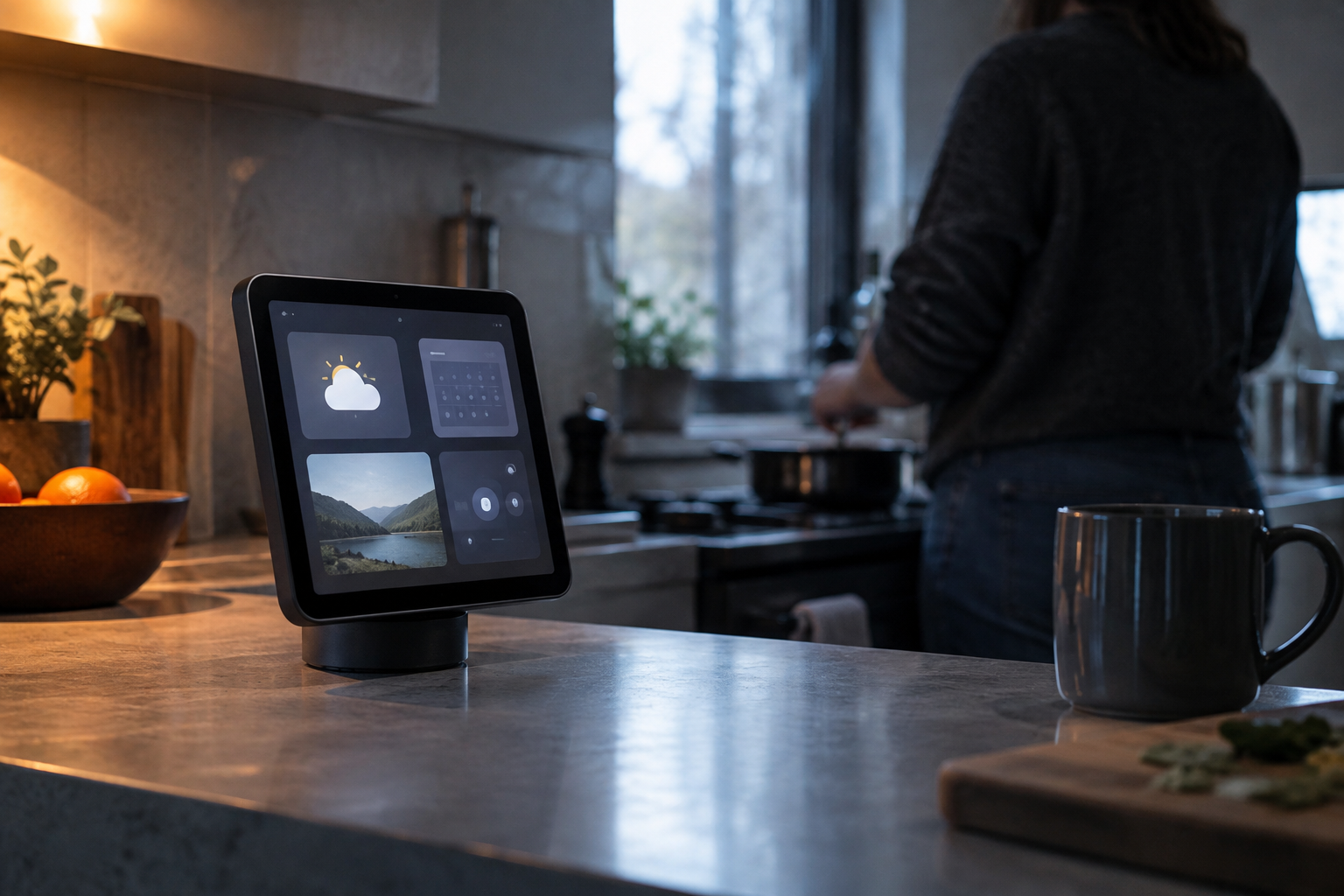
Shipments start November 13, 2026. Buyers get a seven-inch square touchscreen engineered to sit permanently on a kitchen counter or hallway credenza. It functions as an anchored command post rather than an iPad you haul to the sofa.
The enclosure carries a 12-megapixel FaceTime lens. That front camera handles high-definition video calls while doubling as a visual sensor to register whoever stands in front of the glass. Apple designed the device to distinguish up to six family members, cycling between their schedules, messages, and alerts automatically.
Beneath the casing sits a dual-protocol smart home hub packing both Matter and Thread radios. It ties directly into HomeKit Secure Video feeds, pulling live doorbell cameras and stored motion alerts straight to the seven-inch display without requiring an Apple TV or an iPhone intermediary.
Siri handles interaction as an upgraded, context-aware voice engine. Instead of returning generic web searches, the assistant crawls personal data lakes including Apple Mail, Calendar, and Messages to surface answers unique to whoever asks.
Apple designed the HomeView hardware to distinguish up to six family members, cycling between individual schedules and alerts automatically.
Yet the launch hardware arrives with a glaring omission. The device lacks native support for video streaming applications, leaving buyers without third-party entertainment platforms or Apple's own native video services at launch.
Cupertino unveiled the HomeView during its Tuesday 'Welcome Home' media showcase. The announcement filled an obvious, years-long hole in Apple's residential hardware lineup where Amazon Echo Show and Google Nest Hub devices had parked uncontested.
For a decade, Apple forced customers to duct-tape their smart homes together using HomePod speakers and repurposed wall-mounted iPads. An iPad costs more, runs hot when permanently plugged into an outlet, and lacks multi-user facial switching. The HomePod, meanwhile, lacked visual confirmation for voice inputs.
Amazon and Google spent that same decade turning cheap smart displays into billboard real estate. Their hardware pushed sponsored recipes, sponsored shopping prompts, and unprompted video suggestions into living rooms. Apple's pitch counters that ad-driven model by offering a closed ecosystem focused strictly on personal utility.
Siri's underlying overhaul represents the technical core of the system. In previous iterations, asking an ambient kitchen speaker to find car keys or look up an address required awkward handoffs to an iPhone. The HomeView runs those queries directly against local and cloud-based user data.
Here is what the ambient voice system handles directly from the counter:
That functional footprint targets households where multiple people share common hardware but maintain separate digital identities. Handing an ambient speaker full access to private communications has always been a security headache. The six-profile cap attempts to bridge that gap.
Early hands-on testers gave a clear read on the physical execution. Jennifer Pattison Tuohy evaluated the hardware following the showcase, describing the device as an iPhone built specifically for household surfaces with the physical proportions of an oversized Apple Watch.
The square display form factor drew immediate attention. Unlike the widescreen aspect ratios favoured by Google and Amazon for media streaming, a seven-inch square prioritizes widget cards, timers, and portrait camera feeds over 16:9 television episodes.
Industry observers were quick to flag the odd absence of native video playback software. Jess Weatherbed reported that the operating system launches completely stripped of dedicated video applications, shutting out even Apple's first-party streaming catalog on day one.
Early marketing materials also triggered debate among consumer tech reviewers. Allison Johnson noted that initial promotional campaigns for the HomeView felt puzzling to general audiences while speaking directly to parents managing chaotic family schedules and shared domestic logistics.
Retail watchers concentrated on the Amazon price cut. Shaving ten dollars off an unreleased flagship indicates aggressive merchant positioning. Amazon clearly wants pre-order volume flowing through its own checkout funnels rather than Apple's direct retail platform, even if the discount sits at a modest three percent.
Smart home installers took note of the Matter and Thread radios inside the specification sheet. By serving as an active Thread border router, the display eliminates the requirement for standalone hubs from third-party smart lighting and sensor manufacturers.
The retail countdown ends on November 13, 2026, when pre-orders land on doorsteps and store shelves. The real test begins once consumers place the hardware in messy kitchens and test Siri's multi-user voice recognition against background noise.
Siri's contextual reliability will dictate the hardware's fate. If the assistant misidentifies household members or stumbles over text-message lookups, the seven-inch display becomes an expensive digital picture frame. Voice AI has promised ambient domestic intelligence for years, but execution has routinely collapsed around noisy blenders and overlapping chatter.
Apple faces an immediate software update timeline. Launching a smart display without video streaming capabilities leaves an obvious functional vacuum that Cupertino will need to patch if it wants to justify the $299 regular MSRP against cheaper alternatives.
Amazon's pricing aggression also establishes an unusual precedent. If third-party merchants discount Apple's smart display before launch day, holiday promotional cycles in late 2026 could see the HomeView slip deeper into the mid-$200 range.
Developers will also be watching for third-party application access. The closed nature of the interface means non-Apple developers currently sit on the sidelines waiting for official API toolkits to build interactive voice widgets for cooking, task management, and domestic automation.
Cupertino staked its domestic voice ambitions on a seven-inch square piece of glass. November will prove whether consumers want Siri running their kitchen counters, or if an expensive smart screen without video apps is an answer to a question nobody asked.
Apple is betting that ambient voice assistants need personal context and facial recognition rather than banner ads to win the kitchen. By locking Siri into private emails, texts, and local Matter smart hubs, Cupertino is trying to turn a voice assistant into an indispensable household coordinator. Stripping out video streaming apps at launch proves Apple views this as an operational command deck, not an entertainment tablet. If buyers accept that premise, ambient voice AI shifts from answering trivia to managing daily domestic logistics.
Reported off The Verge. Original reporting and analysis by Devon Achebe for Vox Roboti.
Retail price is $299 at Apple and Best Buy, though Amazon listed launch pre-orders for $289.99.
The HomeView smart display officially launches on November 13, 2026.
It features a seven-inch square touchscreen built for countertop smart home management.
Yes. It recognizes up to six household members and switches profiles automatically.
No. The HomeView does not natively support any video streaming applications at launch.
Yes. It supports both Matter and Thread, connecting to HomeKit Secure Video feeds.
The device comes in two finish options: gray and a creamy white starlight colorway.
Selma Ortiz · 16h ago · 4 min read

Cass Iverson · 2d ago · 5 min read

Selma Ortiz · 2d ago · 5 min read