Voice AI
Amazon Silently Kills Alexa Voice Switching for Older Echo AUX Jacks
Selma Ortiz · 16h ago · 4 min read
Meta launched Muse for free. OpenAI introduced paid Dots. Both slap cartoon faces on software built to hijack your computer and run your errands.

By Devon Achebe, Infrastructure reporter · Reported off The Verge
Follows latency, cost and the parts of the stack vendors hide.
Silicon Valley gave up on asking you to tap screens. Meta and OpenAI want full control of your operating system instead.
At OpenAI DevDay in San Francisco, the company unveiled Dots. Weeks earlier at Meta Connect, Mark Zuckerberg rolled out Muse. Both software suites are autonomous agents designed to live on your desktop, seize your browser, and finish chores without human supervision. They do not wait for step-by-step prompts. They chew through multi-step workflows while you look away.
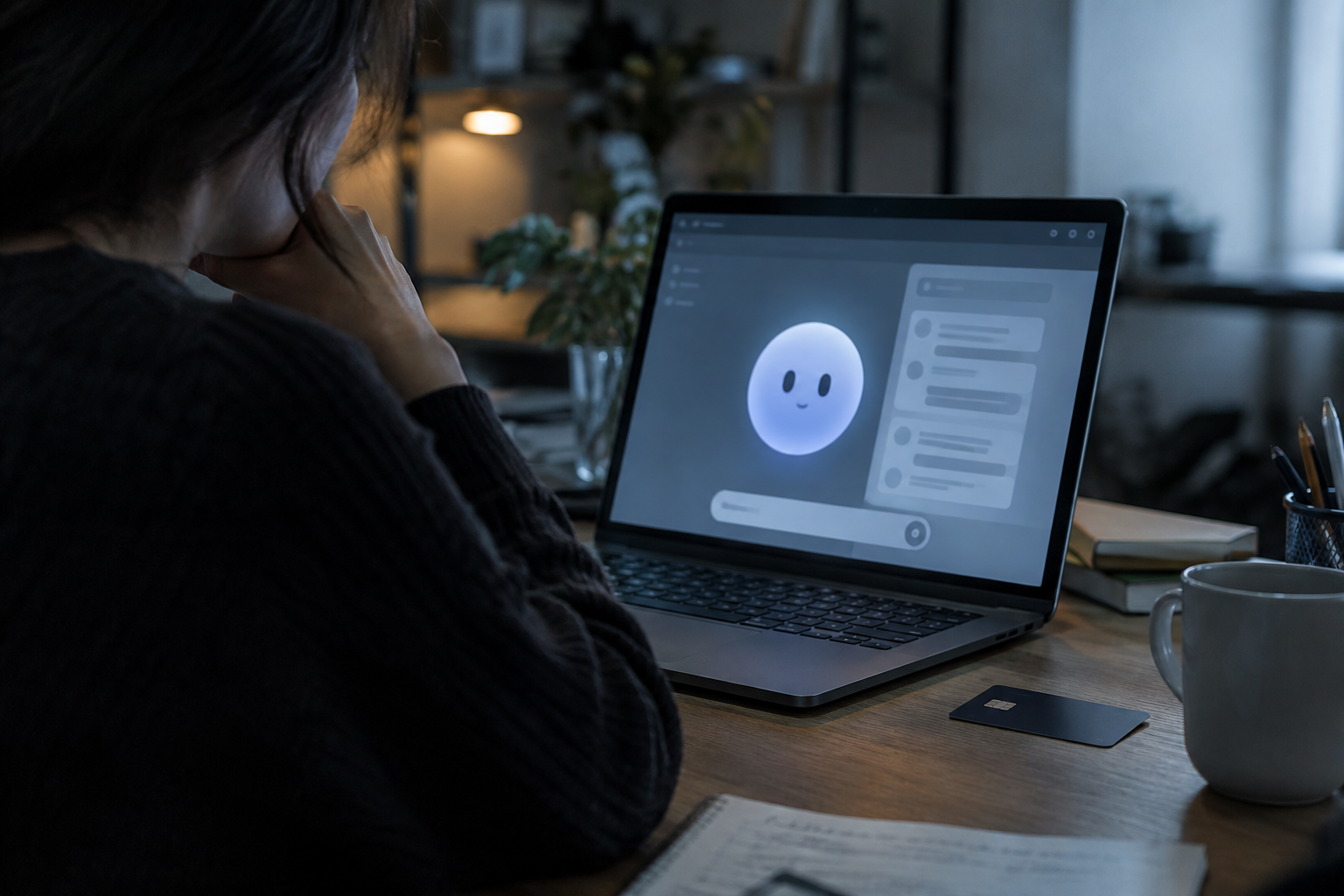
To keep consumers from bolting at the thought of automated software rifling through their personal files, both companies slapped animated mascots onto the front end. Cute faces make invasive system privileges look like digital toys.
Underneath the friendly exterior sits an aggressive commercial split. Meta is distributing Muse entirely for free. OpenAI is charging recurring fees for Dots. To justify that price tag, OpenAI introduced dedicated specialist Dots configured for distinct corporate departments, specifically legal analysis, marketing operations, and accounting.
Elon Musk entered the same arena by pushing xAI's Grok bot into agent territory, turning autonomous software into a three-way platform race among tech giants.
OpenAI and Meta did not invent this architecture from scratch in a corporate lab. Both platforms trace their direct technical lineage to OpenClaw, a homebrew automation project built by developer Peter Steinberger. Steinberger cobbled together an always-on agent over a single weekend, proving that independent software could execute continuous tasks on local machines.
That solo prototype caused an unexpected hardware run earlier in 2026. Buyers stripped retail shelves of Apple Mac Mini units to run continuous OpenClaw scripts at home, proving consumers would tolerate blatant software security flaws if an agent saved them enough personal time.
OpenAI noticed the hardware run, admitted its internal roadmap was lagging behind an open-source project, and hired Steinberger outright to build Dots. Meta built Muse concurrently, moving fast enough to beat OpenAI to market with an operating agent despite lacking an acknowledged frontier model of its own.
Silicon Valley executives spent four years failing to make software agents work before reaching this product cycle.
In 2022, tech leaders labeled the calendar year the ideation phase. Presentations leaned on Marvel comics, promising investors that voice interfaces and background models would soon mimic Tony Stark's fictional Jarvis assistant.
In 2023, the industry pivot brought the self-styled year of deployment. Startups shipped early agent wrappers that attempted to automate web tasks, and almost every single one collapsed. The software hallucinated links, broke payment flows, and crashed mid-transaction.
Between 2024 and 2025, venture capital went quiet on consumer agents because the baseline logic remained too unreliable for public release. Corporate roadmaps stalled while models struggled to execute basic web navigation without human hand-holding.
Steinberger broke the logjam in early 2026 by wrapping raw model intelligence in an execution harness. Instead of confining artificial intelligence to a chat window on a web page, the OpenClaw harness granted the underlying model direct tools to control desktop software, mouse clicks, and browser navigation.
That architecture shifted the product race from theoretical reasoning benchmarks to operational capability. OpenAI and Meta realized that winning consumer computing did not require building a fundamentally smarter brain. It required giving an existing brain direct hands on the keyboard.
An agent is an AI model wrapped in a harness that lets it use a computer on its own mental scratchpad.
By the time DevDay arrived in San Francisco, the design philosophy of voice and desktop interaction had fundamentally reversed:
Reporting from The Verge senior AI reporter Hayden Field on the Decoder podcast with Nilay Patel outlines the friction behind this sudden rollout. Patel noted on October 8, 2026, that computing may be shifting away from smartphones entirely toward persistent background software that requires neither manual apps nor handheld hardware.
Field, who spent her early career working as a personal assistant in New York, drew a sharp line between traditional software scripts and genuine agent operations. A competent human assistant gets fired if they pester an executive for frequent flyer credentials, seat selections, and itinerary parameters on every single booking. Silicon Valley is finally testing whether software can maintain an internal reasoning scratchpad long enough to book a complete travel itinerary without asking a human supervisor for mid-task guidance.
Interpersonal drama among founders followed the product rollouts immediately. Alexandr Wang from Meta took public shots at competing agent architectures, while Elon Musk attempted to steer attention toward xAI's competing Grok agent.
Yet the technical debate centers on distribution power rather than computing models. Meta operates zero frontier models that match OpenAI's raw compute tier, but Meta holds billions of daily active users across Instagram, WhatsApp, and Quest devices. A free product backed by established distribution channels routinely crushes a superior paid product that requires an upfront subscription.
Security engineers hold a far darker view of both products. To make Muse or Dots functional, a consumer must hand over sensitive hard drive files, local browser session tokens, private inbox credentials, and unlocked payment methods. Giving an automated script root access to financial accounts creates an attack surface that no cartoon mascot can disguise.
The coming consumer clash will determine how hardware operating systems handle software permissions going forward. If agents replace manual mobile applications, Google and Apple will be forced to either block third-party agent harnesses on iOS and Android or surrender control over their application store revenue.
OpenAI faces the harder economic test with Dots. Enterprise firms will pay recurring software fees for automated legal review and marketing generation only if the error rate remains absolute zero. One corrupted accounting ledger or unauthorized corporate credit card transaction inside a specialist Dot will trigger immediate executive cancellations.
Meta faces the inverse problem with Muse. Distributing an autonomous desktop agent for free requires Meta to monetize user data, task behaviors, and shopping transactions downstream. When a user tells Muse to purchase holiday gifts, Meta's business model relies on steering those autonomous purchases toward preferred commercial partners and sponsored ad inventory.
The real test will not be benchmark performance or animated mascot popularity. The test will occur when the first major desktop agent drains a personal checking balance through an automated booking error or leaks confidential local files while scraping an email inbox. Consumers were willing to run hobbyist code like OpenClaw on isolated Mac Minis. Handing daily financial survival over to Meta and OpenAI on primary work computers is a completely different wager.
Autonomous agents mark the end of the mobile app ecosystem. If software harnesses can navigate websites and book transactions on background scratchpads, consumers no longer need phone screens, app stores, or manual checkouts. OpenAI is betting businesses will pay premium subscriptions for automated white-collar labor, while Meta is positioning Muse as free consumer plumbing to capture downstream transaction volume. The company that secures local system trust wins the interface that replaces the personal computer.
Reported off The Verge. Original reporting and analysis by Devon Achebe for Vox Roboti.
Meta Muse is free and consumer-focused. OpenAI Dots is a paid service offering specialist agents for legal, marketing, and accounting tasks.
Software engineer Peter Steinberger created OpenClaw over a single weekend before OpenAI hired him to develop Dots.
AI enthusiasts bought Mac Mini units in bulk to run Peter Steinberger's continuous, always-on OpenClaw agent locally.
Agents wrap an AI model inside a technical software harness that operates mouse clicks, desktop browsers, and local applications independently.
Both agents execute multi-step workflows like booking flights, reserving restaurants, buying gifts, sorting emails, and analyzing commercial documents.
Yes. Elon Musk entered the autonomous category by expanding xAI's Grok bot into agent workflows.
Users must surrender local desktop permissions, unencrypted email access, private storage drives, and saved credit card details to the software.
Selma Ortiz · 16h ago · 4 min read
Cass Iverson · 2d ago · 5 min read

Selma Ortiz · 2d ago · 5 min read