
Voice AI
Amazon Silently Kills Alexa Voice Switching for Older Echo AUX Jacks
Selma Ortiz · 15h ago · 4 min read
Meta is reorganizing its future around an AI agent named Muse, pairing the technical pivot with a fresh stock plan to bankroll the staggering compute costs.

By Ray Dalton, Editor-in-chief · Reported off Reuters AI watch
Runs the desk. Allergic to demos that only work on stage.
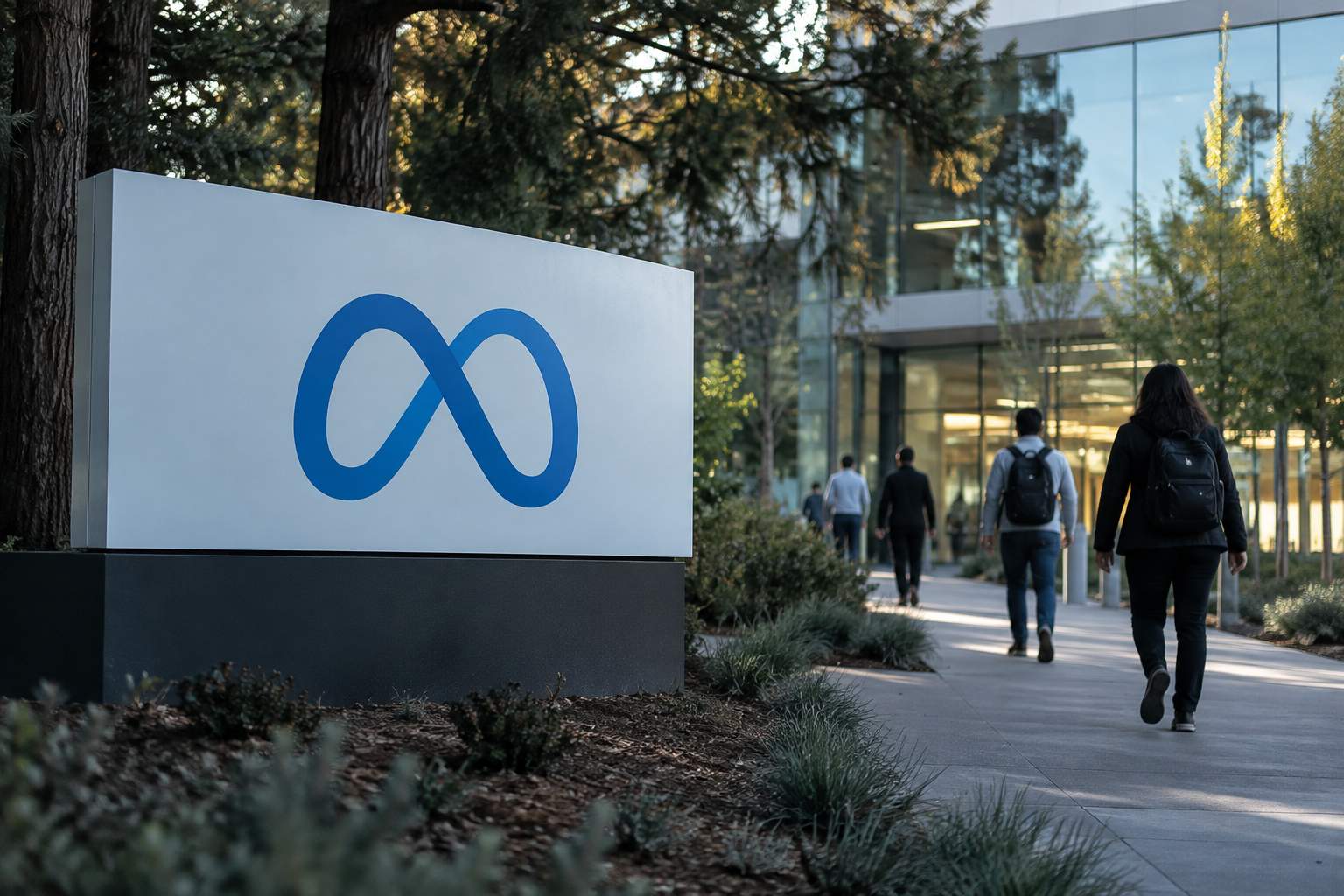
Mark Zuckerberg does not place small bets when he smells a platform shift. Meta has placed an agent architecture called Muse directly at the center of its corporate artificial intelligence blueprint. The technical pivot lands alongside a financial maneuver: Menlo Park is preparing a new equity structure designed specifically to bankroll the capital investments required to keep pace in the frontier AI race.
Building foundation models was step one. Turning those models into persistent, action-oriented digital agents is step two. Muse represents Meta's formal departure from passive conversational chatbots toward active autonomous systems. This software is built to listen, process multimodal context, make decisions across tools, and talk back to users across hardware and messaging surfaces.
Running that kind of autonomous machinery at the scale of three billion daily active users breaks conventional operating budgets. Training and serving agentic workflows demands massive, continuous inferencing power. By plotting a new equity class or share vehicle, Meta is creating a dedicated funding pipe. The goal is simple: suck up institutional capital to pay for silicon, data center power, and technical infrastructure without forcing the core business to choke on cash-flow constraints.
The transition from predictive text models to real-time voice and action agents turns compute from a software expense into a utility-scale industrial cost.
This two-pronged announcement separates Meta from rivals who rely solely on balance sheet cash or cloud partnerships. Microsoft depends on OpenAI. Apple leans on Google and outside developers. Meta wants its own proprietary cognitive layer powering every interaction, and it is willing to engineer its capital structure to ensure the hardware bills do not derail the plan.
To understand why Meta is pulling financial levers for Muse, look at the spending trajectory established over the past four years. In October 2021, Facebook rebranded to Meta and plunged tens of billions into Reality Labs. That bet produced custom silicon, virtual reality headsets, and smart glasses, but it also burned through billions in quarterly operating losses.
When generative AI erupted in late 2022, Meta found itself playing catch-up on server hardware. In 2023, the company executed its Year of Efficiency, slashing over 20,000 jobs while quietly diverting corporate resources toward compute clusters. Zuckerberg authorized purchases that would amass hundreds of thousands of Nvidia H100 graphics processing units, elevating Meta's capital expenditure forecasts toward the $40 billion annual mark.
The open-weight Llama family gave Meta developer mindshare, but open weights do not generate direct subscriber revenue. Meanwhile, the Ray-Ban Meta smart glasses emerged as a surprise hardware hit in late 2023 and 2024. For the first time, millions of consumers were using voice rather than a touchscreen to query an AI engine on the go.
That hardware breakthrough highlighted a structural bottleneck in Menlo Park's technical stack:
Muse is the architectural answer to those operational limitations. Instead of merely serving as a voice-enabled search engine strapped to a camera frame, Muse is engineered to execute multi-step workflows. It bridges audio inputs, visual feeds, and transactional backends. Building that engine into Meta's existing apps requires an infrastructure upgrade that makes the original Llama training runs look modest by comparison.
Equity analysts in New York view the funding maneuver with a mix of respect and unease. Portfolio managers remember the initial investor revolt of 2022 when metaverse capital expenditures depressed Meta's share price below $90. While Wall Street now accepts AI as an existential necessity, introducing new equity mechanisms raises inevitable questions about shareholder dilution and voting control.
Market observers note that Zuckerberg already commands absolute voting power through Class B super-voting stock, which carries ten votes per share. Creating a distinct stock vehicle allows Meta to finance massive capital projects or issue equity-based compensation to scarce AI researchers without diluting Zuckerberg's 61 percent voting grip on corporate governance.
Inside Silicon Valley, enterprise AI leads view Muse as Meta's bid to commoditize proprietary voice agents. Google has integrated Gemini Live into Android handsets, and Apple has attempted to overhaul Siri with private cloud clusters. Yet developers point out that Meta possesses the single largest consumer distribution network on Earth through WhatsApp and Instagram. If Muse successfully delivers low-latency voice reasoning at zero cost to the end user, standalone voice assistant startups will face brutal pricing pressure.
Infrastructure providers read the signals differently. Chip fabricators, server manufacturers, and private power developers see Meta's financial restructuring as proof that capital requirements are accelerating, not slowing down. Model builders are no longer competing on benchmark scores; they are competing on how many gigawatts of electrical capacity their treasury desks can underwrite over a rolling five-year window.
The immediate test for Meta lies in corporate governance and regulatory filings. Securities regulators will scrutinize the mechanics of any new equity structure Menlo Park puts forward. Shareholders will demand specific guardrails on how much dilution this vehicle will introduce, alongside clear disclosures on how much capital will flow directly into hardware purchases versus corporate acquisitions.
On the product front, Muse will face immediate integration trials across Meta's hardware ecosystem. The Ray-Ban frames need an agent that can handle complex voice tasks without choking on background noise or lagging for two seconds while round-tripping audio to remote servers. Meta is already testing tighter integration with third-party APIs, aiming to let Muse book rides, order food, and process messages through pure voice commands.
The broader industry will feel the fallout across four critical fronts:
Zuckerberg has made his calculation. He watched the desktop era belong to Microsoft and the mobile operating system era belong to Apple and Google. He refuses to let the agentic era belong to anyone else, even if he has to rewire Meta's equity structure and outspend every legacy tech titan to own the audio layer of the internet.
When software companies start issuing tailored equity instruments simply to feed their inferencing clusters, the economics of artificial intelligence have permanently shifted. Meta is telling the market that building voice-driven agents is no longer an R&D experiment funded by advertising surpluses. It is heavy industry. Competitors without a multi-billion-dollar balance sheet or a sovereign funding vehicle will find themselves priced out of the voice layer entirely.
Reported off Reuters AI watch. Original reporting and analysis by Ray Dalton for Vox Roboti.
Muse is Meta's primary AI agent architecture, designed to handle autonomous, multimodal tasks across voice, text, and external application workflows.
The new stock structure provides dedicated capital to fund massive data center, chip, and infrastructure costs without depleting operational corporate cash.
No. The planned equity structure is designed to raise institutional capital while preserving Zuckerberg's majority voting power through his Class B shares.
Muse serves as the reasoning engine for hardware, transforming smart glasses from reactive voice lookup tools into proactive voice-driven task agents.
Muse will operate across Meta's messaging backends, allowing users to automate customer service, schedule tasks, and process transactions directly in chats.
No. Muse builds on top of Meta's underlying foundation model research, converting raw model weights into actionable, long-running agent workflows.
Selma Ortiz · 15h ago · 4 min read

Cass Iverson · 2d ago · 5 min read

Selma Ortiz · 2d ago · 5 min read