Voice AI
Amazon Silently Kills Alexa Voice Switching for Older Echo AUX Jacks
Selma Ortiz · 15h ago · 4 min read
Meta's new voice agent Muse pulled ten million users in six weeks. Now Zuckerberg plans to monetize the compute with merchant fees, premium tiers, and smart glasses.

By Tobias Reinholt, Policy and security writer · Reported off Engadget
Fraud analyst turned policy writer. Deepfakes, consent, regulators.
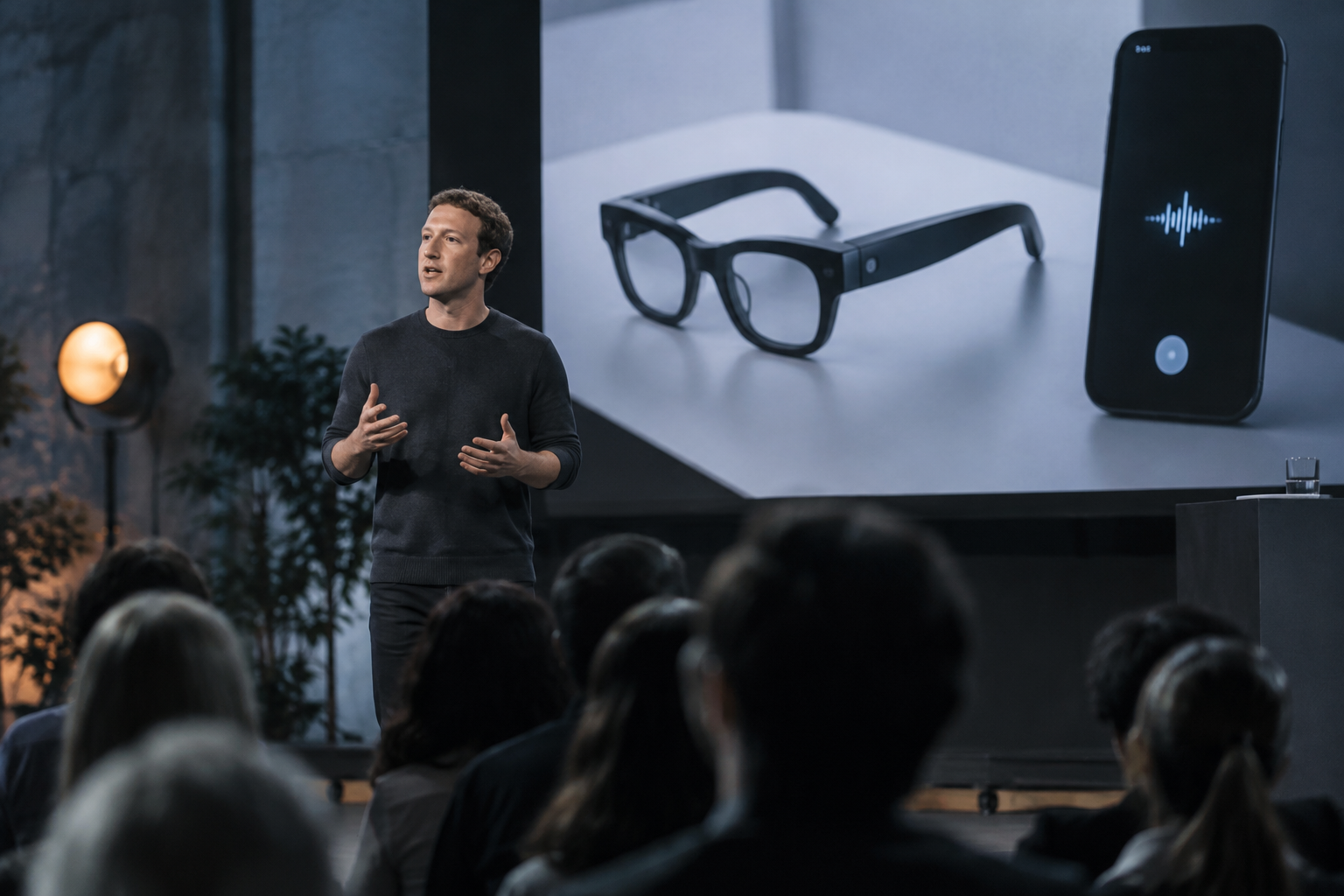
Mark Zuckerberg just told Wall Street that free conversational AI is over. During Meta's third-quarter earnings call on Wednesday, October 21, 2026, the chief executive laid out the financial reality of Muse, the company's new personal agent. The software rolled out across the United States and Canada in early September. In roughly six weeks, more than ten million people signed up to use it.
Ten million active accounts would be a celebration inside most tech firms. Inside Menlo Park, it is an escalating compute bill. Operating an agent that converses, tracks tasks, and processes real-time requests costs Meta significantly more than serving static photo feeds or algorithmic video reels. You cannot fund high-concurrency neural inference on regular display banner ads. Zuckerberg knows it, and he told investors that Meta is already working on direct monetization strategies to stop the cash bleed.
The initial usage metrics hand Meta an escape hatch. Zuckerberg revealed that shopping is currently the single most common activity people hand off to Muse. When users let the voice agent complete a transaction, the average checkout basket hits $200. Because users are already treating the assistant like a personal purchasing concierge, Meta plans to roll out custom commerce tools that charge outside merchants a transaction fee whenever Muse brokers a sale.
Meta also intends to bolt software subscriptions onto the product. Power users and small businesses leaning on Muse for daily task orchestration will be pushed into paid monthly tiers. Zuckerberg claimed the combined upside of transactional commerce fees and software subscriptions will eventually push Muse's average revenue per user higher than the historical monetization rates of Facebook and Instagram.
For two decades, Meta made its fortune on digital attention capture. The machine was simple: lure a user into scrolling an infinite feed, collect their telemetry, and sell targetable ad inventory to the highest bidder. In the United States, that setup turned into a money press. Zuckerberg noted on the call that the average annual revenue per American user across Meta's family of apps sits in the range of several hundred dollars.
That business model collapses when voice interfaces replace glass screens. You do not scroll an ad feed while speaking to an assistant through your frames on a morning walk. You issue a prompt, you get a clean answer, or you ask the machine to buy an item. If Meta served ads by having the voice read commercial interruptions between spoken responses, users would abandon the platform instantly. Without ad slots, the legacy revenue engine dies.
Meta previewed Muse at its annual Connect conference in September 2026. The pitch focused on deep operational utility rather than novelty chat. Users were shown directing the assistant through hands-free conversational voice, clearing items off to-do lists, checking upcoming schedules, and authorizing product purchases without reaching into their pockets for a phone.
At the same time, Meta needs a financial engine for its hardware division. The company's smart glasses have generated solid cultural traction, but Zuckerberg conceded during the call that Meta makes very little profit on the physical hardware units themselves. The frames are sold near manufacturing cost to secure consumer adoption. Without software revenue bolted to the temples, the hardware business remains an expensive subsidised distribution experiment.
Zuckerberg did not hedge his bets when speaking to analysts on the Wednesday call. He argued that the initial ten million users prove the market wants task-oriented agent interaction, justifying a fast shift toward commercial extraction:
"Now that Muse has clear product market fit, we are entering a new phase and a more operational phase that is focused on scaling it. We expect to grow Muse to serve billions of people."
Turning an experimental tool into a carrier-grade utility for billions requires Meta to change how it views user value. Zuckerberg was blunt about how the financial mechanics of Muse compare to the social feeds that built his empire:
"The average revenue per American user for our existing family of apps users is several hundreds of dollars annually, and we expect that Muse will reach an even higher level over time due to the amount of commerce that we already see taking place."
To hit those financial targets, Meta is dividing the product architecture into distinct monetization channels:
The hardware gating strategy is already visible across Meta's roadmaps. The company has already looked at locking upcoming smart glasses features behind extra charges, including an anticipated hearing enhancement tool designed to filter ambient noise through onboard microphones. Muse is being prepared for the exact same treatment.
The immediate testing ground begins in November 2026, when Meta officially pushes Muse onto its smart glasses line. Owners will talk to the agent directly through onboard microphones and open-ear speakers, pulling task lists and issuing vocal purchase requests without an interface screen. While the standard voice assistant on the glasses handles basic device control, the advanced orchestration layers of Muse will almost certainly require an active paid subscription.
The move marks a structural pivot for Meta. Instead of selling user attention to third-party advertisers, Meta is positioning itself as a transactional tollbooth sitting between consumers and retailers. If a customer uses Muse to reorder household goods or book services, Meta takes a slice of the $200 average ticket. Retailers who refuse to integrate with Meta's merchant tools risk disappearing from the assistant's recommendation flow entirely.
Scaling Muse to billions of users will force Meta to defend its operating margins against crushing cloud compute expenses. Every single conversational exchange, multi-turn reasoning task, and checkout sequence consumes expensive server clusters. If merchant checkout fees and paid subscriptions fail to cover that computational overhead, the agent will turn into a financial drag on Meta's balance sheet.
The coming months will prove whether consumers are actually willing to pay for an agent on their faces. Silicon Valley spent years convincing the public that consumer artificial intelligence should be subsidized, free, and ubiquitous. Zuckerberg is betting that an agent capable of executing errands is valuable enough to break that expectation, extracting direct software payments from users and transactional tolls from merchants. If he succeeds, conversational voice replaces the social feed as Meta's primary cash generator.
When voice assistants replace visual feeds, display ads stop working. Meta cannot run audio commercials inside private conversational tasks without destroying the product experience. Zuckerberg's push into merchant cuts and agent subscriptions marks the voice industry's first serious attempt to build a post-advertising business model at massive consumer scale.
Reported off Engadget. Original reporting and analysis by Tobias Reinholt for Vox Roboti.
Muse is Meta's personal AI agent built to converse with users, manage daily task lists, and execute shopping purchases through voice and text.
More than 10 million people in the United States and Canada started using Muse within six weeks of its early September 2026 rollout.
Meta plans to charge merchant transaction fees on shopping checkouts, sell premium AI subscriptions to power users, and paywall features on smart glasses.
According to Mark Zuckerberg, shopping is the primary activity on Muse, with transactions averaging roughly $200 per checkout.
Meta is launching Muse on its smart glasses line in November 2026, allowing hands-free voice control and task management.
Meta has indicated that certain advanced Muse capabilities on smart glasses will likely require a paid recurring subscription.
Selma Ortiz · 15h ago · 4 min read

Cass Iverson · 2d ago · 5 min read

Selma Ortiz · 2d ago · 5 min read