Voice AI
Amazon Silently Kills Alexa Voice Switching for Older Echo AUX Jacks
Selma Ortiz · 16h ago · 4 min read
An Android APK teardown reveals Google is testing Gemini Calling to outsource routine personal phone calls to an AI agent.

By Selma Ortiz, Product and labs writer · Reported off The Verge
Tests every model on ugly, real calls. Writes reviews vendors dread.
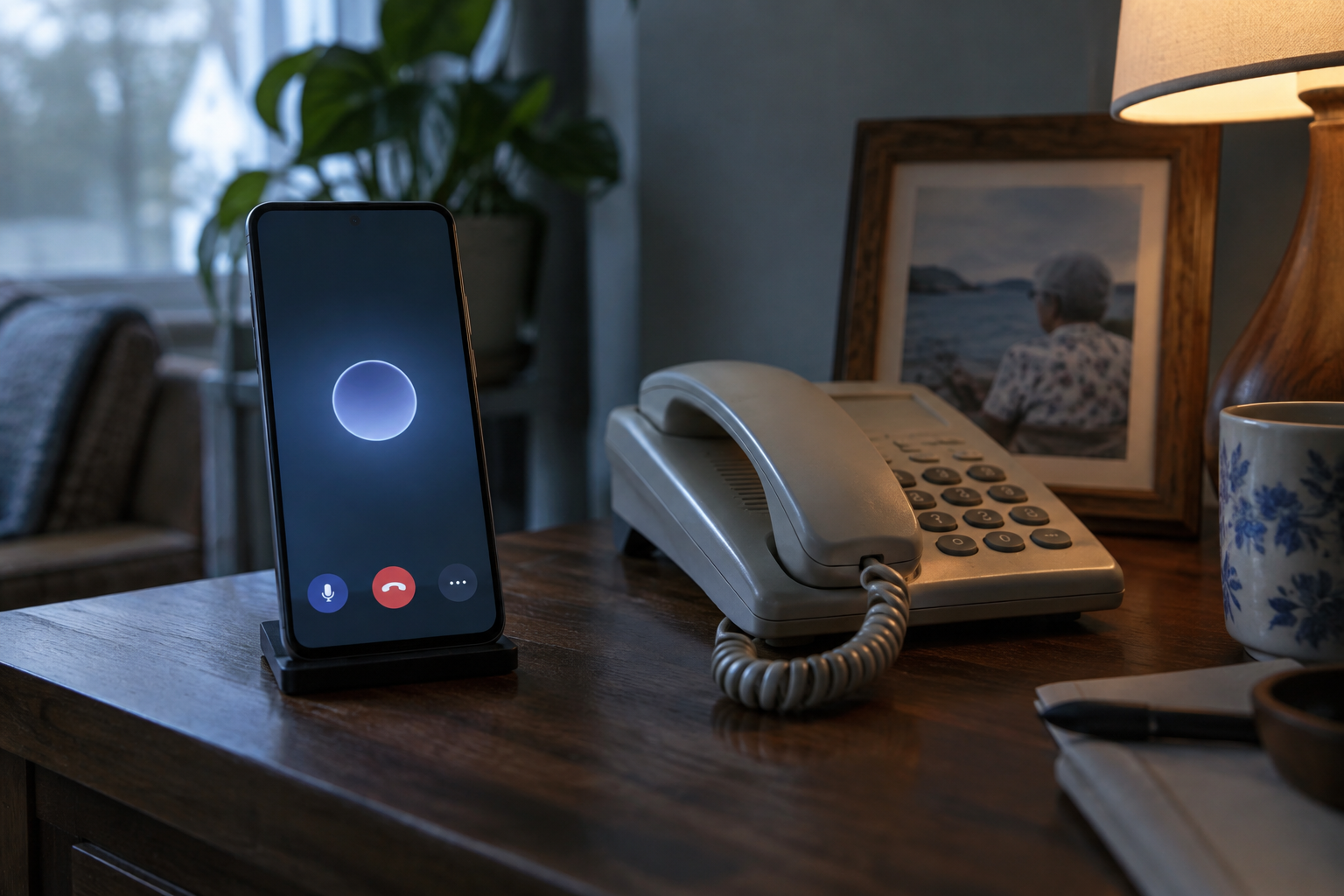
Your phone rings. The caller ID displays your daughter's face. You pick up, say hello, and instead of your daughter, an artificial voice informs you she is stuck behind a delivery truck on Interstate 90 and will miss dinner by twenty minutes.
That scenario is no longer speculative fiction. On October 5, 2026, tech writer Stevie Bonifield reported for The Verge on code unearthed by Android Authority inside a fresh Android package file. Mountain View is engineering a consumer-facing tool dubbed Gemini Calling. It takes Google's enterprise-focused call automation software and points it straight at your personal contact list.
Android Authority dissected an Android application package and extracted an unreleased onboarding splash screen explicitly titled Gemini Calling. The interface displays pre-built command suggestions designed to handle domestic errands over the standard telephone network.
Two specific instruction templates appear in the dismantled code. The first prompt directs the software to dial a parent: "Call Mom and tell her I will be 15 minutes late." The second tackles social logistics: "Call John and ask if he is coming for dinner."
This is not a voice assistant drafting an SMS. The system routes an outbound telephone call through the device's dialer, speaks to the recipient using Gemini's synthetic voice engine, delivers the factual payload, collects an answer if required, and terminates the connection.
The teardown also exposed a secondary structural update buried in the operating system's configuration files. Google is building granular permissions for Gemini actions across standalone Android applications. These system toggles govern dialer access, giving handset owners the ability to dictate which automated tasks the model can trigger without manual confirmation.
Crucially, those same permission layers hint at reciprocal boundary controls. The code contains references indicating Google may allow call recipients to reject automated inbound voice calls dispatched by Gemini, blocking bot-mediated personal check-ins before the audio connects.
Google has spent eight years inching toward automated voice mediation. The company unveiled Project Duplex at its I/O developer conference in May 2018, showcasing an assistant that placed telephone calls to hair salons and neighborhood restaurants. That early system leaned on disingenuous conversational filler, inserting synthetic vocal pauses to fool human desk clerks.
Duplex proved brittle and expensive to run on standard telecom infrastructure. Google quietly re-engineered the stack into utilitarian enterprise utilities. In October 2020, the Pixel 5 launched with Hold for Me, a system that sat on toll-free telephone queues so users did not have to listen to elevator music. Later came Call Screen to interrogate suspected spammers, followed by Call for Me, which directed Google's bot to ring local storefronts to verify retail inventory and holiday operating schedules.
Gemini Calling represents a strategic pivot from business-to-consumer mediation to peer-to-peer voice automation. The technical friction of personal voice calls has worsened as consumer habits drifted toward asynchronous messaging. Voice calls today carry high social friction. Millennial and Gen Z smartphone users routinely ignore unexpected ringtones, treating unscheduled calls as emergencies or carrier spam.
Yet millions of households still rely on synchronous telephone calls. Older demographics frequently overlook text messages, leave mobile data turned off, or depend entirely on legacy copper landlines and fixed wireless home stations that cannot receive an SMS. Google's product managers view voice AI as an automated translation layer between mobile natives who refuse to talk and analog family members who refuse to type.
The reporting from Android Authority and The Verge frames Gemini Calling as an errand runner rather than a conversational surrogate. Bonifield underlined that the uncovered strings point strictly to transactional dispatches rather than open-ended conversations.
"Call Mom and tell her I will be 15 minutes late."
Industry observers note the sharp boundary between practical dispatch and interpersonal alienation. Telecommunications analysts argue that sending an automated proxy into a private relationship degrades the social contract of the phone call. If an individual cannot spare thirty seconds to speak with a relative, dispatching an algorithm to deliver the excuse turns family communication into a ticketing system.
Software engineers dissecting the teardown view the feature through the lens of device permissions. Android Authority emphasized that the inclusion of strings in an APK file does not guarantee a public commercial deployment. Google regularly writes, compiles, and dogfoods operational features that get scrapped before reaching the stable release channel of the Google Play Store.
Privacy advocates have focused on the potential opt-out mechanisms found inside the code. Receiving an automated dispatch from a child or spouse raises obvious consent issues. If standard Android handsets gain the ability to generate outbound conversational dispatches at zero marginal cost, the telecommunications network faces an entirely new classification of interpersonal synthetic traffic.
Before Gemini Calling can dial your family, Google faces an obstacle course of regulatory compliance, telecommunications law, and carrier-grade anti-spam heuristics.
The mechanics of implementation will dictate whether this feature survives dogfooding. If an Android device fires an autonomous call, the software must navigate interactive voice response trees, voicemail inboxes, and carrier call screening tools like Samsung Smart Call or Apple's Live Voicemail.
If the bot encounters an answering machine, Gemini must recognize the trailing beep, wait for the recording window, and compress the update into an intelligible memo. If a human answers, the model must declare its non-human status immediately to avoid deceptive impersonation liability.
The presence of granular permission controls suggests Google knows this deployment is dangerous territory. Handset owners will demand the ability to lock down the dialer. If malicious third-party apps find ways to invoke Gemini Calling via background intents, rogue software could dial premium-rate numbers or harass local contacts without the handset owner ever touching the phone.
Google has not issued an official launch date or public documentation for the feature. The leaked assets sit in Android's staging environment, awaiting an executive go-ahead or a quiet burial in Mountain View's graveyard of abandoned experiments.
The jump from business automation to personal robocalls crosses a psychological line. For six years, voice assistants stayed inside call centers, retail desks, and customer support queues. Pushing synthetic voice agents into interpersonal family calls risks corrupting basic telecom trust. If carriers fail to authenticate these dispatches, personal numbers will catch the same carrier spam filters that killed telemarketing. This is the moment voice AI leaves enterprise utility and begins testing how much synthetic mediation human relationships will actually tolerate.
Reported off The Verge. Original reporting and analysis by Selma Ortiz for Vox Roboti.
It is an unreleased Android feature that directs Google's Gemini AI to place routine personal phone calls on your behalf.
No. The discovered code shows the system handles brief, text-message-like tasks such as checking arrival times or delivering short schedule updates.
Android Authority found the unreleased splash screens and permission toggles during an application package teardown, later reported by The Verge.
The leaked Android code contains settings that suggest users will have options to opt out of receiving synthetic calls from Gemini.
It targets recipients who do not use text messaging, miss mobile notifications, or only answer legacy home landline phones.
No. The feature was discovered in an APK teardown, meaning Google could modify, delay, or abandon the project entirely.
Selma Ortiz · 16h ago · 4 min read

Cass Iverson · 2d ago · 5 min read

Selma Ortiz · 2d ago · 5 min read