
Voice Agents
Google Drops the Fitbit Edge and Tightens the Hardware Trap
Priya Raghunathan · 2d ago · 5 min read
Deepgram is moving its voice AI models directly onto disconnected laptops. Cloud hyperscalers hate it. Enterprise security teams finally get speech tech without the surveillance.

By Marla Quinn, Senior writer, voice agents · Reported off Voice vendor watch
Ex-support ops. Covers voice agents from the inside of the queue.
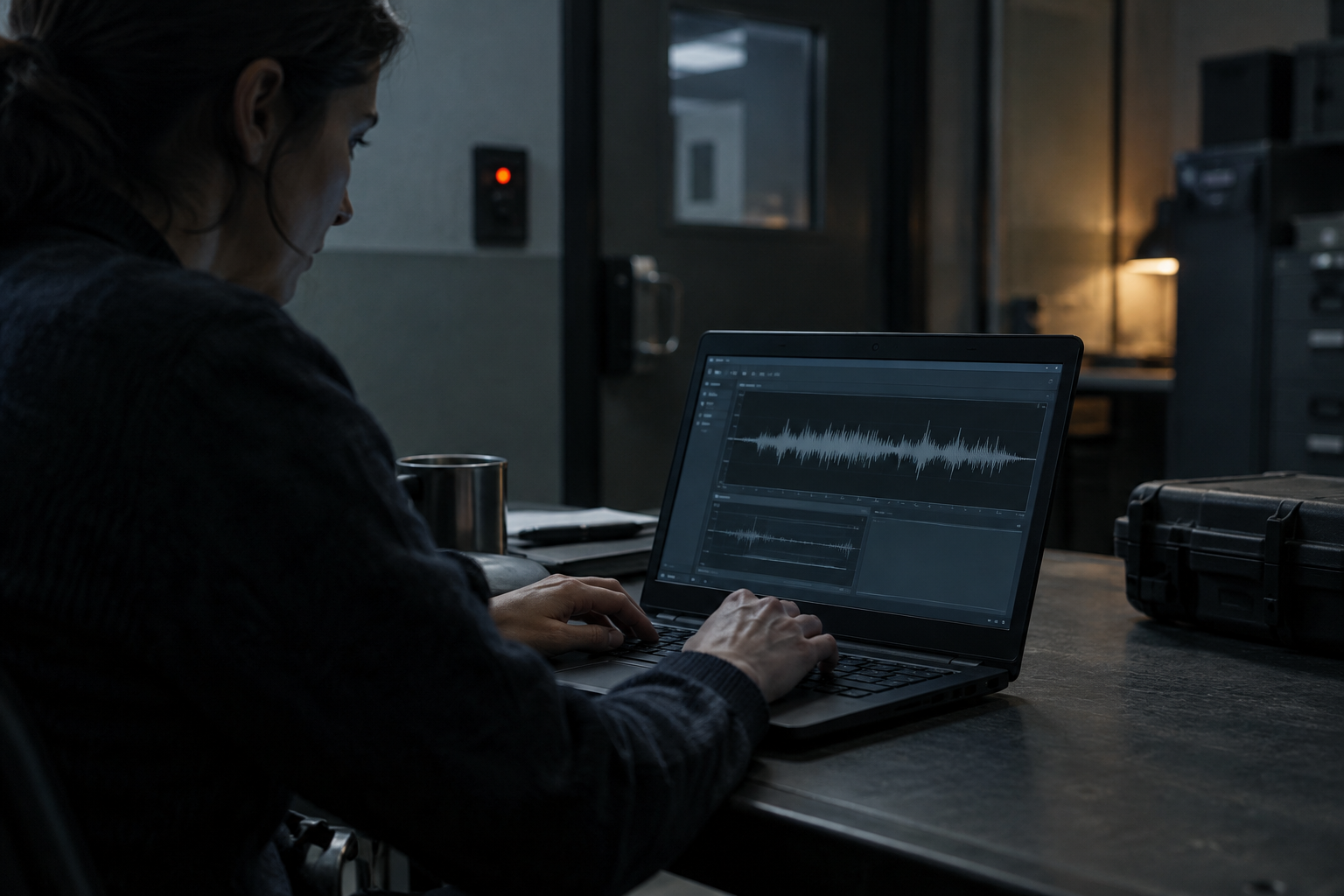
Deepgram just took an axe to the voice industry's primary umbilical cord. The speech infrastructure vendor is now targeting fully air-gapped laptops, shoving its voice AI stack directly onto disconnected client hardware.
That means zero internet connection. Zero outbound pings to an AWS bucket. Zero compliance officers hyperventilating over employee speech recordings drifting into a third-party training pool.
Until this move, running industrial-grade automatic speech recognition and conversational voice pipelines meant surrendering to a remote server farm. If you wanted sub-second inference, you piped raw PCM audio streams across the public internet to an endpoint running banks of Nvidia GPUs. If your internet connection flickered, your voice stack died on the spot. If your industry was legally barred from routing unencrypted conversational audio across external transit pipes, you simply sat on the sidelines while everyone else deployed automation.
"The cloud voice tax was never just about API costs. It was the security liability of treating every spoken conversation like public internet traffic."
Deepgram's architecture push flips the operational model on its head. By shrinking and optimizing its models to execute locally on standard enterprise notebook silicon, the company is stripping away the network hop entirely. Speech-to-text, audio parsing, and local voice interaction can now happen inside secure isolation chambers:
For the past five years, the voice AI sector sold enterprise software buyers a convenient fiction. The pitch promised that cloud-hosted microservices were the only viable path to human-level transcription accuracy and lightning-fast voice response times.
That narrative served the balance sheets of cloud vendors far better than it served enterprise IT departments. Pushing every microsecond of recorded workplace audio into a hosted API meant recurring billing for streaming compute, recurring egress charges, and a perpetual licensing toll. If an enterprise wanted to deploy internal voice bots or dictation systems across fifty thousand employee laptops, the bandwidth overhead alone was staggering.
More toxic was the regulatory trap. When a doctor dictates a patient summary, that audio stream contains protected health data. When a patent attorney talks through an unfiled semiconductor design, that audio stream is corporate gold. Under the traditional cloud model, vendors asked enterprise risk managers to sign Business Associate Agreements, check a box on data non-retention, and cross their fingers that an upstream infrastructure breach would never dump unencrypted conversational logs onto a public ledger.
Meanwhile, edge silicon grew teeth. Modern enterprise laptops stopped shipping with anemic mobile processors designed strictly for spreadsheets. The arrival of Apple Silicon unified memory architectures, combined with Intel Core Ultra chips and AMD Ryzen AI processors packing dedicated neural processing units, turned everyday business notebooks into localized inference engines. Local hardware finally had the matrix multiplication muscle required to run dense neural speech models without turning the device's battery into a paperweight.
Yet most speech vendors refused to adapt their deployment models. Porting full-featured speech-to-text architectures to localized edge endpoints risked cannibalizing their high-margin hosted cloud API consumption revenue. Deepgram noticed that hesitation and decided to exploit it.
Inside corporate security operations centers, the reaction to air-gapped speech tech is straightforward relief. For half a decade, Chief Information Security Officers have spent their working hours shutting down rogue transcription software and unapproved voice-agent plug-ins installed by frustrated corporate staff. Workers want voice control, voice dictation, and real-time meeting synthesis. IT administrators, terrified of espionage and accidental data leakage, have responded by slapping wholesale DNS blocks on leading voice APIs.
Developers building specialized enterprise software view the release through a different lens: raw speed and deterministic performance. A cloud-tethered voice agent is at the mercy of unpredictable Wi-Fi jitter, airport cellular dead zones, and hotel broadband throttling. By moving the model weight files directly onto local solid-state storage, software developers can guarantee that an interface reacts within milliseconds, irrespective of whether the laptop is sitting in an underground bunker or an airliner at thirty-five thousand feet.
Cloud infrastructure hyperscalers are substantially less enthusiastic. The hyperscale business model relies heavily on network lock-in. When enterprise workloads leave the central cloud to run on bare-metal edge silicon, cloud providers lose their billing leverage on processing time, persistent storage, and outbound network transit. Every speech-processing pipeline that migrates to an air-gapped laptop is an enterprise audio stream that no longer generates recurring revenue on a centralized server farm.
The immediate consequence of this rollout will hit the defense and intelligence contracting space. Government agencies have spent years watching consumer and enterprise tech advance while their own operational units remained chained to manual typists and clumsy, legacy on-premise servers. A voice agent that can process tactical field audio on an encrypted, disconnected laptop breaks an enormous procurement logjam.
Next comes the squeeze on specialized vertical software vendors. Companies building niche voice software for legal discovery, medical transcription, and executive meeting notes will face an uncomfortable choice. If your product relies on piping client recordings up to a remote OpenAI or Google voice endpoint, your enterprise sales pipeline is about to dry up. Corporate procurement officers who learn that real-time voice processing can run safely inside a disconnected sandbox will reject software that insists on streaming audio across external networks.
The real technical battle now shifts to the hardware layer. Running accurate voice AI locally requires careful memory management. Models must be quantized aggressively to fit inside constrained system RAM without degrading word error rates or introducing hallucinated words. Software teams will have to write code that plays nicely with competing edge neural silicon across different operating systems, optimizing simultaneously for Intel NPU instructions, Apple Metal performance shaders, and AMD inference libraries.
The era of using the public internet as a crutch for basic conversational compute is closing. Deepgram made the bet that corporate buyers will pay for voice AI that respects a disconnected wire. If enterprise security teams vote with their procurement budgets, the rest of the voice software market will have no choice but to follow them off the grid.
For years, enterprise voice tech was held hostage by the cloud. If you wanted sub-second transcription or conversational interfaces, you had to surrender your audio to someone else's data center. By bringing voice models onto air-gapped laptops, Deepgram breaks that monopoly. It proves that modern edge silicon can handle heavy voice inference locally, handing control back to enterprise security teams and cutting out the cloud billing meter entirely.
Reported off Voice vendor watch. Original reporting and analysis by Marla Quinn for Vox Roboti.
Yes. The new target architecture allows Deepgram's voice models to run on fully air-gapped laptops without an active network connection.
No. On an air-gapped machine, all speech processing and transcription occur directly on the device's local hardware without data egress.
Regulated organizations like defense contractors, banks, and healthcare providers cannot legally or safely expose sensitive audio to external cloud servers.
The rollout targets modern enterprise notebooks equipped with edge processors and neural processing units capable of local model inference.
Yes. Processing audio locally eliminates network transit delays and internet bandwidth bottlenecks, delivering consistent sub-second speech processing.
Defense, national security, clinical medicine, corporate legal departments, and financial trading desks benefit directly from air-gapped voice capabilities.
Priya Raghunathan · 2d ago · 5 min read
Nina Falco · 3d ago · 5 min read

Devon Achebe · 4d ago · 4 min read