Voice AI
Amazon Silently Kills Alexa Voice Switching for Older Echo AUX Jacks
Selma Ortiz · 16h ago · 4 min read
Google's Gemini voice migration is breaking hands-free dialing on closed clamshell phones, leaving drivers stuck with a dashboard prompt to flip their handsets open.

By Selma Ortiz, Product and labs writer · Reported off Engadget
Tests every model on ugly, real calls. Writes reviews vendors dread.
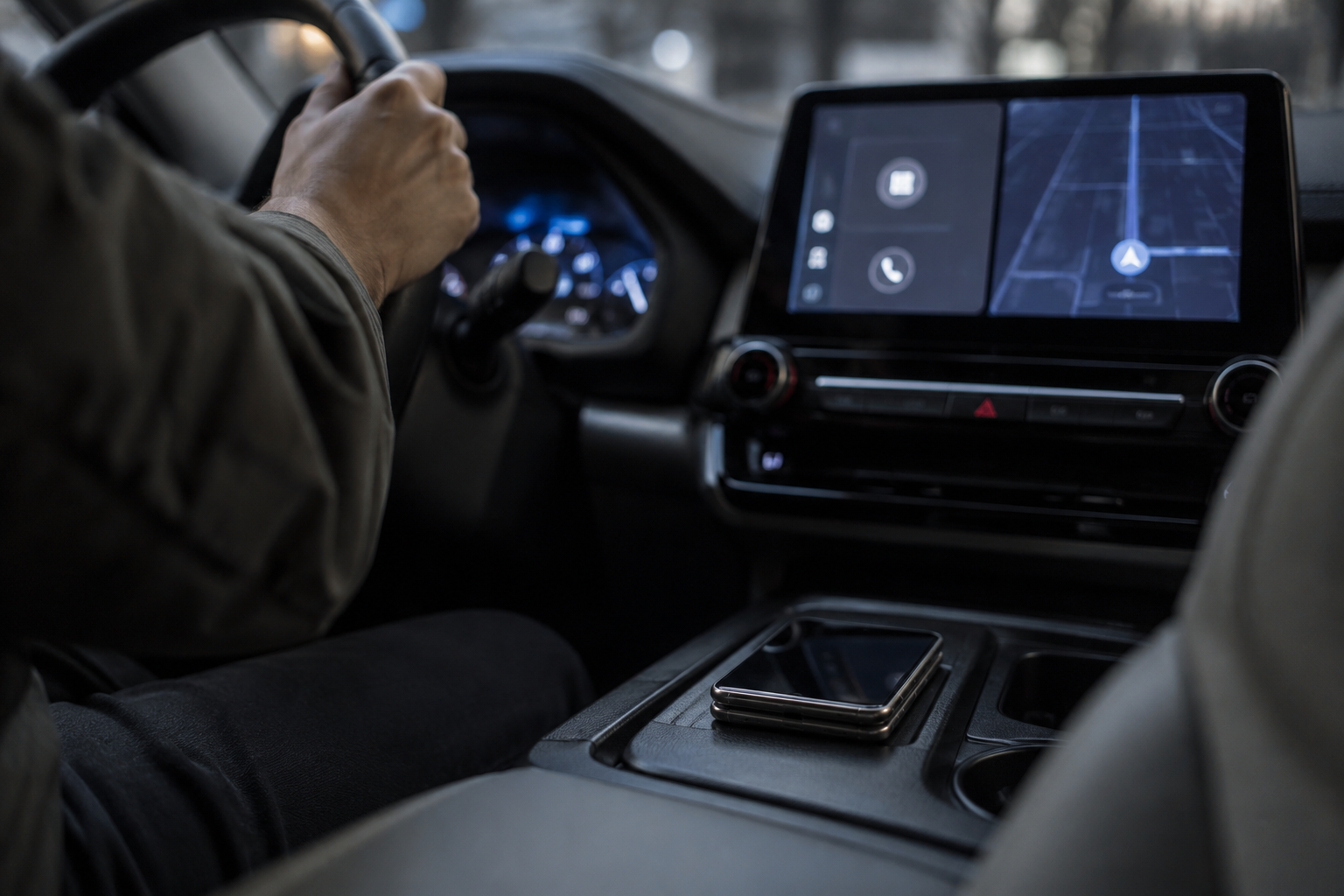
Buy a flagship foldable, plug it into your dashboard, ask Google's new artificial intelligence engine to dial your office, and your car will tell you to pry your phone apart while driving.
That is the operational breakdown hitting owners of modern clamshell smartphones running Android Auto. Drivers who keep their devices shut while connected to their vehicles find that outgoing voice calls flatline before the network connects. The software takes the voice command, processes the contact, and then stalls out entirely.
Incoming calls still work without friction. The car speakers ring, the steering wheel controls pick up the line, and the vehicle microphone transmits audio through the standard hands-free profile. That clean audio pass-through isolates the breakdown to outgoing voice orchestration rather than automotive Bluetooth pairing or cellular radio hardware.
The malfunction zeroes in on specific hardware running the latest operating system builds. Drivers using the Motorola Razr Ultra 60 and the Motorola Razr Ultra 70 have populated support queues with identical bug reports. Both of those devices run Android 16, pointing directly to a software permission conflict between the operating system, the closed-display state, and the primary voice agent.
Samsung hardware shares the exact same operational flaw. Galaxy Z Flip 7 owners running the same software combination report identical failures when trying to initiate hands-free phone calls from their dashboards. The cross-brand nature of the reports confirms this is not an isolated Motorola skin bug inside Moto OS.
Instead of dialing, the car infotainment display returns a written system prompt that defeats the entire legal and mechanical premise of hands-free driving:
"flip open to continue."
This breakdown is the downstream consequence of a platform migration Google orchestrated over the past sixteen months. Android 16 made its public debut in June 2025, bringing live notification updates, upgraded camera pipelines, and real-time scam detection features to consumer handsets. It also accelerated the integration of Gemini into core telephony processes.
Automotive software has operated under strict hands-free driving laws for over a decade. Systems like Android Auto were built specifically so motorists never have to interact with physical phone displays, mechanical hinges, or manual lock screens while operating a vehicle.
When early signs of this bug surfaced on a Samsung Galaxy Z Flip 7 in April, affected owners found a simple technical workaround. They went into system settings, demoted Gemini, and selected Google Assistant as their default system assistant.
Reverting to Google Assistant restored full outgoing call functionality instantly. Drivers could keep their foldables shut in a cup holder or pocket, tap the voice button on their steering wheel, speak a contact name, and complete the call through Android Auto without ever touching the device.
That fallback option no longer exists for modern hardware. On September 4, 2026, Google officially began terminating legacy Google Assistant access on phones, tablets, and companion devices capable of meeting the minimum hardware requirements for Gemini.
The deprecation policy converted what was once a temporary software conflict into an inescapable platform state. Devices with sufficient neural processing units and memory pools lost access to the stable voice infrastructure that preceded generative language models:
Android Authority first surfaced the issue after complaints jumped from enthusiast forums into mainstream consumer tech tracking. Threads detailing the malfunction have spread across Reddit, Google's issue trackers, and Motorola's official technical support boards.
The user documentation reveals uniform frustration over the loss of basic voice utilities. Drivers bought clamshell designs specifically to reduce device footprint and keep screens protected inside vehicle cabins. Forcing a mechanical display change while the vehicle is in motion violates basic automotive ergonomics.
Forum discussions show that early adopters blame the rush to insert conversational language models into standard operating system plumbing. Telephony is a solved software layer. Drivers do not need a multi-modal reasoning engine to process an outbound call to a contact list; they need an intent parser that triggers a basic dialer command.
One recurring criticism across user threads targets the absence of local setting overrides. When software engineers tether core automotive interfaces to cloud-heavy generative agents, edge cases break without clear recovery paths. Users who previously relied on deterministic speech engines find themselves trapped inside a beta-quality AI ecosystem that cannot execute fifteen-year-old voice tasks.
Motorola community managers have begun responding directly within customer threads. Company representatives are actively cataloging build versions, carrier configurations, and car infotainment firmware specifications to map out why the closed-hinge state terminates outgoing call intents.
Google support staff have also intervened on the official Android Auto issue tracker, requesting bug dumps from drivers operating Razr Ultra and Galaxy Z Flip hardware. Neither company has offered an official public explanation for why the dialer demands physical display authentication while connected to an authorized vehicle interface.
Software engineers at Google and Motorola face a narrow technical problem with serious liability implications. Forcing drivers to mechanically manipulate hardware to clear an artificial software prompt undermines hands-free compliance mandates across North America and Europe.
The root cause sits somewhere between Gemini's security requirements and Android Auto's display-state policies. When a clamshell shuts, the operating system locks the primary display and shifts system operations to the cover screen. Gemini appears to classify outgoing telephony as an action that requires primary screen authentication, ignoring the trusted vehicle environment established by the Android Auto session.
A resolution will require Google to push an update through either the Gemini app container, the Android Auto subsystem, or an Android 16 security patch. Until that update arrives, foldable owners have only two practical operating options:
Neither option aligns with why consumers purchase compact foldables in the first place. Clamshell buyers pay premium prices for hardware that stays closed and out of the way. Leaving an expansive, delicate folding display open to direct sunlight and cabin clutter compromises the physical durability of the panel.
The broader lesson hits the voice industry harder than Motorola or Google's bug triage teams. Upgrading consumer hardware from predictable, intent-based voice recognition to generative AI agents frequently breaks the simplest tools in the operating system. If Gemini cannot reliably dial a phone number from behind a closed screen, it does not matter how well it summarizes an inbox.
Swapping predictable, intent-based voice assistants for generative models introduces friction to battle-tested automotive workflows. When basic dialer commands break because an AI model cannot resolve a closed screen state, user trust evaporates. Automotive interfaces demand absolute operational reliability; voice systems that introduce cockpit distractions violate the fundamental safety requirements of hands-free driving legislation.
Reported off Engadget. Original reporting and analysis by Selma Ortiz for Vox Roboti.
Gemini cannot complete voice-directed outgoing calls when clamshell phones remain closed. The system prompts drivers to open their devices.
Reports highlight the Motorola Razr Ultra 60, Motorola Razr Ultra 70, and Samsung Galaxy Z Flip 7 running Android 16.
Yes. Incoming phone calls connect through vehicle speakers and microphones without issues while the device remains folded shut.
No. Google began removing legacy Google Assistant from eligible phones and tablets on September 4, 2026.
Neither company has released an official software update or patch yet, though both support teams are collecting telemetry.
The only reliable workaround reported by users is unfolding the clamshell phone so the main screen remains open.
Selma Ortiz · 16h ago · 4 min read

Cass Iverson · 2d ago · 5 min read

Selma Ortiz · 2d ago · 5 min read