
Voice Agents
Voice Agents Get Fired for the Same Reason Bad Staff Do
Devon Achebe · 14h ago · 5 min read
McDonald's is unplugging IBM's voice ordering system across more than 100 drive-thrus by July 26. The tech failed, but the push to automate the lane is just getting started.

By Nina Falco, Front-desk beat reporter · Reported off Voicebot.ai
Sold answering services to dentists. Now she reports on them.
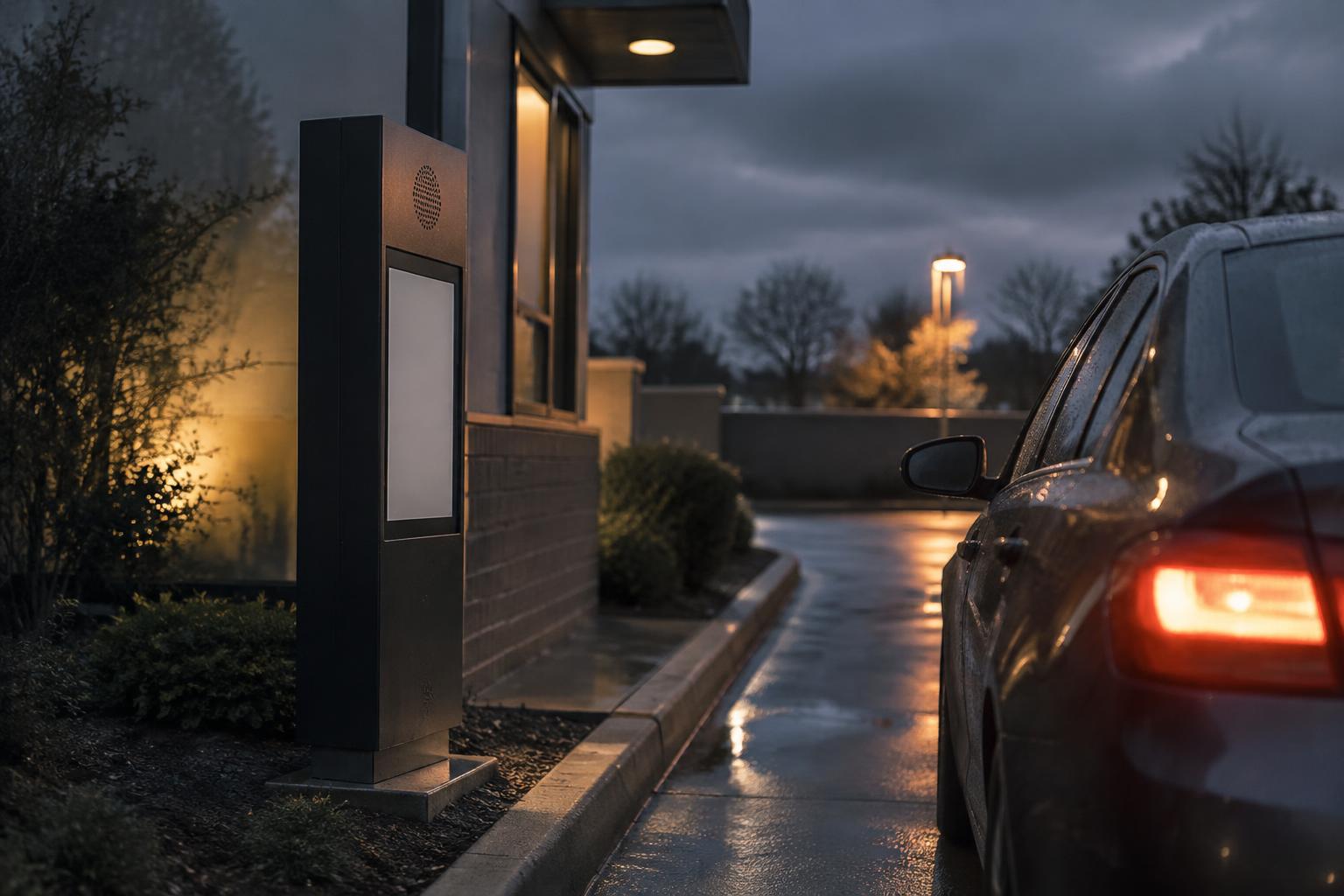
Pull up to an intercom box on a rainy Tuesday evening. Your diesel engine idles with a deafening rattle against the brick wall. Two kids in the backseat are screaming over french fries, the windshield wipers squeak across the glass, and you order a burger with no onions and extra sauce in a heavy regional drawl.
A teenager working the window handles that auditory disaster without flinching. They map the garbled audio to an item on a screen, punch two modifier buttons, and ask if you want an apple pie.
IBM's automated software, on the other hand, collapsed into a digital coma.
McDonald's spent years pretending that kind of brittle automation was the future of fast food. Now the bill has come due, the gear is getting ripped out of the lanes, and an enterprise tech giant is left standing outside in the rain.
Corporate headquarters sent an unambiguous directive to its store network: shut down the Automated Order Taker before July 26.
The shutdown hits more than one hundred test restaurants across the United States. In every one of those locations, franchise managers must disable the automated drive-thru lanes and put human crew members back on the order headsets.
The casualty in this purge is IBM. Big Blue had been the sole technology supplier tasked with making the voice system run reliably at scale.
Every operational metric pointed toward the same conclusion. When the voice engine failed to log an item accurately, ticket times ballooned. In the quick-service restaurant business, an extra thirty seconds at the speaker box ruins the throughput of an entire location.
Store managers faced mounting bottlenecks as cars backed up onto access roads. Instead of cutting crew hours, franchise operators had to keep human workers hovering by the terminal to catch software errors before orders reached the kitchen grill.
Headquarters finally pulled the plug. The pilot is dead, the contract is cancelled, and the hardware in the drive-thru lane is going dark.
This mess was five years in the making. In 2019, McDonald's decided it was going to build its own proprietary software empire. It purchased a speech recognition outfit called Apprente and christened the acquisition McD Labs.
Buying an engineering shop is easy. Maintaining real-time speech infrastructure while flipping burgers is impossible. By 2021, the front office realized that managing voice software was an expensive distraction from selling food, so it sold the entire McD Labs division to IBM.
IBM took the software and promised an automated revolution. For three years, that system manned the speaker posts at over one hundred drive-thrus, attempting to handle real customer interactions without human hands on the register.
The engineering under the hood was doomed from day one. The Apprente codebase relied on classical natural language understanding. That architecture depended on rigid semantic trees, strict phonetic dictionaries, and brittle intent classification.
That legacy approach functions well inside quiet test labs where engineers speak standard American English into noise-canceling microphones. It disintegrates in the wild.
When a classical speech recognizer misses a syllable, it does not guess based on context. It stalls. That fundamental engineering flaw caused the system to register dozens of unwanted items or freeze entirely, forcing motorists to scream corrections into a piece of painted sheet metal.
The internal memo sent from McDonald's management to franchise operators attempted to soften the blow of a public technological failure.
"While there have been successes to date, we feel there is an opportunity to explore voice ordering solutions more broadly. After thoughtful review, McDonald’s has decided to end our current partnership with IBM on AOT."
Strip out the corporate public relations language. The message means something far more brutal: the product does not work in production, customers are furious, and continuing the contract is burning cash.
Franchisees had grown tired of defending the system to irate motorists. Viral videos mocked the software as it added hundreds of dollars of unwanted food to order tallies while baffled drivers tried to cancel them.
IBM defended its work by framing the three-year pilot as an operational baseline. The company maintained that the deployment proved automated speech processing could function in demanding enterprise settings, and insisted it would continue marketing similar automated voice products to other restaurant chains.
Silicon Valley observers drew the wrong lesson immediately, framing the decision as proof that automated drive-thrus are an impossible dream. That reading misses the entire technological shift happening across the industry.
McDonald's is not giving up on automating the drive-thru lane. The corporate office is simply swapping out obsolete tools.
Seven months before firing IBM, McDonald's inked an expansive strategic alliance with Google Cloud in December 2023. That enterprise agreement outlined a comprehensive modernization plan across corporate computing assets and restaurant operations, with generative foundation models at the center of the roadmap.
The economics of the restaurant industry make automation inevitable. State-mandated minimum wage hikes continue to drive up retail operating costs. Staffing the morning and late-night drive-thru windows remains a persistent human resources challenge for every major fast-food operator.
Legacy speech recognition failed because it lacked flexibility. Generative voice systems operate on entirely different mathematical principles. Large multi-modal models absorb chaotic audio, parse heavy accents, accommodate mid-sentence corrections, and maintain conversational context without crashing.
Before the next-generation voice systems can deploy to the lanes, engineers must resolve structural hurdles:
IBM took the public loss, but the automated speaker post is not going anywhere. McDonald's is merely clearing out old technical debt before installing a modern engine.
Fast food drive-thrus generate the bulk of quick-service revenue, and rising store wages make manual order-taking an expensive bottleneck. Dumping IBM does not signal a retreat from voice automation. It marks the formal burial of first-generation, rule-based speech software that could not survive outside the lab. The chains that crack generative, low-latency voice models will trim seconds off lane times and slash store overhead. The chains that cling to brittle legacy software will watch their customers drive across the street.
Reported off Voicebot.ai. Original reporting and analysis by Nina Falco for Vox Roboti.
The software made too many errors. It stumbled on accents, background racket, and custom orders, slowing down the drive-thru line.
More than one hundred corporate pilot locations across the United States tested the Automated Order Taker over three years.
Franchise operators were ordered to turn off the IBM voice system no later than July 26.
No. The chain is dumping outdated voice software while expanding an enterprise partnership with Google Cloud to test modern generative AI.
McDonald's bought startup Apprente in 2019, formed McD Labs, and then sold the unit to IBM in 2021.
It used older, rigid natural language understanding. It could not handle road noise, heavy accents, or people changing their minds mid-sentence.
Devon Achebe · 14h ago · 5 min read

Nina Falco · 4d ago · 7 min read

Ray Dalton · draft · 5 min read