Voice AI
Amazon Silently Kills Alexa Voice Switching for Older Echo AUX Jacks
Selma Ortiz · 20h ago · 4 min read
Firmware strings discovered in HomeView 27.2 reveal Apple is preparing to turn its smart display into an active surveillance node via HomeKit Secure Video.

By Cass Iverson, Synthetic voice correspondent · Reported off The Verge
Audio engineer turned reporter. Hears the artefacts you do not.
Someone finally crawled through Apple code and found the obvious.
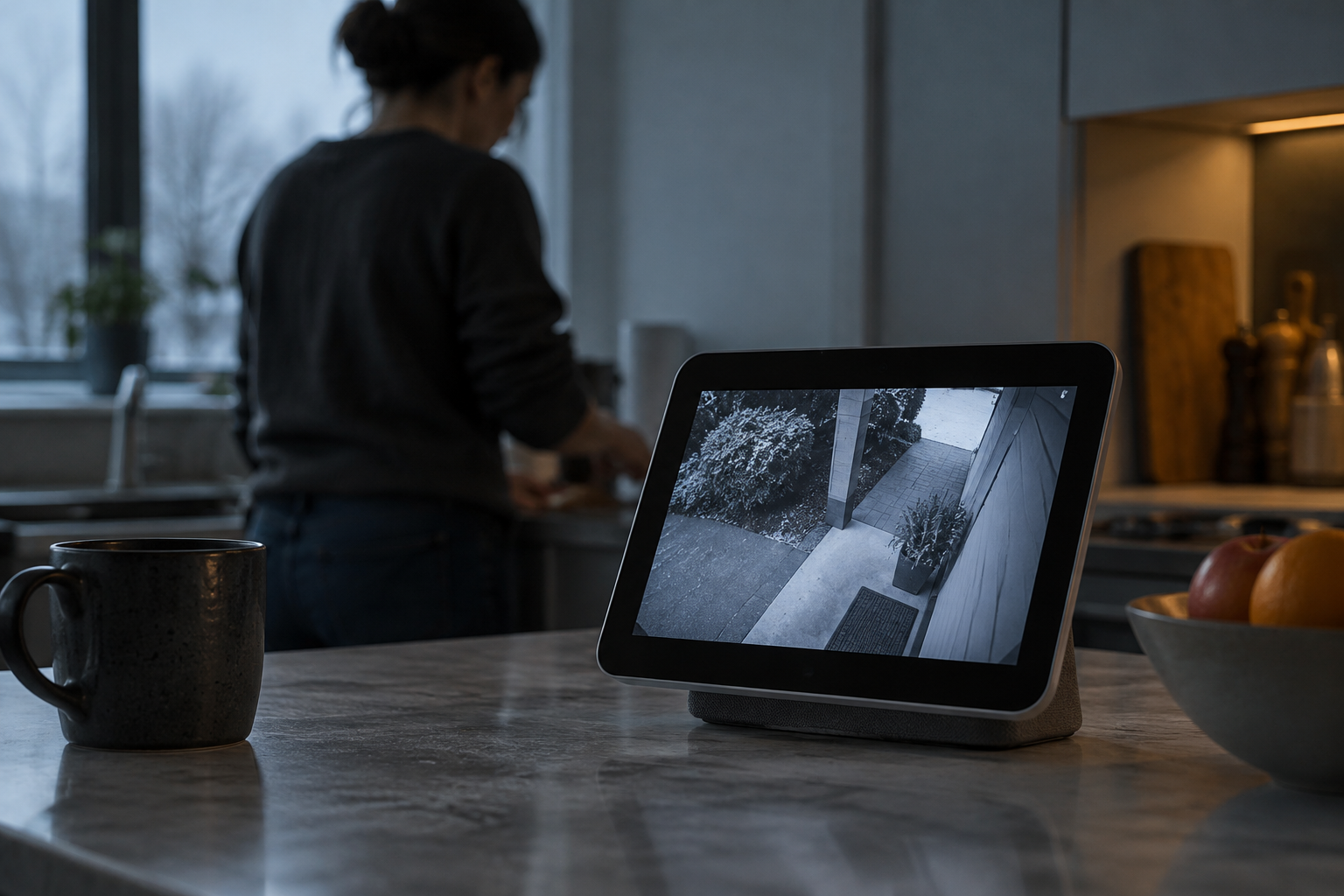
A Reddit sleuth operating under the handle pdfu tore down the firmware for HomeView version 27.2. Inside the software binaries sat an unreleased operating mode designed to convert the desktop screen into a networked indoor sentry. The software strings lay out a full surveillance profile driven by HomeKit Secure Video, complete with automated motion sensing, encrypted live feeds, and local video capture.
One string leaves zero room for corporate spin. It spells out the pitch in plain English:
"Your HomeView can be used as a security camera with HomeKit Secure Video."
That single line reveals Apple's plan to flip an idle countertop display into a household surveillance asset. The software architecture detailed in build 27.2 locks remote visibility strictly to authenticated members of the Apple Home ecosystem. Nobody outside your designated family group gets access to the raw glass.
The system enforces physical feedback whenever that lens goes hot. The code dictates that the hardware must flash a visible status indicator and emit an audible chime the second a household user dials into the live stream or initiates a recording. You cannot silently spy on the living room while someone chops onions.
Every administrative adjustment triggers an immediate digital trail. If an authorized user changes motion sensitivity, disables recording, or alters access rights, version 27.2 pushes a broadcast alert to every single enrolled device in the home. The software splits surveillance policies into three strict operational states:
Apple shipped the original HomeView with an obvious operational hole. The screen hit the market with an integrated camera intended for FaceTime calls and hand gestures, but the hardware stayed blind to general room surveillance. Customers spent hundreds of dollars on a dedicated display only to place a third-party accessory from Eve or Logitech right next to it on the shelf.
The delay was calculated rather than accidental. Cupertino built its entire modern identity around aggressive privacy marketing, running billboards that treat personal data like an inviolable vault. Handing users a camera that points directly into their breakfast nook without foolproof operational guardrails would have wrecked that corporate posture overnight.
Amazon and Google took the sloppy path years ago. The Amazon Echo Show and Google Nest Hub entered living rooms with aggressive surveillance modes that normalized unannounced drop-in video and constant sensor telemetry. Both platforms weathered public backlash when customers realized how easily family members could snoop on shared rooms without clear optical or audio warnings.
Apple opted for the slower path of HomeKit Secure Video. The protocol offloads computer vision tasks to local edge hardware, specifically an on-premise Apple TV or HomePod mini, instead of shipping unencrypted pixel streams to an offshore server. That edge computing requirement keeps facial recognition and object classification restricted to the homeowner's local silicon.
Storage constraints also shaped this development cycle. HomeKit Secure Video runs on top of paid iCloud storage tiers, giving subscribers ten days of rolling footage without counting against their base file quotas. Integrating a smart display directly into that pipeline required Apple to calibrate thermal envelopes so the screen could process video streams around the clock without cooking its logic board.
Smart home power users greeted the leak on Reddit with vindication. Early adopters who bought the hardware on day one spent months complaining about the artificial software barrier that locked the lens into teleconferencing duty. For that contingent, build 27.2 simply delivers the baseline utility they paid for upfront.
Privacy hardliners within the enthusiast forums are taking a more defensive stance. They point out that a smart display sits on desks, bedside tables, and kitchen counters, spots where consumers rarely mount dedicated security hardware. An audible chime helps, but an active camera inside an intimate domestic perimeter creates domestic tension that an exterior doorbell camera never produces.
Industry analysts note the defensive timing of the software strings. By expanding the utility of existing hardware through build 27.2, Apple builds an operational moat against dedicated smart camera vendors who charge separate monthly subscriptions for cloud clips. A household already paying for an Apple One bundle has zero incentive to pay fifteen dollars a month to a third-party security brand.
Apple itself has maintained total silence on the 27.2 code dump. The company routinely seeds system frameworks months ahead of public rollouts to test low-level APIs across internal test fleets. Corporate spokespeople offered no comment on when, or even if, the configuration strings will surface in a public settings menu.
When Apple flips the server switch on build 27.2, the internal smart camera market will contract fast. Budget hardware vendors relying on cheap indoor lenses will lose their most affluent customer segment overnight. Apple customers will not purchase standalone plastic cameras when their existing voice display can handle the intake for free.
Physical display placement will force consumers to make weird compromises. Security cameras belong on high walls and ceiling corners to capture wide room entries. HomeView displays belong at arm's reach on low counters next to power outlets and fruit bowls. Users who activate this mode will end up with wide-angle security feeds mostly framing toaster ovens, cutting boards, and the backs of cereal boxes.
Domestic friction will follow the software update into consumer households. Because version 27.2 alerts everyone when settings change, housemates will find themselves in silent configuration wars over when the lens is active. Teenagers and roommates will not tolerate a desktop machine that chimes every time a parent checks if the back door is locked.
The broader play here is ambient context for Apple's voice intelligence. A display that tracks motion states, room vacancy, and sleep routines does not just collect surveillance clips. It feeds temporal presence data into Siri, allowing the voice assistant to know whether you are standing in front of the counter before it decides to speak out loud.
Turning interactive displays into security sensors destroys the wall between communications hardware and surveillance gear. Apple spent years pitching privacy while letting Amazon take the heat for invasive indoor cameras. Activating this capability inside HomeView instantly validates countertop surveillance as an industry standard. It locks users tighter into iCloud subscriptions and proves that voice displays cannot survive as mere talking radios. To justify their counter space, they must watch the room.
Reported off The Verge. Original reporting and analysis by Cass Iverson for Vox Roboti.
Code in HomeView version 27.2 reveals an unreleased security camera mode powered by HomeKit Secure Video.
No. The software restricts live video and recorded clips strictly to authenticated members of the home.
Yes. The hardware will display a visible indicator light and play an audible chime when someone watches or records.
Yes. Version 27.2 sends a notification to all household members whenever Secure Video settings are changed.
The software includes customizable detection, streaming, and recording preferences for home, away, and sleep states.
No. Apple has not commented on the firmware discovery or confirmed when the feature will launch.
Selma Ortiz · 20h ago · 4 min read

Cass Iverson · 2d ago · 5 min read
Selma Ortiz · 2d ago · 5 min read