Voice AI
Amazon Silently Kills Alexa Voice Switching for Older Echo AUX Jacks
Selma Ortiz · 16h ago · 4 min read
Apple agreed to a $250 million class action settlement over delayed Apple Intelligence features, paying U.S. iPhone buyers between $25 and $95 per device.

By Selma Ortiz, Product and labs writer · Reported off Engadget
Tests every model on ugly, real calls. Writes reviews vendors dread.
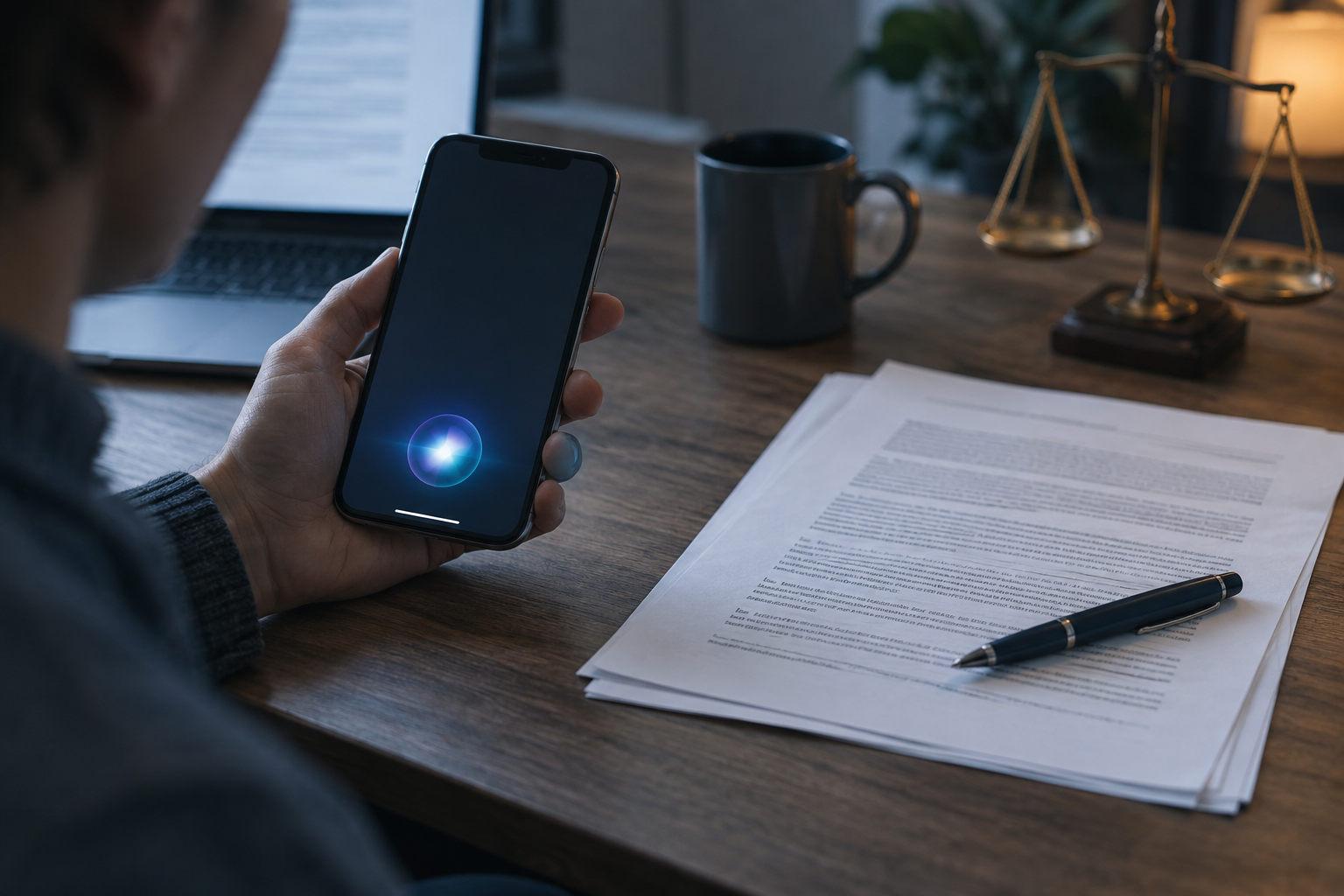
Selling high-ticket consumer hardware on software features you have not actually finished building is a time-honored Silicon Valley hustle. Apple pushed that hustle past the breaking point, and now the bill has arrived. The company agreed to deposit $250 million into a settlement fund to resolve a nationwide class action lawsuit over its bungled Apple Intelligence rollout.
The lawsuit targeted a simple corporate offense. Millions of consumers bought premium hardware under the direct impression that advanced voice intelligence features demonstrated onstage would arrive within months. Instead, they waited years. While Apple agreed to the payout, the company formally denied all legal wrongdoing and refused to admit guilt in the settlement papers.
The $250 million headline figure does not go straight into consumer pockets. Before any buyer sees a cent, the gross fund will be gutted by deductions for court-approved attorney fees, administrative processing costs, and applicable taxes. Whatever cash remains will be split among eligible claimants who submit valid paperwork before the claims portal shuts down on December 21, 2026.
Approved claimants will receive an estimated base payment of $25 per qualified device. That cash transfer could scale up to a maximum cap of $95 per device if the total volume of submitted claims ends up being unusually low. If claims surge, the per-device payout will drop below that $25 baseline.
To see any money, you must be the original purchaser of an eligible iPhone bought brand-new in the United States between June 10, 2024, and March 29, 2025. Purchases made for personal or commercial use qualify, provided the buyer can prove ownership. Apple and the settlement administrators have restricted the eligibility list strictly to modern devices with the silicon required to run the delayed system:
Geographic boundaries are absolute. If you bought an identical handset in the United Kingdom, Canada, France, or anywhere else on the planet, you are completely excluded from the settlement fund. The payout applies exclusively to hardware bought inside the United States.
Consumers filing claims must use the official portal at SmartphoneAISettlement.com. Claimants holding a pre-assigned Claim ID and PIN can log straight into the interface. Anyone without those credentials must register manually and select whether they are filing as an individual or an enterprise.
Individual filers must supply basic personal contact data, their payment route of choice—options include direct deposit via ACH, paper check, PayPal, or Venmo—and their device serial number, found under Settings > General > About. Filers must then sign an electronic declaration under penalty of perjury certifying that every statement provided is accurate.
Corporate entities face a heavier administrative burden. Business claimants must download and complete a standardized claim spreadsheet. That sheet requires the enterprise to log every claimed hardware serial number, the exact corporate Apple Account ID tied to the unit, and the active telephone number assigned to the hardware. Enterprise payouts are restricted to ACH transfers or physical checks.
The mess began on June 10, 2024, at Apple's Worldwide Developers Conference. Executives took the stage to announce Apple Intelligence, presenting a comprehensive overhaul of Siri that could understand personal context, manage on-screen actions, and execute cross-app voice workflows. The marketing presentation promised consumers that these voice and computational capabilities would debut on supported hardware later that year.
Consumers took the bait. Between June 10, 2024, and March 29, 2025, buyers purchased millions of high-margin iPhones specifically to access the voice-driven operating environment shown in keynotes and television commercials. But behind the scenes at Cupertino, the software was nowhere near ready for daily use.
Late 2024 arrived with none of the promised next-generation Siri capabilities in sight. Apple pushed the release timeline into 2025, then missed those revised internal deadlines as well. When the company finally shipped an update in fall 2025, it contained only an anemic fraction of the original feature set.
The full scope of Apple Intelligence promised in June 2024 did not actually materialize on customer hardware until the release of iOS 27 in fall 2026.
That two-year delay broke the technical leadership inside Apple. John Giannandrea, the senior vice president recruited from Google in 2018 to steer Apple's machine learning and voice strategy, began his formal retirement process during the crisis. Giannandrea's departure marked the quiet failure of Apple's attempt to build an entirely proprietary voice AI stack capable of matching leading foundation models.
To rescue its voice roadmap, Apple surrendered its absolute independence. The company executed a partnership agreement with Google, routing deep intelligence queries and assistant workloads to Google Gemini. Apple had to rely on its fiercest platform rival to deliver the voice processing speed and semantic reasoning it had promised customers two years earlier.
The legal filing exposed a deep rift between corporate marketing language and software engineering reality. The plaintiffs argued that Apple ran an aggressive promotional campaign designed to accelerate an upgrade supercycle for the iPhone 15 Pro and iPhone 16 lineups. By promising that conversational voice intelligence would ship shortly after hardware launch, Apple induced purchases that buyers otherwise would not have made.
Apple's legal defense held a rigid line throughout settlement negotiations. The company maintained that complex software development involves unpredictable technical hurdles and that promotional materials never formed a binding delivery contract. By settling for $250 million, Apple bought legal peace without admitting that its launch marketing crossed the line into consumer fraud.
Litigation observers point out that the class action bar walks away as the primary winner. Legal fees and administrative expenses will consume tens of millions of dollars directly off the top of the $250 million pool before any consumer receives a $25 check. For Apple, a $250 million penalty represents less than three days of net operating cash flow.
International consumer advocates have voiced irritation over the geographic firewall. European and Asian buyers paid identical premium prices for iPhone 16 models marketed with identical voice AI features. Yet those consumers receive zero compensation, stranded by jurisdictions with weaker class action mechanisms.
The clock is running for eligible owners. The portal at SmartphoneAISettlement.com will close to all submissions at midnight on December 21, 2026. Any claim submitted on December 22 or later will be summarily rejected by the settlement administrator.
Once the filing window closes, administrators will cross-reference every submitted serial number against Apple's internal hardware activation databases. Any claim listing an iPhone bought outside the June 10, 2024, to March 29, 2025, window will be flagged and disqualified. Units purchased through unauthorized gray-market channels or submitted by second-hand owners will be stripped from the registry.
Final distribution calculations will occur only after the audit completes. If claim rates follow typical consumer class action patterns—where less than ten percent of eligible victims file paperwork—claimants could see their payouts climb toward the $95 maximum ceiling. If claim volume spikes, the payout will slide toward the $25 floor.
This payout also imposes a lasting regulatory tax on Apple's voice marketing. The era of Tim Cook demoing aspirational Siri workflows two years ahead of production code is over. With Google Gemini now embedded in the iOS 27 voice architecture and class action lawyers circling every keynote, Apple will be forced to ship working voice code before using it to sell silicon.
Selling next-generation voice assistants through staged keynotes has officially turned into a legal hazard. Apple's $250 million check proves that consumer patience for voice vaporware is dead. Hardware makers can no longer juice hardware upgrade cycles with synthetic voice demos that require two years, executive departures, and emergency partnerships with Google to actually deliver. Moving forward, conversational AI roadmaps will face the same legal scrutiny as battery life and safety specs.
Reported off Engadget. Original reporting and analysis by Selma Ortiz for Vox Roboti.
Approved claimants will receive an estimated $25 per eligible phone. That payout may rise up to $95 if few people file claims, or decrease if claim volume is high.
You must submit your claim online by December 21, 2026. Submissions after that date will be denied.
Eligible models include the iPhone 15 Pro, iPhone 15 Pro Max, iPhone 16, iPhone 16e, iPhone 16 Plus, iPhone 16 Pro, and iPhone 16 Pro Max.
Your device must have been purchased brand-new in the United States between June 10, 2024, and March 29, 2025.
No. The settlement applies strictly to qualifying devices purchased inside the United States. International buyers are excluded.
You must file directly through the official settlement website at SmartphoneAISettlement.com.
Individuals can choose direct deposit via ACH, paper check, PayPal, or Venmo. Businesses must use ACH or physical checks.
Selma Ortiz · 16h ago · 4 min read

Cass Iverson · 2d ago · 5 min read
Selma Ortiz · 2d ago · 5 min read