Voice AI
Amazon Silently Kills Alexa Voice Switching for Older Echo AUX Jacks
Selma Ortiz · 16h ago · 4 min read
A year inside Amazon's Alexa Plus overhaul reveals faster home automation, sharp latency cuts, and a screen experience ruined by aggressive display ads.

By Tobias Reinholt, Policy and security writer · Reported off The Verge
Fraud analyst turned policy writer. Deepfakes, consent, regulators.
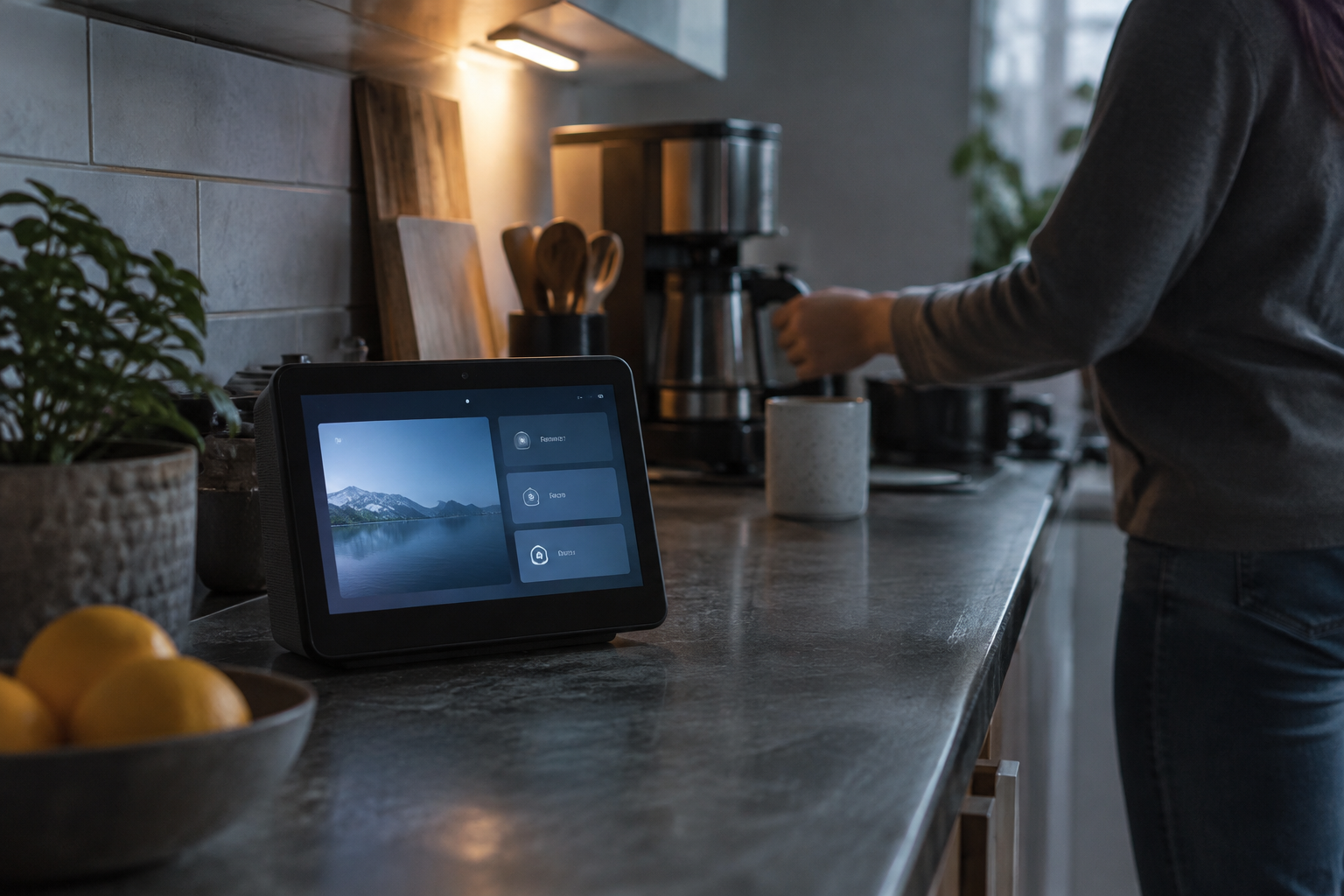
Your smart display wants to make you cry before it sells you a sofa.
Amazon pushed its generative voice overhaul, Alexa Plus, into early access in July 2025 before executing a general rollout in February 2026. By October 2026, twelve solid months of living with the system settled the score on whether large language models belong on kitchen counters. The assistant finally understands messy, human speech. It executes multi-step commands without choking, and it cut command latency down from painful 10-to-15-second pauses in 2025 to a functional three-to-five-second response window today.
You no longer need to speak like a mid-level programmer issuing SQL queries. You can tell the hardware you feel cold, or tell it to brighten the room, and it adjusts the connected hardware without demanding exact device labels. More importantly, the system finally parses compound operational strings in a single breath. A homeowner can rattle off instructions to lock the front door, turn off the interior lights, lower the thermostat, and dispatch a robot vacuum to clean the ground floor without hearing conversational pushback or stalling out halfway through the sequence.
Yet the system remains split down the middle. While the software controls hardware reliably, its memory for human routine stumbles constantly. It regularly forgets household identities and misplaces family school routines, while cluttering Echo Show screens with aggressive ad placements.
Alexa Plus is the best smart home assistant tested for routines and kitchen queries, but attempts to make it a personal assistant remain underbaked.
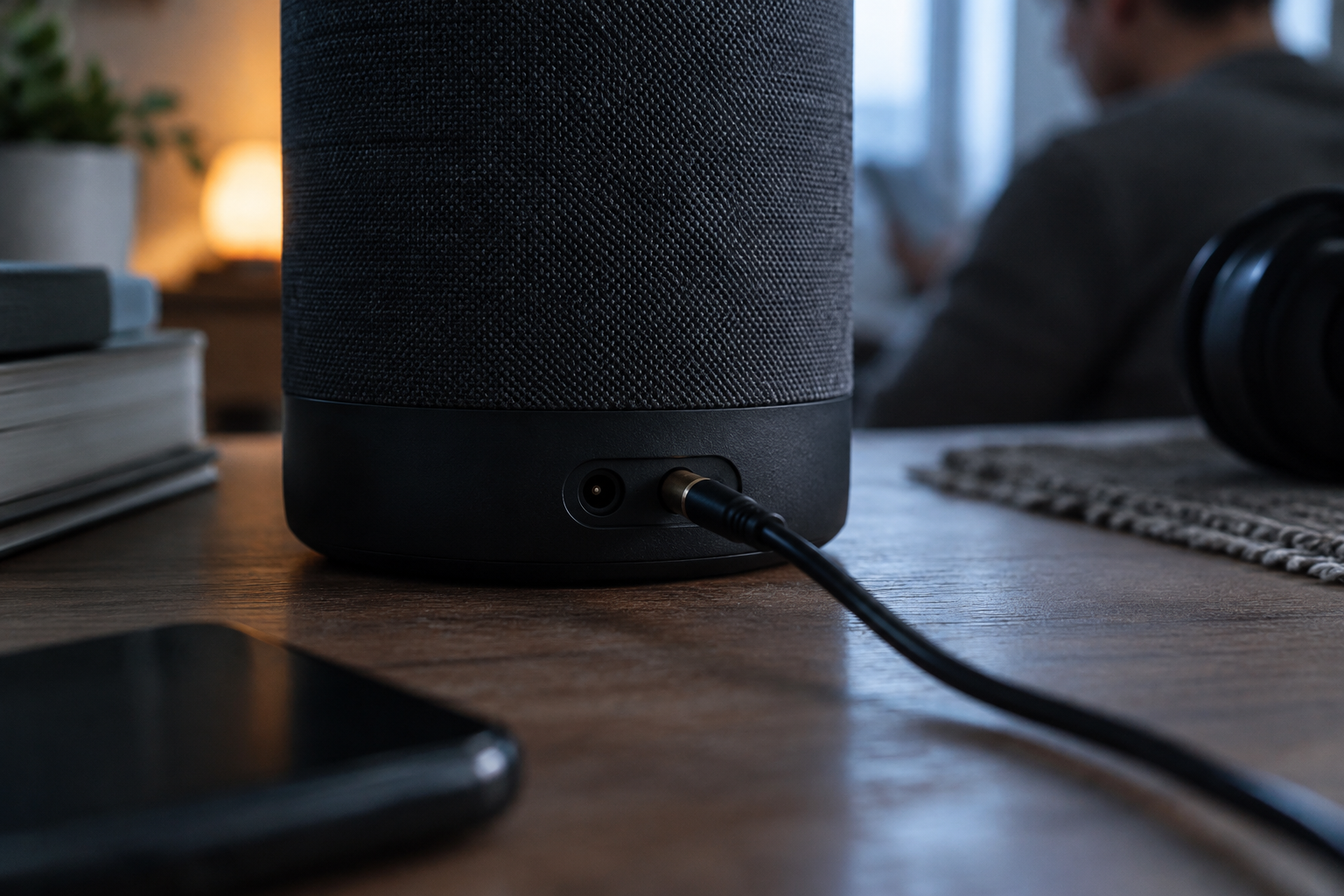
Hardware choice dictates whether the assistant feels like a technical upgrade or an intrusive billboard. Amazon positioned the Echo Dot Max as its flagship Alexa Plus smart speaker. Operating without a screen, the Max sidesteps the commercial clutter that plagues the Echo Show 8, Echo Show 11, and Echo Show 15. On those displays, nostalgic family photo montages assembled by the assistant's memory algorithms frequently cut straight into full-panel advertisements for brown leather recliners.
Amazon built this voice overhaul to turn a notorious money-losing division into an active revenue engine. Accessing Alexa Plus across your Echo hardware requires an active Amazon Prime subscription or a standalone fee of $19.99 every month for unlimited use. Amazon offers free access through Fire TV units, the Alexa smartphone application, and the Alexa.com desktop interface, but puts hard usage caps on those non-hardware channels.
Geographic availability remains split into two distinct tiers:
The technical upgrade required a total system reset for existing smart setups. Users testing the system over the 2025-to-2026 rollout window discovered that older routine configurations broke entirely under the new generative engine. Getting the model to handle domestic hardware cleanly meant tearing down legacy automations and rebuilding device groups from scratch.
Latency was the early killer. During the July 2025 testing phase, basic commands routinely hung in limbo for over ten seconds while cloud models processed natural phrasing. Amazon shaved that processing lag down by late 2026, making simple weather lookups and timer setups behave like local hardware functions rather than sluggish remote computations.
Personality choices also demanded immediate user intervention. Amazon shipped Alexa Plus with an overly talkative conversational demeanor that chimed in with unprompted commentary regarding grocery choices. The company had to implement a dedicated Brief mode, giving users a way to muzzle the model's conversational chatter during simple shopping list updates.
Long-term household testing highlights a stark divide between ambient home automation and contextual personal assistance. The generative platform excels at fluid kitchen workflows. The software can take a smartphone snapshot of a handwritten recipe sent through the mobile app, reformat the cooking instructions, pull up the details on an Echo Show 11, and manage simultaneous unit conversions between grams and ounces without losing track of the cooking steps.
Hardware sensor integrations show similar progress. Ring security cameras feeding into Echo Show hardware allow users to ask when a delivery arrived, prompting the system to scrub video feeds, play the matching clip, and verify package contents for Amazon purchases. Yet that mechanical competence makes its administrative failures stand out harder. When handling personal logistics, the platform still loses context between tasks, occasionally dumps active recipe steps, and falls behind dedicated kitchen calendar hardware like the Skylight Calendar when organizing multiple conflicting family schedules.
Industry reviewers who tracked the model from its 2025 preview into late 2026 agree that Amazon fixed voice parsing at the expense of interface peace. The Verge pointed out that the software represents the strongest smart home coordinator on the market, but emphasized that unskippable smart display advertising actively ruins the hardware experience. Users who rely on Echo Show units for photo displays find their personal memories weaponized as lead-ins for retail promotions.
That balance pushes power users toward headless speakers. The Echo Dot Max and standard Echo Dot units deliver the conversational flexibility of the generative backend without turning living rooms into retail display kiosks.
Amazon no longer operates in an isolated smart home ecosystem. Google rolled out its Gemini for Home software updates earlier in 2026, while Apple scheduled the full integration of Apple Intelligence into the Apple Home platform for October 2026. Both competitors treat their AI platforms as value additions to existing phone and tablet ecosystems, rather than gatekeeping core voice hardware behind a $19.99 monthly subscription.
That difference creates an uncomfortable calculation for device owners. Prime subscribers absorb Alexa Plus as a bundled perk, but households outside that delivery orbit face a recurring fee for hardware they already bought. If Amazon continues pushing sponsored product placements across Echo Show screens while charging monthly access fees, screen-based Echo hardware faces heavy consumer attrition.
The real test over the next twelve months centers on autonomous task completion. Voice assistants spent a decade acting as glorified kitchen timers. Alexa Plus proved that large language models can handle compound physical tasks, parse natural language commands, and bridge disconnected smart home standards. Now Amazon has to prove its AI engine can manage personal context without wiping user data, dropping calendar entries, or forcing retail ads into private homes.
Amazon demonstrated that generative models solve natural language smart home control, but turned its display hardware into an ad billboard to pay for the compute. Locking voice capabilities behind a $19.99 monthly fee while plastering hardware with retail promotions alienates early adopters. With Google Gemini for Home and Apple Intelligence embedding generative voice tools directly into their operating systems without separate hardware subscriptions, Amazon's paywalled ambient computing strategy risks losing the living room.
Reported off The Verge. Original reporting and analysis by Tobias Reinholt for Vox Roboti.
Alexa Plus requires an Amazon Prime subscription or a $19.99 monthly fee for unlimited Echo use. Web, mobile app, and Fire TV access remain free with usage caps.
It runs on Echo smart speakers, Echo Show displays, Fire TV, the Alexa mobile app, and through web browsers at Alexa.com.
Commands and general queries execute in three to five seconds. Early test versions in 2025 took between 10 and 15 seconds.
Yes. It can lock doors, turn off lighting, change thermostat targets, and run robot vacuums in a single sentence without follow-up wake words.
Enable the built-in Brief personality mode. This stops the assistant from adding unprompted commentary when you add items to lists or set household timers.
Amazon runs full-screen sponsored advertisements directly on Echo Show displays, rotating retail product promotions alongside personal photo albums and calendar reminders.
Full access operates in the US and Canada. Early access testing includes the UK, Germany, France, Italy, Spain, Austria, Mexico, Brazil, Australia, and India.
Selma Ortiz · 16h ago · 4 min read

Cass Iverson · 2d ago · 5 min read

Selma Ortiz · 2d ago · 5 min read