Synthetic Voice
Cloudera Hooks Neo4j and Cartesia Into Its Enterprise Data Engine
Cass Iverson · 5d ago · 5 min read
Studios are watching automated ADR crash into legal firewalls. Under AB 2602 and the 2026 SAG-AFTRA pact, lazy voice buyout clauses are officially dead.

By Selma Ortiz, Product and labs writer · Reported off Respeecher
Tests every model on ugly, real calls. Writes reviews vendors dread.
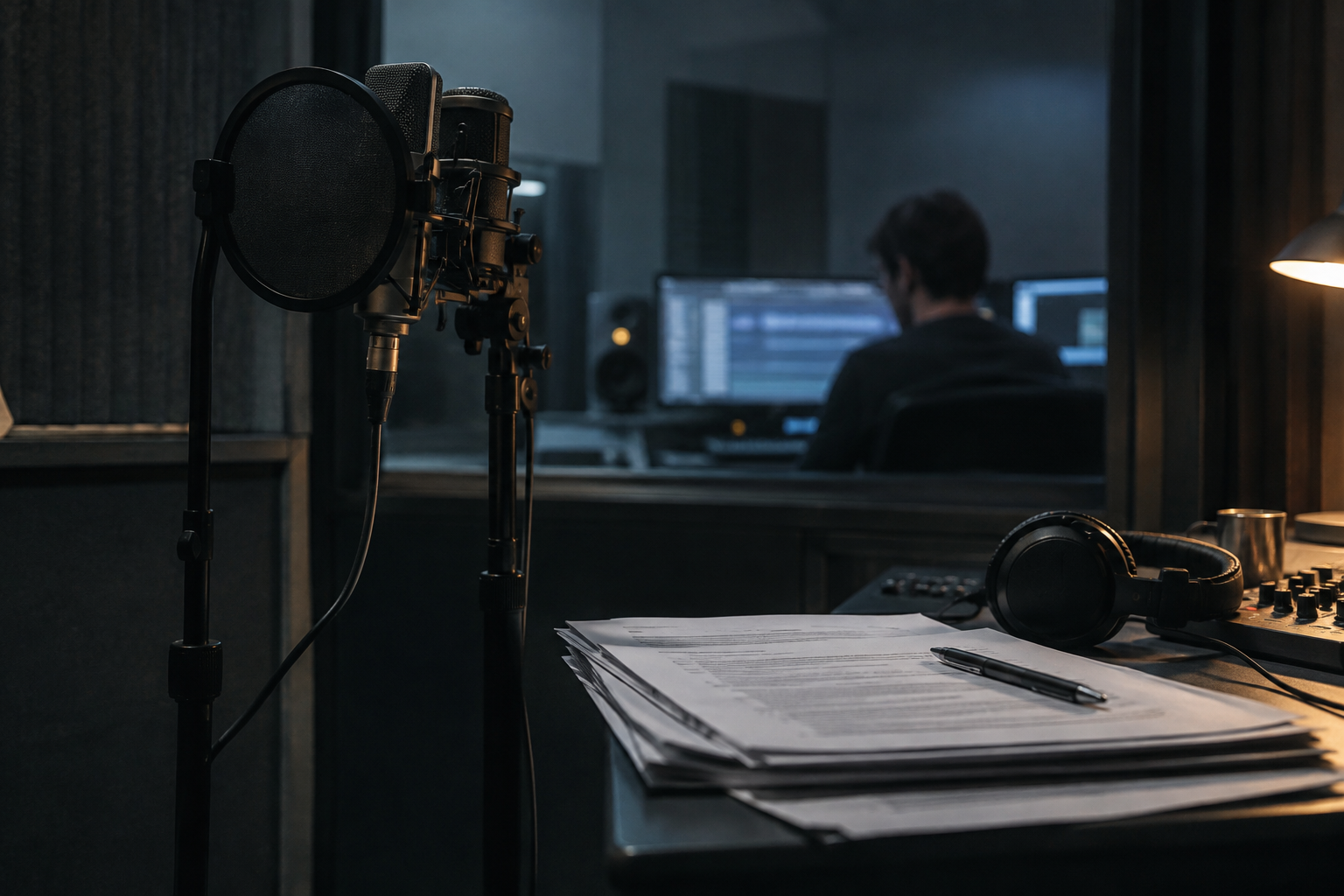
You finish the mix. The synthesized dialogue sounds clean enough to fool the actor's mother. You export the stems, queue the delivery pipeline, and prepare to bill the client. Then production legal drops an anvil through your ceiling. They want to know the exact paragraph where the voice talent signed off on machine learning synthesis.
You point them to standard language in the talent agreement. The old rider covers name, voice, and likeness in all media now known or hereafter devised, across the universe, in perpetuity. Legal laughs in your face and pulls the delivery off the server.
That scenario is not hypothetical. Ukrainian synthetic voice provider Respeecher just laid out the mechanics of this operational wrecking ball for film and television producers. Studios are generating replacement lines with neural networks, assuming their standard release forms protect the final cut. They do not.
Legacy contracts are failing quality control checks at every major distributor. Studio business affairs desks now treat broad, perpetual audio grants as legal liabilities rather than bulletproof assets. If an actor did not sign an explicit, project-level addendum naming synthetic vocal generation, the lines cannot ship.
The perpetual, universe-wide voice buyout is dead, buried, and actively toxic to distribution pipelines.
Production legal departments are halting project deliveries days before air dates. They are discovering that automated dialogue replacement tracks generated by neural models violate both state statutes and union rules. Fixing the problem requires ripping out synthesized tracks or paying emergency settlement fees to voice talent who hold all the leverage.
For decades, entertainment lawyers relied on omnibus release forms. You paid an actor their day rate, slipped a four-page boilerplate document across the folding table, and walked away with perpetual rights to every grunt, whisper, and sigh captured on set. That system worked when editing meant splicing tape, cutting tracks in Pro Tools, or running basic spectral repair.
It broke the moment machine learning began turning five seconds of clean reference audio into infinite new performances. Two major regulatory sledgehammers dismantled the old boilerplate framework.
The first blow came from Sacramento with California Assembly Bill 2602. The statute targets legacy language directly. Under AB 2602, a contract clause allowing a synthetic digital replica to replace a performer's live work is legally unenforceable if three conditions exist:
If your agreement hits those three tripwires, the grant is void. The state treats that perpetual grant as if it never existed.
The second blow came from labor negotiations. The SAG-AFTRA 2026 TV/Theatrical Agreement took effect on July 1, 2026, and runs through June 30, 2030. It puts strict operational boundaries around synthetic vocal work, splitting digital voice assets into two distinct regulatory buckets.
The first bucket covers employment-based digital replicas. These are voice models created in direct connection with an actor's specific employment on a project. If you bring an actor in for principal photography, run an audio scan, or sample their production dialogue to generate unperformed lines, you have created an employment-based replica. Under the 2026 contract, producers must have an articulable business reason before scanning an actor at all. Furthermore, audio captured from set footage without an explicit scan still qualifies as an employment-based replica.
The second bucket governs independently created digital replicas. These are synthetic voices built from archival tracks, past projects, or pre-existing voice models the performer developed on their own time. You cannot slip these models into a background scene for free.
Under the 2026 union terms, an independently created replica demands clear consent alongside a specific description of use. It also triggers mandatory compensation: at least the standard day performer rate, plus residuals whenever a live performance would have earned them. Reusing an employment-based replica in another project, whether that is a video game spin-off, a mobile ad, or a theatrical sequel, requires an entirely new negotiation with fresh compensation.
Entertainment law firm Davis Wright Tremaine flagged the exact language that AB 2602 was written to destroy. The firm highlighted standard legacy clauses where a player consents to simulated voice and likeness use without additional pay across all technologies now known or hereafter developed. Davis Wright Tremaine noted that state legislators specifically used that exact paragraph during statutory negotiations as the prime example of an unenforceable provision.
Respeecher, which provides neural voice cloning tools for Hollywood studios, has instituted its own operational firewall. The company mandates direct, written consent from every voice owner before processing audio assets, completely bypassing studio-level omnibus releases.
Production legal teams are telling producers that vague promotional permissions no longer protect marketing deliverables. Marking a contract for general promotional purposes does not authorize localized trailers, interactive video game avatars, social media soundbites, or synthetic voice-over lines. Talent lawyers are aggressively auditing post-production stem deliveries to ensure background vocal tracks match physical call sheets.
Union negotiators have made it clear that consent must be unbundled. Voice talent representatives are rejecting agreements that hide synthetic recreation clauses inside standard ADR riders. Attorneys representing A-list performers now strike any language permitting vocal cloning unless the production establishes an escrow fund for synthetic downstream usage.
Independent producers complain that the operational cost of tracking voice data provenance threatens post-production schedules. Audio engineers who used to fix muffled boom mic recordings with quick synthetic patches are now forced to clear every spectral replacement through legal counsel.
Production teams must rebuild their talent agreements around explicit addendums. Respeecher's analysis details seven mandatory contractual boundaries that entertainment lawyers are now implementing across every voice engagement:
The regulatory pressure will increase further next year. The 2026 SAG-AFTRA agreement contains an explicit requirement for synthetic foreign language dubbing. For productions commencing principal photography on or after July 1, 2027, studios must obtain distinct, express consent before using a performer's synthetic voice replica to translate their performance into another language.
If your studio is sitting on audio assets captured under pre-2026 boilerplate, those stems are ticking time bombs. Post-production supervisors can no longer treat audio recordings as general training data or infinite pick-up line generators.
You either document explicit consent with specific use descriptions, negotiate union-compliant rates, and isolate your raw recordings from foundation model training pipelines, or you explain to your distributor why your finished picture cannot legally clear distribution.
The wild west era of grabbing an actor's voice track and turning it into an infinite, unpaid ADR generator is closed. Studios that cut legal corners to rush automated lines through post-production will find their distribution pipelines paralyzed by statutory claims and union grievances. Voice is no longer a passive visual asset you buy by the hour. It is a strictly compartmentalized digital performance license. If you do not have line-item paperwork for every synthetic syllable, your project does not ship.
Reported off Respeecher. Original reporting and analysis by Selma Ortiz for Vox Roboti.
No. California AB 2602 renders broad, perpetual simulated-voice grants unenforceable if they replace live work without explicit descriptions and legal counsel.
It is a synthetic voice model built from recordings or scans captured specifically during an actor's employment on that particular production.
It is a synthetic voice asset created outside the production, either from archival material or pre-existing voice models owned by the actor.
Under the 2026 SAG-AFTRA agreement, studios must pay at least the standard day performer rate plus applicable residuals.
No. Valid contracts explicitly exclude mixing, mastering, noise reduction, and pitch or timing adjustments that generate no new vocal performance.
Producers must obtain distinct consent for AI voice dubbing on productions starting principal photography on or after July 1, 2027.
No. Modern compliance frameworks strictly prohibit feeding raw actor audio into general foundation models without separate, explicit written authorization.
Cass Iverson · 5d ago · 5 min read

Selma Ortiz · 6d ago · 5 min read
Selma Ortiz · 7d ago · 6 min read