
Synthetic Voice
Cloudera Hooks Neo4j and Cartesia Into Its Enterprise Data Engine
Cass Iverson · 5d ago · 5 min read
Sassuolo forward Cristian Volpato just handed his voice, likeness, and biometric data to an AI agency. Athletes are realizing that if they don't sell their clones, someone else will steal them.

By Selma Ortiz, Product and labs writer · Reported off Guardian AI
Tests every model on ugly, real calls. Writes reviews vendors dread.
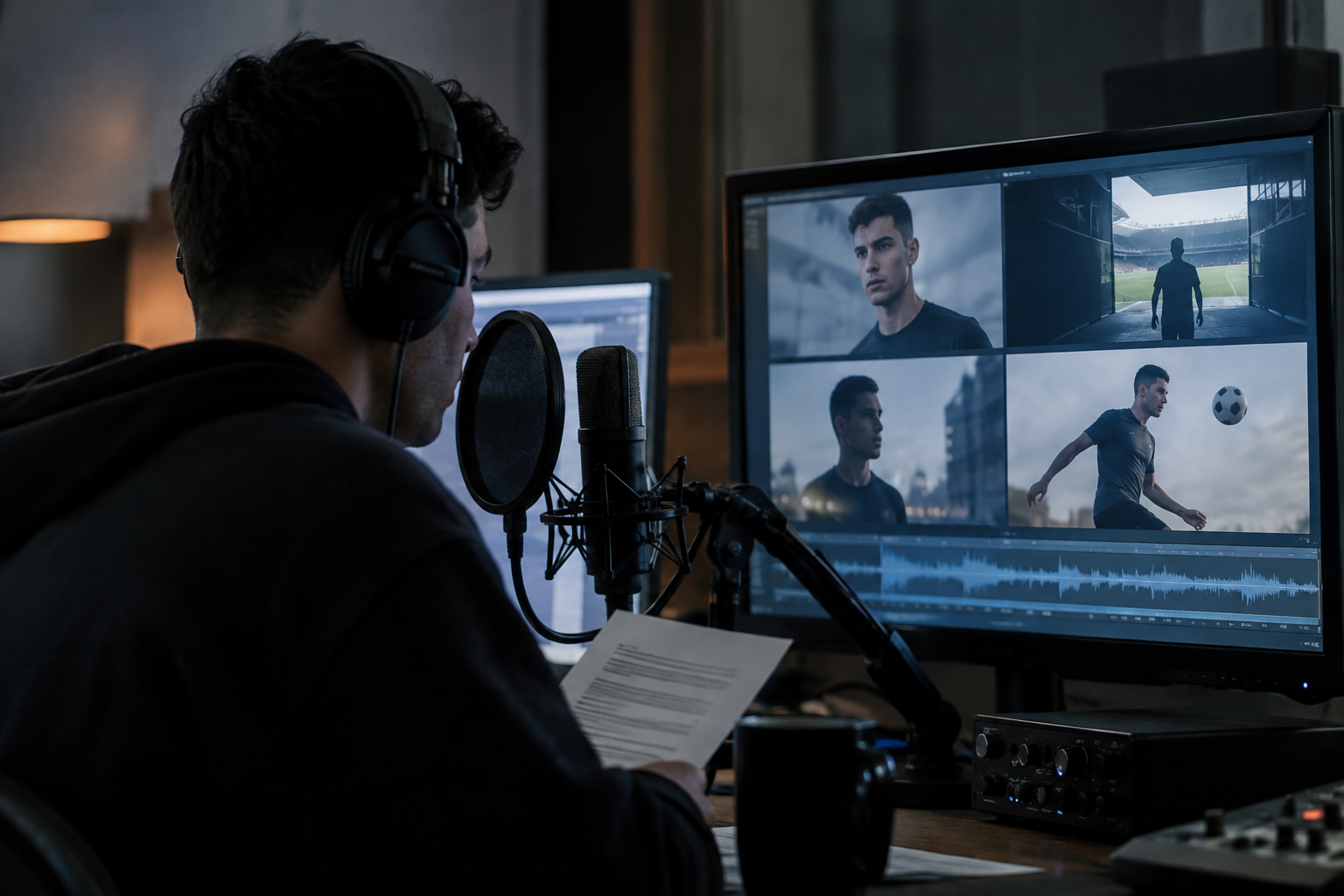
Cristian Volpato does not have time to shoot your shampoo commercial. The twenty-two-year-old attacking midfielder spends his workweek running drills for Italian Serie A club Sassuolo, trying to keep his starting spot and dodge hamstring tears. When practice ends, he wants to see his family, not stand under hot studio lights reciting ad copy for three dozen takes. So he outsourced the job to a software avatar.
In mid-September, the Australian international signed an exclusive agency deal with Callandor, a California company that builds and rents out synthetic duplicates of professional athletes. Callandor did not just take a few promo photos. The contract hands the agency exclusive commercial control over Volpato's digital likeness, synthetic voice profile, biometric metrics, and raw on-pitch performance data.
Callandor sets up the brand sponsorships, delivers the generated media, collects the checks, and takes an agency cut off the top. The company also patrols the internet to shut down unauthorized deepfakes of Volpato circulating on social feeds. If a sportswear brand wants Volpato to endorse a boot launch in three languages he cannot speak, the software does it while the real man sleeps in Emilia-Romagna.
The agency was founded in February by Michael Fisk, a former studio executive with resumes at Sony Pictures and MGM. Fisk is not pitching low-resolution video filters. His firm builds digital twins designed to operate uninterrupted around the clock across global ad campaigns, audiobooks, and interactive fan products.
Volpato's rollout video showed the player walking through an echoey atrium in soccer boots before splitting into four separate digital copies. One clone appears on a billboard in a team kit. Another puts on a tailored gray suit in front of a mirror. A third poses in white linen by the Twelve Apostles on the Australian coast. Every frame was computed without camera crews, physical flights, or scheduling headaches.
Fisk has already signed Chelsea midfielder Jorginho and American competitive sailor Chris Poole to the same roster. The agency treats athletic talent the way Hollywood treats intellectual property: as an asset class to be decoupled from the fragile human body that created it.
Sports licensing used to be simple. You put an athlete on a cereal box, paid their agent a flat fee, and bought sixty seconds of broadcast time. Generative AI broke that entire economic pipeline within twenty-four months.
Bookmakers, broadcasters, and fringe media brands now generate synthetic clips of famous players inside text-to-video tools in seconds. Earlier this month in Australia, the Australian Football League stepped in to order wagering giant Sportsbet to pull AI-generated player clips from circulation. The AFL Players Association lodged a formal complaint after members saw simulated versions of their faces running in commercial betting promotions without consent or compensation.
The traditional labor contracts across major Australian sporting leagues do not contain a single clause addressing artificial intelligence rights. Team agreements cover broadcast footage, jersey sponsorships, and standard media appearances. They say nothing about who owns a player's vocal cadence, their running biomechanics, or their synthetic clone.
Big names saw the writing on the wall earlier this year. In June, Brazilian star Neymar licensed his digital likeness to a Chinese-owned entertainment platform, which pumped out short synthetic video clips throughout the FIFA World Cup cycle. Volpato's Sassuolo deal marks the shift from one-off publicity stunts by mega-stars to institutional, career-long agency representation for emerging players.
Domestic broadcasters have already begun normalizing the look of synthetic athletes. Earlier this month, Australian test cricketer Travis Head fronted an advertisement for streaming platform Kayo. In the spot, Head joked that his digital twin had already completed the filming schedule, right before the broadcast cut to an AI-generated rendering of the cricketer riding a giant flying kookaburra.
The joke landed because viewers already expect television screens to be fake. But for the athlete whose income depends on selling access to their image, unmanaged synthetic media represents an existential pay cut.
Fisk frames the entire venture as basic labor economics. Professional athletes have short earning windows, punishing training regimens, and finite physical endurance:
"Cristian is constantly training. He's constantly out there playing. If he has any free time whatsoever, he'll probably want to spend it with family and friends, so he loses on a lot of opportunities on brand placements. A synthetic twin could be used 24-7, year-round by brands."
Fisk is building interactive products that put synthetic voices into real-time consumer software. He is pitching instructional apps where a virtual Volpato watches user training footage through a phone camera and delivers immediate tactical corrections using the player's synthetic voice, telling an amateur ballplayer why their touch is off. Callandor is also pitching foreign-language audiobook narration, using the player's licensed voice model translated automatically into global markets.
In Sydney, rival startup Hyperknown is chasing the exact same business model. Hyperknown chief executive William Saunders argues that athletes are signing AI rights deals as a defensive counter-punch:
Saunders points directly to the Sportsbet crackdown as the warning shot for the entire industry. As Saunders puts it, AI can create an infinite volume of digital content, but it cannot synthesize an individual's legal consent. The commercial value of a digital clone lives entirely in whether the real human signed off on the usage.
Legal authorities warn that current intellectual property frameworks do not automatically protect players. Jonathan Harlen, an intellectual property law scholar at Southern Cross University, points out that existing copyright statutes require demonstrable human authorship. If a third-party creator generates an athlete's voice or face entirely through an algorithm without sampling a protected master recording, standard copyright law offers zero immediate protection.
The sports management industry is about to split into two camps: agents who negotiate synthetic rights, and agents who lose their clients to tech firms.
Player unions across Europe, Australia, and North America are preparing to rewrite collective bargaining agreements. The next round of player contract negotiations will center on whether clubs hold the rights to run digital twins of their rosters in club-sponsored commercials after players transfer or retire. If Sassuolo sells Volpato's physical registration to another club next season, does Callandor's synthetic image pipeline follow the player, or will team sponsors demand ongoing access to the digital twin?
Advertisers also face an untested pricing test. Marketing agencies will happily pay top dollar for a physical celebrity to sit at a launch dinner. Will corporate marketing directors pay six-figure sums for synthetic voice tracks and computer-generated video clips that cost Callandor pennies to render on a server stack? Fisk admits the current roster campaigns are still operating in pilot phases.
The technical barrier to entry has evaporated. As Fisk noted, synthetic video and voice output rendered for mobile screens has crossed the threshold where ordinary consumers can tell the difference between a studio shoot and an algorithmic clone. When visual and vocal fidelity is solved, the only thing left to trade is the signature on the contract.
Athletes like Volpato are setting the template for every high-profile performer. If you have a recognizable face, a signature voice, and an audience that tracks your movements, you can no longer afford to leave your digital identity unmanaged. You either hire an agency to monetize your clone, or you spend the rest of your career sending cease-and-desist letters to gambling platforms.
The sports industry is watching the separation of human labor from commercial brand rights. When an athlete licenses their voice model, biometric data, and image to a third-party broker, they transform their physical identity into infinitely scalable software. For voice AI, this marks the end of simple voiceovers and the start of biometric estates: managed rights catalogs that license dynamic, interactive personas across international advertising, streaming services, and training apps.
Reported off Guardian AI. Original reporting and analysis by Selma Ortiz for Vox Roboti.
Volpato granted Callandor exclusive commercial rights over his digital image, synthetic voice model, biometric profile, and athletic performance data.
Callandor was founded in February by Michael Fisk, a former entertainment executive from Sony Pictures and MGM.
Callandor currently manages digital twins for Brazilian soccer player Jorginho and American competitive sailor Chris Poole alongside Volpato.
The Australian Football League acted after the players' union complained that gambling advertisements used synthetic player likenesses without player consent.
No. Legal expert Jonathan Harlen noted copyright requires human authorship, leaving pure algorithmic reproductions outside standard statutory copyright protection.
Callandor plans to produce localized foreign-language audiobooks and interactive training software where Volpato's voice gives real-time tactical feedback.
Cass Iverson · 5d ago · 5 min read

Selma Ortiz · 6d ago · 5 min read

Cass Iverson · 8d ago · 5 min read