
Synthetic Voice
Cloudera Hooks Neo4j and Cartesia Into Its Enterprise Data Engine
Cass Iverson · 5d ago · 5 min read
ElevenLabs turned synthetic speech from a robotic parlor trick into a billion-dollar juggernaut. Here is how their voice engine actually works.

By Selma Ortiz, Product and labs writer · Reported off Voice vendor watch
Tests every model on ugly, real calls. Writes reviews vendors dread.
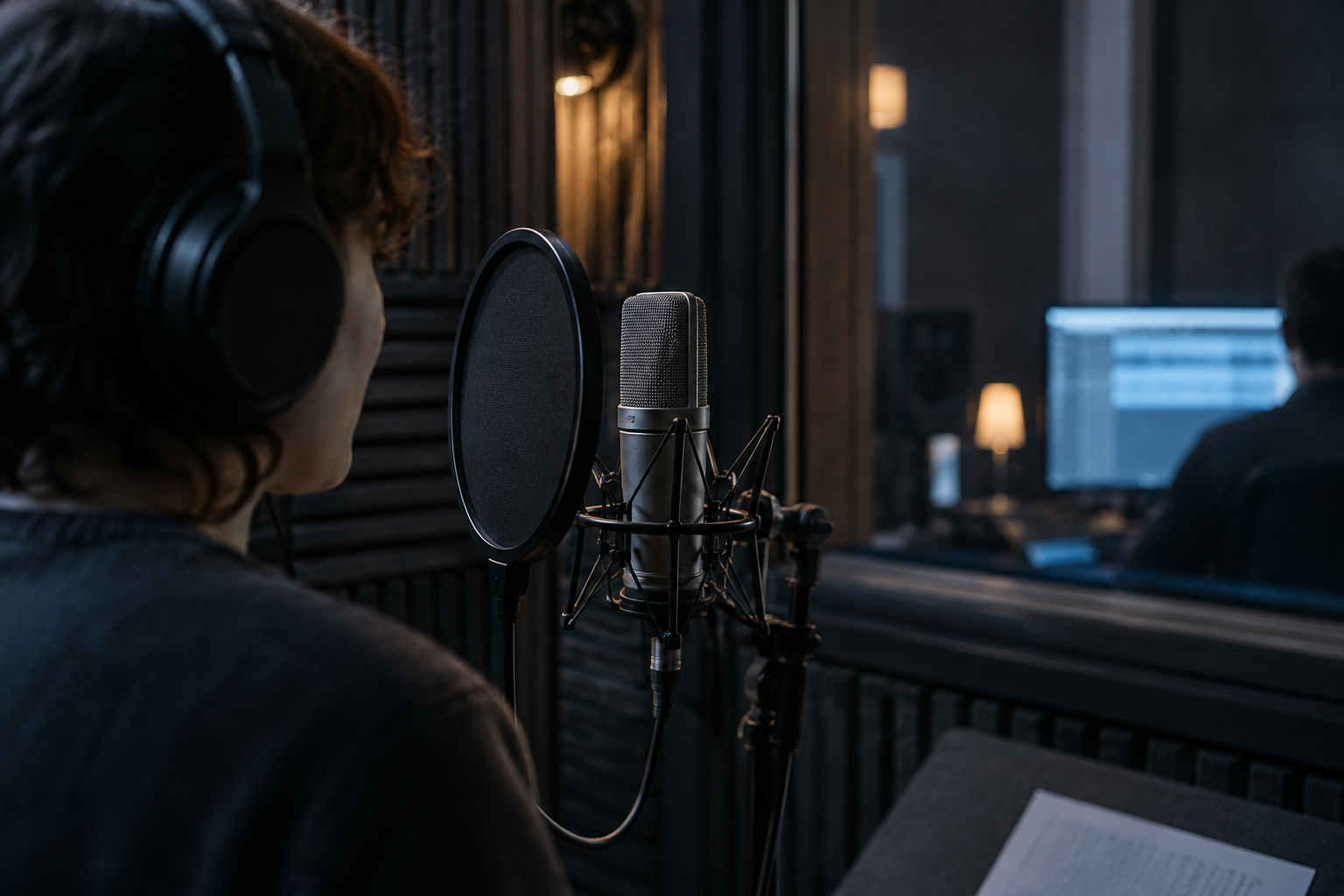
Your ears are no longer a reliable judge of reality. Turn your back for five seconds, and an algorithm clones your cadence, steals your vocal fry, and delivers a monologue you never uttered.
Tech publication Built In published an exhaustive autopsy on ElevenLabs. The diagnosis is simple. ElevenLabs took speech synthesis, an area long cursed by uncanny robotic cadence, and turned it into an infrastructure monopoly.
Most software vendors treat text-to-speech like an accessibility checkbox. They license cheap API calls from legacy cloud providers, tweak the pitch, and hope customers do not notice the metallic hum. ElevenLabs took the opposite gamble. They built deep neural networks designed to capture emotional subtext, breath patterns, and pacing. That decision turned synthetic speech into an aggressive product layer that every media production house, call center, and game studio now pays to integrate.
Voice is not an interface. Voice is personal identity, and ElevenLabs proved identity can be mapped to an array of floating-point numbers.
Here is how their current feature stack breaks down for end users:
The company now processes billions of spoken characters every month across audiobooks, game development, video localization, and enterprise telephony. What began as an experimental side project has forced standard cloud audio providers to confront their own obsolete speech engines.
ElevenLabs did not invent neural audio. DeepMind dropped WaveNet in 2016, proving that raw waveform generation could produce natural speech. But Big Tech spent half a decade sitting on research papers, terrified of reputational damage, deepfake controversies, and copyright fights.
Founders Piotr Dabkowski and Mati Staniszewski saw the vacuum. Dabkowski had spent years at Google as a machine learning engineer. Staniszewski brought deployment experience from Palantir. They were childhood friends who grew up in Poland, annoyed by the absurd voiceover dubbing on American films where a single male voice droned flatly over every actor. They incorporated ElevenLabs in 2022 with a specific objective: eliminate the dubbing gap by preserving emotional delivery across language barriers.
Their timing was lethal. Generative text models exploded in late 2022, creating massive demand for high-grade voice outputs. A conversational bot running on an advanced language model feels broken if the spoken reply sounds like a 1998 GPS navigation unit. Developers needed audio output that matched the fluid output of the underlying models.
Investors responded with open checkbooks. ElevenLabs secured seed backing from Credo Ventures and Concept Ventures, followed quickly by a Series A co-led by Nat Friedman and Daniel Gross. By January 2024, Andreessen Horowitz led an $80 million Series B round, pushing ElevenLabs to an official valuation of $1.1 billion. The startup joined the unicorn ranks in under two years of commercial existence.
That rapid ascension exposed friction. Bad actors immediately weaponized the beta platform to clone public figures for political hoaxes and celebrity impersonations. Early 2023 saw 4chan users pushing cloned audio of actors reading offensive propaganda. The company had to scramble, locking instant voice cloning behind paid verification tiers, rolling out the AI Speech Classifier detection tool, and banning offending accounts. Security was not an academic exercise. It became an operational survival metric.
The creative sector remains locked in open hostility over the startup's growth. Professional voice actors watch ElevenLabs with acute anxiety. The Screen Actors Guild and the American Federation of Television and Radio Artists (SAG-AFTRA) fought major contract battles to enforce strict consent and compensation terms over synthetic replicas. Many working voice artists view voice cloning as digital wage theft packaged as technological disruption.
ElevenLabs attempts to appease performers with its Voice Library payout program. Actors upload verified samples, license their synthetic persona to third-party developers, and receive passive cash payouts based on character usage volume. The company frames this as a democratization of passive income. Union advocates counter that it trades sustainable performance work for fractions of a cent per API call.
On the enterprise side, sentiment leans entirely pragmatic. Product leaders at media companies look at traditional recording budgets—studio rental, engineer fees, voice actor day rates, multiple editing revisions—and see pure margin waiting to be reclaimed. Game studios rely on synthetic voices to draft dialogue during production sprints before paying talent for final cuts, while indie studios skip the human recording booth altogether.
Engineers praise the latency reductions. Early neural text-to-speech models suffered latency spikes running into seconds, killing conversational realism. ElevenLabs dropped API response latency down to a few hundred milliseconds, making synthetic voice viable for interactive agents. The tech community views the company as the default layer for conversational AI audio, even as competitors race to undercut their pricing.
The voice synthesis sector is heading into a brutal phase of platform consolidation. Hyperscalers like Microsoft, Amazon, and Google will not let a standalone startup capture the audio runtime for enterprise AI agents. Every major cloud provider is overhauling its speech portfolio with low-latency neural architectures designed to undercut standalone API pricing.
Open-source speech models represent another immediate threat. Open-weights audio models like XTTS and Bark continue to narrow the audio realism gap. While running private weights requires GPU capacity, privacy-sensitive healthcare systems and financial institutions will accept a slight drop in voice warmth if it prevents proprietary voiceprints from crossing a public vendor API.
ElevenLabs is countering by moving up the workflow stack. They are not remaining a raw API company. The release of their mobile Reader app, designed to turn long-form text and documents into customized personal audiobooks, signals an aggressive push into consumer media distribution. Simultaneously, their turnkey Conversational AI agent platform allows businesses to deploy customer service voicebots with zero developer infrastructure.
Regulation will dictate how fast this market expands. The European Union's AI Act mandates clear labeling for all synthetically generated media, while individual US states are drafting strict biometric voice protection statutes. ElevenLabs faces the challenge of scaling a global voice marketplace while proving that every waveform leaving its clusters carries verifiable lineage, explicit licensing, and bulletproof attribution.
Speech synthesis used to sound like a microwave reading directions. ElevenLabs changed the physics of the market by making synthetic audio impossible to distinguish from human speech over a phone line or media feed. That dynamic turns voice from an artisan trade into a marginal software cost. Companies that rely on human vocal talent or legacy IVR systems must rebuild their stacks around low-latency neural audio or explain why they are paying human overhead for an automated commodity.
Reported off Voice vendor watch. Original reporting and analysis by Selma Ortiz for Vox Roboti.
It is an AI audio research startup providing human-grade synthetic speech, voice cloning, and translation APIs.
Ex-Google machine learning engineer Piotr Dabkowski and former Palantir deployment strategist Mati Staniszewski founded it in 2022.
Instant Voice Cloning requires under one minute of audio, while Professional Voice Cloning requires hours of studio recordings.
Actors license their verified synthetic voices in the Voice Library and earn royalties based on total character generation volume.
Yes. Multilingual synthesis maps the original speaker's vocal tone and pacing across dozens of target foreign languages.
It is venture-backed, reaching a $1.1 billion valuation after an $80 million Series B round in January 2024.
The vendor locks cloning behind paid subscriptions, verifies accounts, and runs a public AI Speech Classifier tool.
Cass Iverson · 5d ago · 5 min read

Selma Ortiz · 6d ago · 5 min read
Selma Ortiz · 7d ago · 6 min read