Synthetic Voice
Cloudera Hooks Neo4j and Cartesia Into Its Enterprise Data Engine
Cass Iverson · 5d ago · 5 min read
Five Oscar-winning productions used synthetic voice tech to fix what human vocal cords couldn't deliver. The secret is out: nobody replaced the actors.
By Selma Ortiz, Product and labs writer · Reported off Respeecher
Tests every model on ugly, real calls. Writes reviews vendors dread.
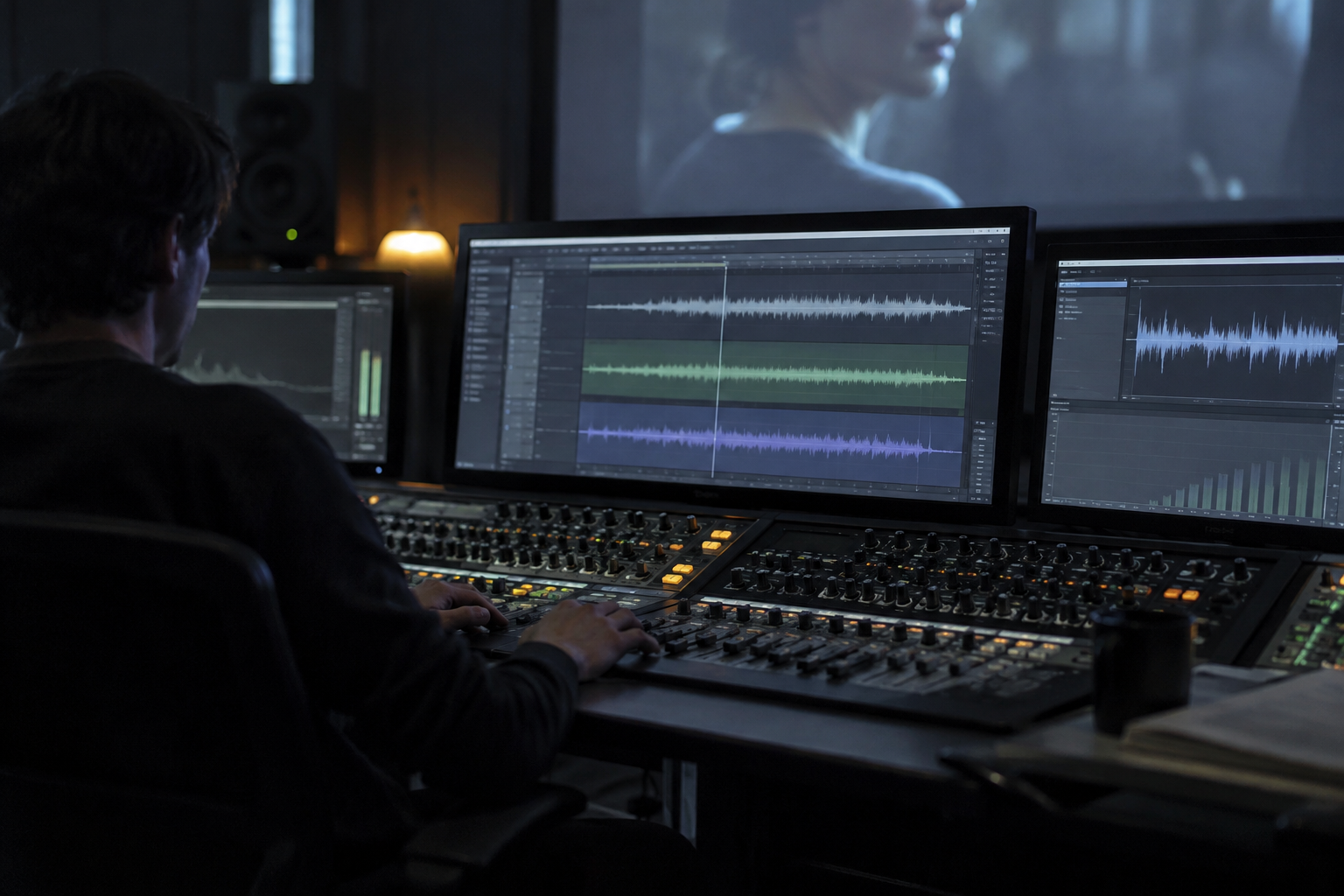
Nobody on the red carpet talks about the phoneme polishers. The public loves a gothic horror story about artificial intelligence wiping out actors, stealing likenesses, and bankrupting casting agencies. The reality inside sound editing suites is far more clinical, infinitely more technical, and already responsible for a mantle full of golden statuettes.
On October 9, 2026, voice conversion specialist Respeecher laid out the receipts from five major awards-season darlings: The Brutalist, Emilia Pérez, Better Man, Top Gun: Maverick, and Bohemian Rhapsody. Across every title, the dirty little secret of prestige Hollywood audio is identical. Directors are not firing their stars to license digital marionettes. They are using surgical speech-to-speech neural models to repair acoustic hitches that would otherwise derail a multi-million-dollar scene.
The myth of generative voice in cinema assumes an engineer types prompts into a terminal and extracts a performance out of thin air. The productions documented by Respeecher show the opposite. The work is unglamorous, hyper-specific audio restoration.
Consider *The Brutalist*, which walked away from the Academy Awards with trophies for Best Actor, Cinematography, and Original Score. Adrien Brody and Felicity Jones labored for months under dialect coaches to master conversational Hungarian. They came remarkably close. But film editor Dávid Jancsó is a native Hungarian speaker, and close was not good enough for his cut. In post-production, Respeecher was brought in not to replace Brody or touch his English lines, but to rework isolated Hungarian consonants and vowels. A native Hungarian voice actor provided the phonemic guide tracks. Respeecher’s neural conversion system swapped the offending sounds while leaving Brody’s original delivery, breath support, and dynamic volume intact.
Over on Jacques Audiard’s narco-musical Emilia Pérez, the problem was range rather than phonetics. Lead actor Karla Sofía Gascón owned the screen dramatically, but the production's operatic score called for vocal registers beyond her biological limits. Decades ago, a studio would hire an uncredited ghost vocalist and wipe the lead actor off the soundtrack entirely. Re-recording mixer Cyril Holtz chose a hybrid route. Holtz drafted a professional singer to track the impossibly high registers, then ran those takes through Respeecher’s voice conversion software to imprint Gascón’s acoustic timbre across the music. The film scored thirteen nominations and bagged two Oscars, including Best Supporting Actress and Best Original Song.
Then came Better Man, Michael Gracey's Robbie Williams biopic that swapped the pop star for a photorealistic digital chimpanzee. The visual effects team earned an Oscar nomination, but the audio department had an even nastier technical hurdle. They had to weave decades of compressed, muddy archival clips together with brand-new Williams studio tracks, across speech, sobbing, laughter, and stadium singing. Respeecher spent more than two years dialing in Williams' acoustic signature, capturing everything down to his distinct vocal fry so the computer-generated primate never broke vocal continuity.
Look at the slate side by side:
Fixing voices in post-production is as old as synchronized sound. Hollywood has lived on Automated Dialogue Replacement, commonly called ADR or looping, since the studio system learned how to print optical tracks. If an airplane flew over an exterior take on an MGM backlot in 1939, the actor stood in a soundproof box three weeks later, watched a projection loop, and tried to shout the line in time with their own moving lips. It usually sounded disconnected, sterile, and flat.
By 2018, manual audio stitching had hit its absolute physical limit. On Bohemian Rhapsody, supervising sound editor Nina Hartstone tackled a nightmare: crucial Freddie Mercury audio stems were missing or degraded. Hartstone’s crew had to splice together Mercury's original multi-tracks, sound-alike recordings from singer Marc Martel, and Rami Malek's on-set guide vocals. Hartstone famously described the surgical workflow as open-heart surgery on tape. The team won dual Academy Awards for Sound Editing and Sound Mixing in 2019, but nobody wanted to repeat that level of manual razor-blade work.
"Open heart surgery-style editing." — Nina Hartstone, Supervising Sound Editor, Bohemian Rhapsody
When throat cancer and a subsequent tracheostomy took Val Kilmer’s speaking voice in 2014, old-school splicing was useless. In 2021, Kilmer teamed up with London-based synthetic audio startup Sonantic. The engineers scraped archival recordings of Kilmer’s younger performances, training more than forty separate iterations of his vocal identity to locate a model with the right cadence and presence. While Paramount Pictures later disputed claims that Sonantic’s synthetic output made the theatrical mix of Top Gun: Maverick, the 2023 Best Sound Oscar proved that Hollywood had irreversibly crossed into neural vocal reconstruction.
The public perception that AI in cinema is a cost-cutting play to fire talent irritates the mixers who actually build these tracks. At the Cannes Film Festival, Cyril Holtz candidly admitted that his initial plan for Emilia Pérez was merely to feather the edges of the vocal arrangements. The neural model worked so cleanly that the production leaned into synthetic voice conversion far more heavily than originally scheduled, specifically because it preserved Gascón's emotional authenticity rather than tossing her work in the bin.
Respeecher has spent months swatting down rumors that The Brutalist secretly turned Adrien Brody into a deepfake. The company repeatedly clarified that its tools never rewrote dialogue, never synthesized a line from a keyboard, and never replaced an actor's organic acting choices. The intervention was locked exclusively to the phonetics of non-native speech.
The real fracture line inside the industry is credit and disclosure. Paramount's public pushback on the Kilmer voice model highlights how terrified studios remain of union blowback and awards season disqualification. The moment an executive admits an algorithm assisted an Oscar-winning soundscape, purists howl that the performance is tainted. Yet sound designers privately point out that color grading has altered every pixel on screen for twenty-five years without anyone demanding an Oscar return.
The technical distinction between text-to-speech and speech-to-speech is where the legal and creative future lives. Text-to-speech creates synthetic assets from thin air; it is cheap, lifeless, and a legal minefield for screen actors. Speech-to-speech preserves the timing, breath, cadence, and microdynamics of a human being standing in front of a microphone, using mathematical models only to skin the acoustic resonance.
Post-production facilities are already baking these speech conversion plug-ins directly into Pro Tools workflows. That shift will permanently kill the standard ADR stage. Instead of hauling a star back into a studio six months after wrapped production to re-record fifty lines of muffled dialogue, a utility voice actor can track the ADR on a cheap stage, and a verified model of the star's voice will convert the performance in real time.
That creates immediate labor friction. SAG-AFTRA and international guild agreements now pivot directly on consent, provenance, and data retention. Every one of the five Oscar productions highlighted by Respeecher operated on ironclad, documented performer consent and direct artist participation. Robbie Williams sat in studios for Better Man specifically to train the neural network. Kilmer supervised Sonantic's models. Brody and Jones approved the Hungarian tuning.
Vendors who offer black-box vocal synthesis without clean lineage records will be locked out of feature film post-production. The future of cinema audio is not machines replacing humans. It is humans using neural filters to rescue performances that time, illness, language, or physical range would otherwise kill.
The mythology that generative audio arrives to automate screen acting is officially dead. Hollywood’s most prestigious mixing rooms are using neural voice conversion for micro-surgery: fixing an elusive foreign vowel, bridging a five-note vocal gap, or stitching together twenty years of degraded archival audio. The tech succeeds by remaining completely undetectable to Academy voters. If a voice vendor cannot prove chain of title, performer consent, and zero-loss emotional fidelity, they will never make it past the studio legal department into a film's final mix.
Reported off Respeecher. Original reporting and analysis by Selma Ortiz for Vox Roboti.
No. Respeecher adjusted specific Hungarian vowels and consonants under the guidance of native speaker Dávid Jancsó, leaving Brody's English dialogue, emotional pacing, and original volume dynamics completely untouched.
Re-recording mixer Cyril Holtz hired a professional singer for out-of-range notes, then converted those tracks into lead actor Karla Sofía Gascón's vocal tone using Respeecher software.
Sonantic built over 40 neural voice models using Val Kilmer's archival speech, though distributor Paramount Pictures disputed reports that the synthetic output appeared in the final theatrical mix.
Sound editor Nina Hartstone manually spliced original Freddie Mercury studio stems, sound-alike tracks from Marc Martel, and actor Rami Malek's production audio together without modern neural AI.
Engineers had to blend decades of compressed historical audio with modern studio recordings, laughs, and vocal fry to match Robbie Williams' real voice to a digital chimp.
Speech-to-speech modifies the acoustic tone and phonemes of an existing spoken recording while preserving the human actor's original rhythm, emotional inflections, and physical timing.
Yes. Every major Oscar project using synthetic voice relied on explicit contracts, active artist collaboration, and documented data provenance to satisfy studio legal standards and guild rules.
Cass Iverson · 5d ago · 5 min read

Selma Ortiz · 6d ago · 5 min read
Selma Ortiz · 7d ago · 6 min read