Voice AI
Amazon Silently Kills Alexa Voice Switching for Older Echo AUX Jacks
Selma Ortiz · 16h ago · 4 min read
Baroness Campbell used an AI voice in the House of Lords to challenge social care policy, shattering centuries of Westminster debate traditions in one afternoon.

By Selma Ortiz, Product and labs writer · Reported off BBC AI
Tests every model on ugly, real calls. Writes reviews vendors dread.
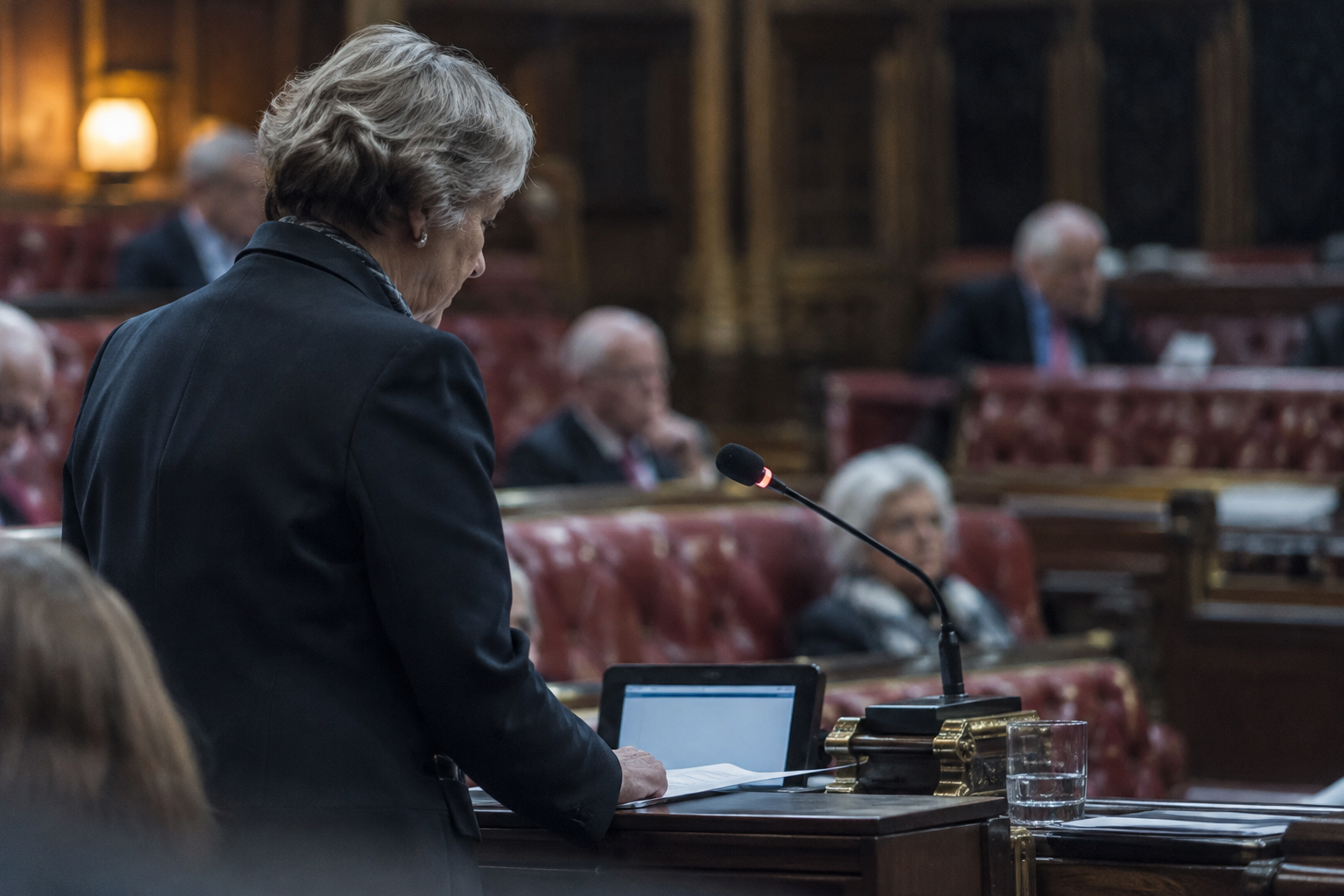
Westminster runs on velvet, wood, and dead men's rituals. Then an artificial voice broke the silence.
Disability rights campaigner Baroness Campbell stood—figuratively, through the machinery keeping her vocal presence intact—in the House of Lords and delivered a speech using an AI-generated voice. The occasion was a high-stakes debate scrutinizing the UK government's plans for social care. The delivery marked the first time in the history of the British Parliament that an artificial vocal model addressed either legislative chamber.
Peers on the red benches did not get the standard Westminster delivery. They did not hear the usual theatrical throat-clearing, the quavering rhetorical flourishes, or the pauses of an aging aristocrat looking for notes. They heard an algorithmic acoustic model engineered to project Campbell’s words across the chamber with clarity, pacing, and presence.
Broadcaster Matt Chorley captured the immediate fallout during an interview on BBC Sounds program Urgent Questions. While Westminster obsessives fixated on the procedural novelty, Campbell used the synthetic voice to target the state of British social care, forcing peers to listen to the exact demographic the system routinely overlooks.
The speech marked the first time in the history of the British Parliament that an artificial voice addressed either legislative chamber.
This was not an academic demonstration staged in a committee room. It happened during active legislative proceedings on the floor of the House of Lords. The chamber's sound system piped synthetic speech directly into the official parliamentary audio feed, setting a precedent that procedural traditionalists had resisted for decades.
Baroness Campbell has spent decades fighting the British state for the right of disabled individuals to exist with dignity. Diagnosed with spinal muscular atrophy, she built a career as a crossbench peer, civil rights activist, and commissioner for the Equality and Human Rights Commission. Her career inside the Palace of Westminster has consistently challenged archaic physical and institutional barriers.
Parliamentary procedure has historically treated speech as an entirely biological event. The House of Lords and the House of Commons operate under rigid Standing Orders that dictate who may address the chamber, how they must address it, and what electronic aids may be present inside the debate. Mechanical devices, mobile phones, and audio amplification have historically faced deep skepticism from the Lords Clerks and Speakers.
Assistive communication technology is not new to public life, but its historical execution was crude:
Campbell’s intervention arrived while British social care policy sat in administrative paralysis. Successive governments had delayed funding reforms, squeezed local authority budgets, and left thousands of severely disabled citizens dependent on fragile, underpaid care networks. For an advocate living that reality, relying on biological lung capacity to deliver a legislative speech was no longer an acceptable bottleneck.
Westminster's recording infrastructure had to adapt on the fly. The parliamentary reporting service, Hansard, has transcribed human voices since the nineteenth century, relying on stenographers and audio logs. Campbell’s address forced staff to log an algorithmically produced acoustic stream as the direct, legally binding testimony of a seated peer.
Inside the chamber, the reaction was immediate quiet. British parliamentary debate usually thrives on braying, jeering, and theatrical muttering from the benches. Campbell’s synthesized speech silenced the room because the technology transformed the dynamic between the speaker and the assembly.
On the broadcast circuit, Matt Chorley used Urgent Questions on BBC Sounds to explore whether synthetic voices alter how legislative power operates. Political commentators noted that the absence of physical vocal strain gave the delivery an unrelenting, steady quality that standard speeches rarely achieve.
Disability advocacy organizations framed the moment as a long-overdue technological reckoning. Outside Westminster, thousands of Britons with motor neurone disease, cerebral palsy, and spinal muscular atrophy face bureaucratic hurdles to secure basic communication devices from the National Health Service. Seeing a peer deploy high-tier neural synthesis inside Parliament exposed the brutal disparity between what modern tech can do and what public health budgets actually fund.
Procedural purists inside the Palace remained cautious. Off-the-record conversations among parliamentary staff centered on verification, questioning how the Clerks will authenticate the source of synthetic speech if remote voting, virtual contributions, and automated audio become routine tools of debate.
The House of Lords Procedure and Privileges Committee will face the administrative fallout. Campbell's address established the precedent without asking for permission first, leaving rulemakers to codify how artificial voices are authenticated, submitted, and authorized in future debates.
Three immediate issues now confront parliamentary authorities:
Beyond Westminster, this moment lands directly on the desks of health service procurement officers. The technology Baroness Campbell brought into the chamber exists in consumer software and commercial APIs, yet the state continues to supply disabled citizens with decades-old communication hardware. The spectacle of a crossbench peer demanding social care funding through an AI vocal model creates an awkward contrast for a government running on fiscal austerity.
Every legislature in the democratic world will watch this tape. From Washington to Canberra, aging politicians and disabled legislators are wrestling with physical decline while holding elected office. Campbell proved that losing a biological voice no longer means surrendering a parliamentary seat.
Voice AI has spent the last two years trapped in corporate party tricks, customer service chatbots, and dubious podcast clones. Baroness Campbell just gave the entire sector its most credible use case to date. By deploying synthetic speech to hold government ministers accountable on the floor of the House of Lords, she dragged voice tech out of the venture capital sandbox and parked it directly into constitutional statecraft. If an AI voice can debate social care policy on the floor of Parliament, no enterprise executive or public institution has an excuse to treat voice accessibility as a low-priority budget line ever again.
Reported off BBC AI. Original reporting and analysis by Selma Ortiz for Vox Roboti.
Baroness Campbell, a disability rights campaigner and crossbench peer in the House of Lords.
The debate focused on the UK government's policy and funding plans for social care.
The address took place in the House of Lords, the upper house of the UK Parliament.
She detailed the experience on the BBC Sounds program Urgent Questions hosted by Matt Chorley.
She lives with spinal muscular atrophy, which restricts physical vocal projection and lung capacity.
No. Baroness Campbell's address in the House of Lords was the first instance across Parliament.
No. It was delivered directly as an official contribution to an active legislative debate.
Selma Ortiz · 16h ago · 4 min read

Cass Iverson · 2d ago · 5 min read

Selma Ortiz · 2d ago · 5 min read