Voice AI
Nothing Ear Note Puts Conversational AI in Your Ears and Your Pocket
Ray Dalton · 19h ago · 5 min read
Meta's Gen 3 Ray-Bans pack an extra microphone and Muse Spark voice AI, but an eye-watering $529 price tag and looming subscription paywalls spoil the pitch.

By Cass Iverson, Synthetic voice correspondent · Reported off Engadget
Audio engineer turned reporter. Hears the artefacts you do not.
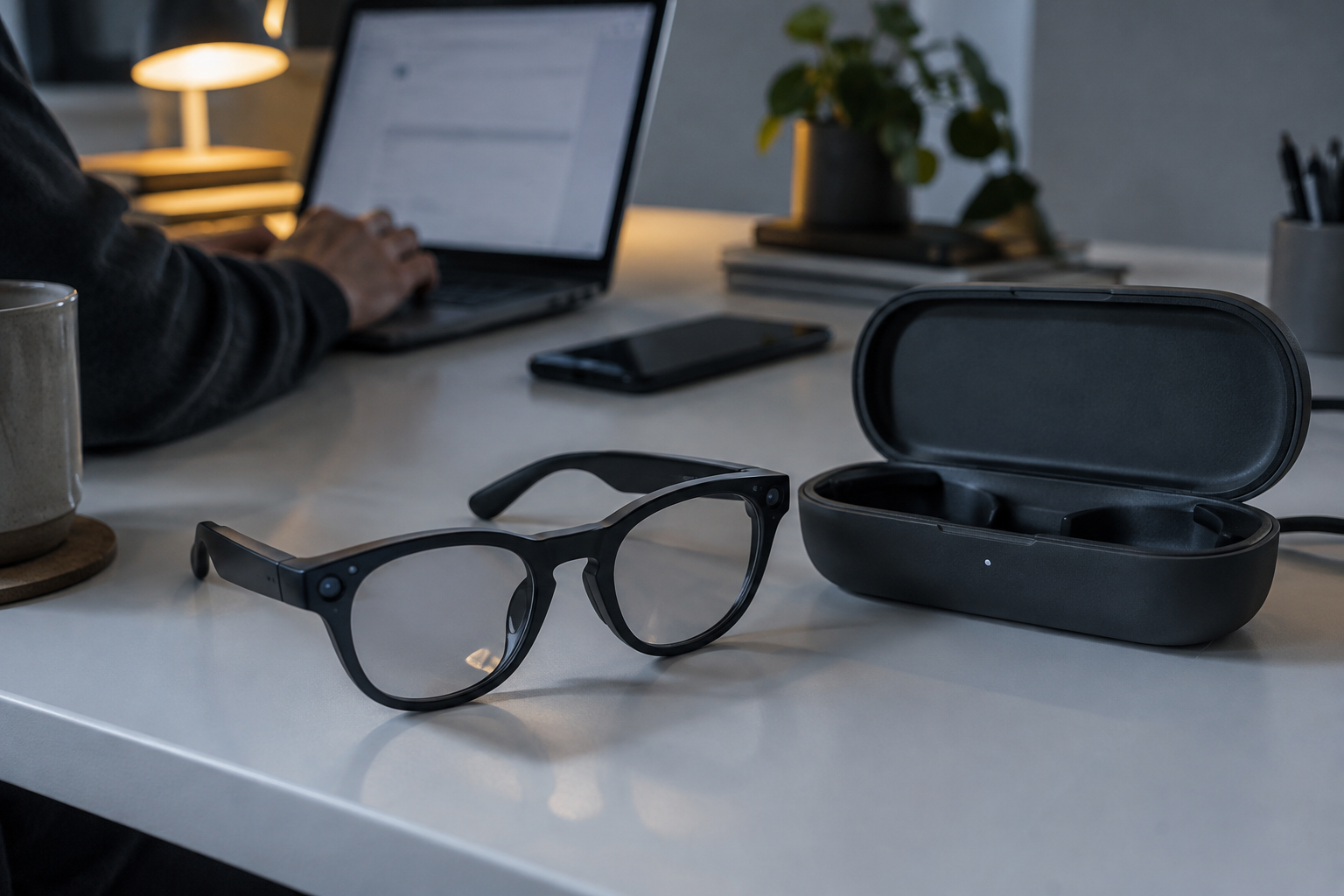
Meta just raised the price of talking to your glasses. The Ray-Ban Meta Gen 3 line entered the market at a $449 base price for the standard Wayfarer cut. That is a massive jump from earlier models, demanding serious cash for hardware whose primary job is acting as an audio conduit and head-mounted microphone.
If you want anything other than the standard square frames, the math gets worse. Meta introduced two new physical silhouettes: the cat-eye Zena and a vintage Aviator tribute. Both styles retail at $529. Choosing either shape slaps buyers with an automatic $80 upcharge over the baseline Wayfarers, establishing the steepest barrier to entry yet for Meta's voice-first hardware.
The Aviator design pushes physical dimensions into uncomfortable territory. The chassis measures 10 millimeters wider than the smallest Gen 3 Wayfarer, creating an oversized, front-heavy footprint on normal faces. Meta built the test units in semi-transparent Havana brown tortoiseshell, leaving internal chips and ribbons visible to anyone standing at arm's length.
Default retail units ship with clear transition lenses rather than dedicated sunglasses. While transition glass handles indoor voice tasks and outdoor walks without a frame swap, putting clear lenses inside bulky, oversized aviator wireframes creates an awkward aesthetic that works against all-day wear.
Here is how the third-generation lineup breaks down across physical hardware and costs:
On voice input, Meta added a sixth microphone into the temple assembly. This is an explicit upgrade over the five-microphone setup on the Gen 2 frames, engineered to isolate vocal commands from ambient background noise and wind buffeting.
The power system received incremental updates. Meta claims the Gen 3 frames survive for up to nine hours on a single charge, gaining an hour over the eight-hour rating of Gen 2. The accompanying clamshell charging case supplies an additional 50 hours of reserve battery.
Bench ratings do not match actual usage. In continuous audio streaming tests, the Gen 3 cell drained completely after six hours of playback. Firing up computer vision through the onboard camera burns power even faster, pulling the battery gauge down rapidly during live sessions.
Meta also borrowed a hardware control from its cheaper frames: a programmable action button. Sitting on the temple arm, the physical switch triggers assigned assistant actions, like reading incoming text messages, without requiring the user to speak a wake word aloud.
Meta's wearable pricing structure has become completely fragmented. Buyers who refuse to spend $449 can still purchase the original Gen 1 frames for $224, while remaining Gen 2 stock sells at $349.
The internal competition is even sharper at the bottom. Meta sells unbranded, displayless smart glasses and audio-only frames for $249. These cheaper frames run the exact same voice assistant features and camera software for less than half the price of the Aviator model.
Microphone engineering has been the central focus of Meta's hardware iterations since the original product launch. The five-mic array on Gen 2 handled basic audio calls well, but struggled in howling wind or noisy bars. Moving to six microphones is an effort to beat standalone premium earbuds at hands-free vocal capture.
Under the hood, Meta upgraded its conversational engine to Muse Spark. This backend model architecture speeds up response latency and cuts interpretation errors, making back-and-forth verbal requests flow more smoothly than on earlier software builds.
The transition to Muse Spark coincided with the quiet elimination of Meta's celebrity synthetic voices. Meta had previously licensed personalities like Snoop Dogg and Tom Brady to vocalize assistant responses. Gen 3 eliminates those synthetic celebrity personas entirely, standardizing on neutral digital speech synthesis.
At Meta Connect, leadership framed the Ray-Ban series as the physical testbed for its broader artificial intelligence roadmap. Meta showcased the Gen 3 frames alongside display-equipped VR prototypes, positioning smart glasses as the lightweight audio gateway for users who reject screen-heavy headsets.
Engadget reviewer Karissa Bell scored the third-generation Ray-Bans at 7.3 out of 10. The assessment reflects a capable audio wearable dragged down by small internal changes and aggressive retail pricing.
Ergonomics drew immediate complaints during hands-on use. The front-heavy Aviator construction repeatedly slipped down the nose bridge during routine movement, forcing testers to push the bridge up constantly or rely on aftermarket silicone grip pads.
Servicing the glasses creates a real hassle. Unlike Meta's budget frames, which allow users to bend the temples at home for a custom fit, the Gen 3 Ray-Bans require professional adjustments. Altering the temple tips forces owners to visit an optical shop or locate a physical Meta retail store.
Voice call quality proved to be the hardware's clearest win. Call recipients reported that voice audio captured through the six-mic beamforming array sounded noticeably clearer and fuller than audio transmitted through Apple's AirPods Pro 2 wireless earbuds.
The disparity between marketing promises and working firmware prompted open skepticism from reviewers:
"Meta's latest Ray-Ban glasses have gotten some cosmetic updates and a few performance upgrades around the edges."
Reviewers pointed out Meta's long track record of software delays. Conversation Focus, an audio feature meant to isolate speaking partners in loud environments, remains missing from the firmware more than a year after its official announcement.
Privacy advocates found one positive development in the companion app. Meta included an explicit toggle letting users block the company from training AI models on visual data, preventing captured images from being stored or reviewed by third-party contractors.
The real test for the hardware depends on the Muse digital assistant, which remains trapped in beta testing according to Meta support documents. The software promises to let users speak directly with an AI agent while feeding it live video through the camera, but general availability remains stalled.
When Muse rolls out broadly, users will be expected to hold multi-turn conversations while the camera processes surrounding objects. Operating continuous video streams alongside a six-mic audio array will push the six-hour battery limits to the breaking point.
Meta is also laying the groundwork to extract recurring revenue from owners. The first menu screen inside the Gen 3 companion app features prominent promotions for Meta One, a subscription service being tested to monetize photo storage.
Voice and audio utilities appear headed for the same subscription paywall. Meta plans to lock an upcoming hearing enhancement tool behind the Meta One paywall, establishing a precedent of charging subscription fees for core audio accessibility software.
Unfinished software rollouts put Meta in a dangerous spot with early buyers. Withholding features like Conversation Focus for twelve months while actively testing subscription menus risks alienating the enthusiast base that bought Gen 2.
The buying decision now comes down to styling over substance. Anyone spending $529 on Aviators gets the exact same Muse Spark voice assistant running on the $249 unbranded hardware, turning the Ray-Ban Gen 3 into an expensive fashion accessory waiting on software Meta has yet to deliver.
Meta wants smart glasses to serve as the hardware foundation for conversational voice computing, but pushing prices to $529 while preparing software paywalls undermines the entire premise. When unbranded frames deliver identical Muse Spark assistant performance for $249, Meta is taxing high-fashion branding instead of selling technical innovation. Gating upcoming audio utilities behind Meta One subscriptions signals a frustrating shift toward recurring fees on premium hardware. If consumers balk at paying luxury markups for half-baked assistant features, ambient voice computing will stall out as a niche novelty.
Reported off Engadget. Original reporting and analysis by Cass Iverson for Vox Roboti.
Base Wayfarer models cost $449. The Aviator and Zena styles retail for $529. Gen 2 sells for $349, Gen 1 is $224, and unbranded Meta frames cost $249.
The Gen 3 frames carry six microphones. That is one more than the five-microphone array found on the Gen 2 model, improving outgoing call clarity.
The glasses run Meta's Muse Spark conversational engine, which lowers voice interpretation errors and creates more natural speech interactions while dropping celebrity voice options.
Continuous audio playback drains the battery in six hours. Meta rates maximum mixed battery life at up to nine hours, with the charging case holding 50 hours.
No. Gen 3 Ray-Ban frames require professional fitting at an optical shop or Meta retail store, unlike Meta's budget frames which offer do-it-yourself adjustments.
The action button is a customizable physical switch on the frame. It executes programmed assistant tasks, like reading incoming text messages, without speaking a voice command.
Yes. A privacy setting in the companion app allows owners to opt out of letting Meta store visual data or use captured imagery for model training.
Meta is testing Meta One subscriptions. Promoted in the app's settings menu, the service plans to paywall photo storage and a planned hearing enhancement audio tool.
Ray Dalton · 19h ago · 5 min read

Tobias Reinholt · 6d ago · 5 min read