Synthetic Voice
ElevenLabs Expands Nvidia Deal as Jensen Huang Makes Tabloid Noise
Cass Iverson · 4d ago · 5 min read
Nvidia boss Jensen Huang quietly pulled out of ElevenLabs' flagship synthetic voice summit, leaving the voice unicorn to carry the stage alone amid widening chip controversy.

By Tobias Reinholt, Policy and security writer · Reported off Voice vendor watch
Fraud analyst turned policy writer. Deepfakes, consent, regulators.
Jensen Huang decided he had somewhere else to be.
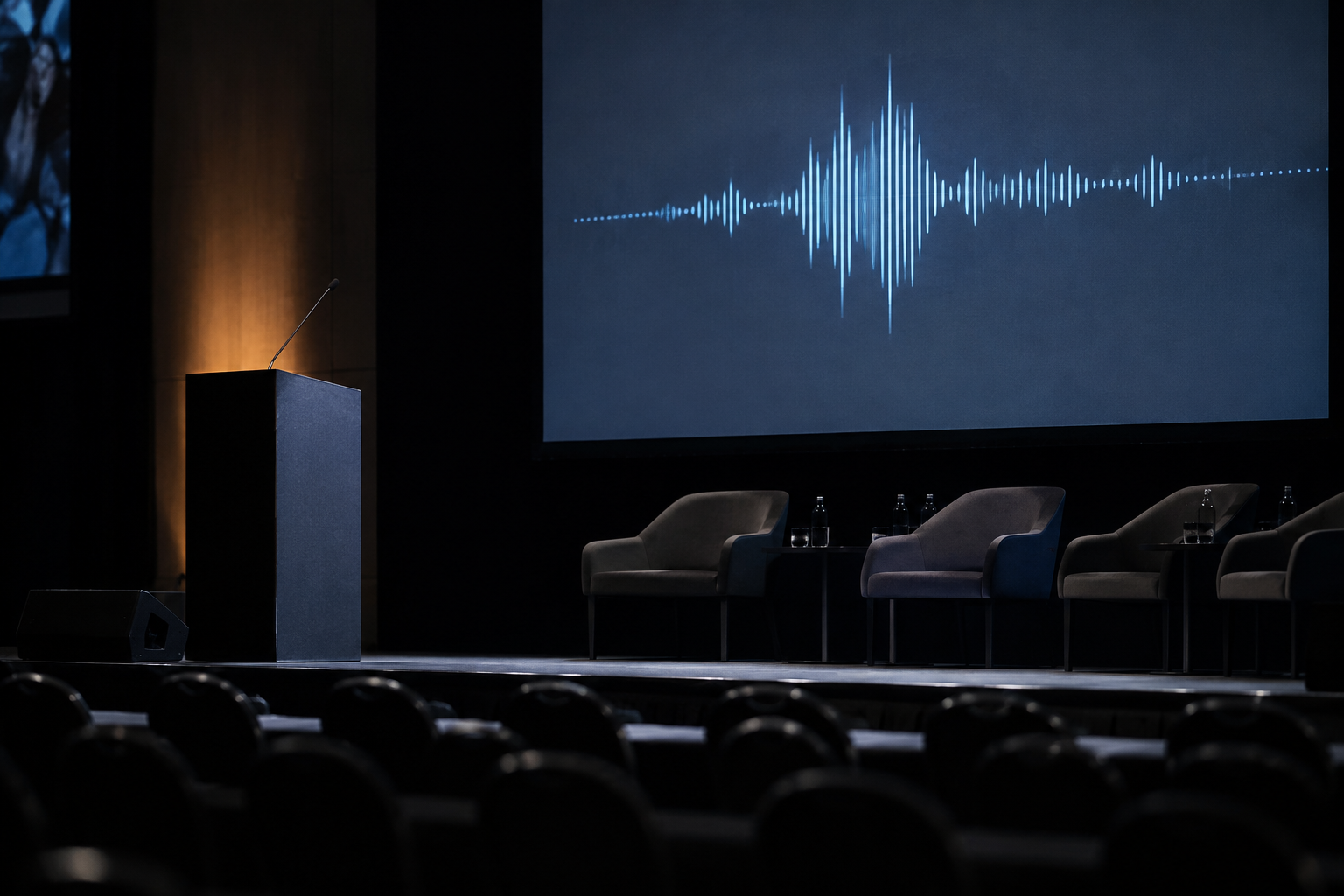
Nvidia's chief executive officially cancelled his planned appearance at the ElevenLabs Summit, pulling his marquee star power from the synthetic voice startup's premier developer gathering. The cancellation arrived without a stage-side fanfare, leaving organizers to recalibrate a keynote roster that was built to showcase the tight bond between the world's dominant AI chip supplier and its most visible voice cloning vendor.
The decision landed as Nvidia navigates intense public scrutiny over its data collection practices, antitrust pressure, and volatile hardware allocations across the enterprise AI ecosystem. Huang had been billed as the summit's undisputed headliner. His presence was intended to validate ElevenLabs as an infrastructure-tier player in generative audio, cementing synthetic speech alongside large language models as a primary consumer of GPU cycles.
Instead, ElevenLabs leadership faced an audience of voice developers, media figures, and enterprise buyers without the leather-jacket-clad icon of the current AI boom. TechCrunch broke the news of Huang's retreat shortly before the event kicked off. The sudden absence underscored a harsh reality for early-stage audio companies: when hardware titans catch heat, their portfolio darlings get left to answer the room alone.
When the world's most valuable silicon kingmaker decides an event carries too much headline risk, the silence on stage echoes louder than any keynote address.
Nvidia representatives attributed the withdrawal to mounting external pressures and calendar conflicts, while ElevenLabs scrambled to fill the stage hours with product updates and workflow showcases. The optics could not be ignored. A flagship platform built to humanize digital voices spent its biggest morning explaining why its most important human speaker backed out.
To understand why Huang's exit cuts deep, look at the math behind modern synthetic voice generation. ElevenLabs does not operate on ambient goodwill. Its foundational text-to-speech architectures, voice cloning pipelines, and real-time conversational APIs require thousands of high-performance Nvidia H100 and A100 Tensor Core GPUs to maintain sub-second latency across global voice agent deployments.
ElevenLabs reached unicorn status on the promise that synthetic voice would replace legacy Interactive Voice Response setups, automate game localization, and power millions of real-time conversational agents for call centres. Behind every smooth synthetic timbre sits a massive compute bill paid directly or indirectly to Santa Clara. Nvidia backed that vision early, viewing high-fidelity audio as the next compute sink after text generation plateaus.
Yet Nvidia's dominant market position has drawn a relentless series of headaches throughout late 2024 and early 2025. Federal regulators, global competition bureaus, and creative rights holders have zeroed in on how the chip giant trains its proprietary models and structures its customer contracts. Reports highlighting aggressive scraping of copyrighted video transcripts, YouTube dialogue, and public media for internal model training put Santa Clara on the defensive across multiple jurisdictions.
At the same time, the voice AI industry faces its own escalating reputational battle. Rights holders, actors' unions like SAG-AFTRA, and enterprise risk officers are actively challenging voice vendors over unauthorized voice cloning and ambiguous dataset provenance. A joint stage appearance between Huang and ElevenLabs leadership threatened to concentrate both controversies into a single press cycle, creating a lightning rod neither legal team wanted to manage.
Here is how the pressure points aligned against the joint appearance:
Huang chose isolation. For ElevenLabs, the exit served as an abrupt reminder that compute partnerships are purely transactional. When corporate communications directors smell a PR trap, stage commitments vanish overnight.
Inside developer channels and venture capital syndicates, the reaction split along predictable fault lines. Hardware analysts viewed Huang's departure as routine executive risk management. When a publicly traded semiconductor juggernaut with a multi-trillion-dollar valuation faces active regulatory inquiries, its CEO does not give unscripted keynote banter at third-party developer showcases.
Synthetic voice founders read the room differently. Several voice agent developers attending the gathering described the cancellation as a tactical snub that leaves mid-tier software providers exposed. With Nvidia stepping away from public stage appearances alongside audio platforms, developers worry that institutional investors will scrutinize voice infrastructure startups more harshly on training ethics and long-term compute availability.
Legal commentators pointed directly to intellectual property liabilities. Nvidia's reported scraping initiatives, combined with persistent media skepticism regarding ElevenLabs' scraping history and community voice libraries, created a toxic cocktail for corporate risk teams. Observers noted that putting Huang on an ElevenLabs stage invited direct questions about data sourcing that neither company could comfortably deflect in front of live trade press.
Wall Street trading desks barely blinked at the scheduling shift, keeping their eyes glued to chip supply chains, data center capital expenditures, and sovereign AI deals in the Middle East and Asia. But within the voice sector, the retreat was treated as a bellwether: the era of unconditional hardware patronages for synthetic media platforms is drawing to a close.
ElevenLabs now faces the task of proving its business model without relying on the halo effect of high-profile chip executives. The company must demonstrate that enterprise revenue from customer service voice bots, publishing partnerships, and gaming contracts can withstand aggressive price pressure from open-source speech models like Whisper, Kokoro, and Meta's audio tools.
Compute economics will dictate the next twelve months. If Nvidia reduces visible promotional backing for standalone voice software vendors, application layers will aggressively diversify their hardware stacks. Voice engine providers are already exploring inference workloads on alternative hardware, including AMD Instinct accelerators, Google Cloud TPUs, and specialized neural processing chips from startups designed to slash voice inference costs.
Regulatory enforcement will also accelerate. As the European Union's AI Act implements mandatory transparency rules for synthetic media and synthetic audio watermarking, voice platforms will have to disclose their underlying training procedures down to the specific hardware runtimes and audio archives. Without Huang on stage to offer top-cover rhetoric about the boundless future of conversational intelligence, voice platforms will have to negotiate those compliance hurdles on their own legal dime.
The ElevenLabs Summit will continue to run its sessions, pitch its enterprise integrations, and debut faster latency benchmarks. But the empty chair in the green room marks a structural shift for synthetic speech. Hardware kingmakers are retreating behind defensive perimeters, and voice software startups must learn to sell business value without relying on a celebrity billionaire in a leather jacket to validate their code.
Voice AI vendors spent two years riding on Nvidia's promotional coat-tails to prove their relevance to enterprise buyers. Jensen Huang's sudden exit shows those days are over. When scrutiny hits the chip tier, hardware providers prioritize their own legal protection and institutional balance sheets over startup developer optics. Voice platforms now have to justify their unit economics, dataset ethics, and latency claims on their own merits, without expecting silicon billionaires to bail them out on stage.
Reported off Voice vendor watch. Original reporting and analysis by Tobias Reinholt for Vox Roboti.
Huang withdrew due to mounting controversies surrounding Nvidia, including data scraping scrutiny, regulatory pressure, and executive scheduling conflicts.
No. The summit proceeded with ElevenLabs leadership presenting product updates and developer tools despite Huang's sudden absence.
ElevenLabs relies heavily on Nvidia GPU infrastructure to train, host, and run low-latency synthetic voice inference models.
TechCrunch reported that the Nvidia chief executive stepped back from the ElevenLabs event.
Yes. Synthetic speech startups are exploring AMD Instinct GPUs, Google Cloud TPUs, and dedicated neural processing hardware to cut inference costs.
Nvidia is handling regulatory antitrust reviews, corporate training data controversies, and intense market pressure around hardware allocation.
Cass Iverson · 4d ago · 5 min read
Selma Ortiz · 6d ago · 4 min read
Cass Iverson · 11d ago · 5 min read