Voice Agents
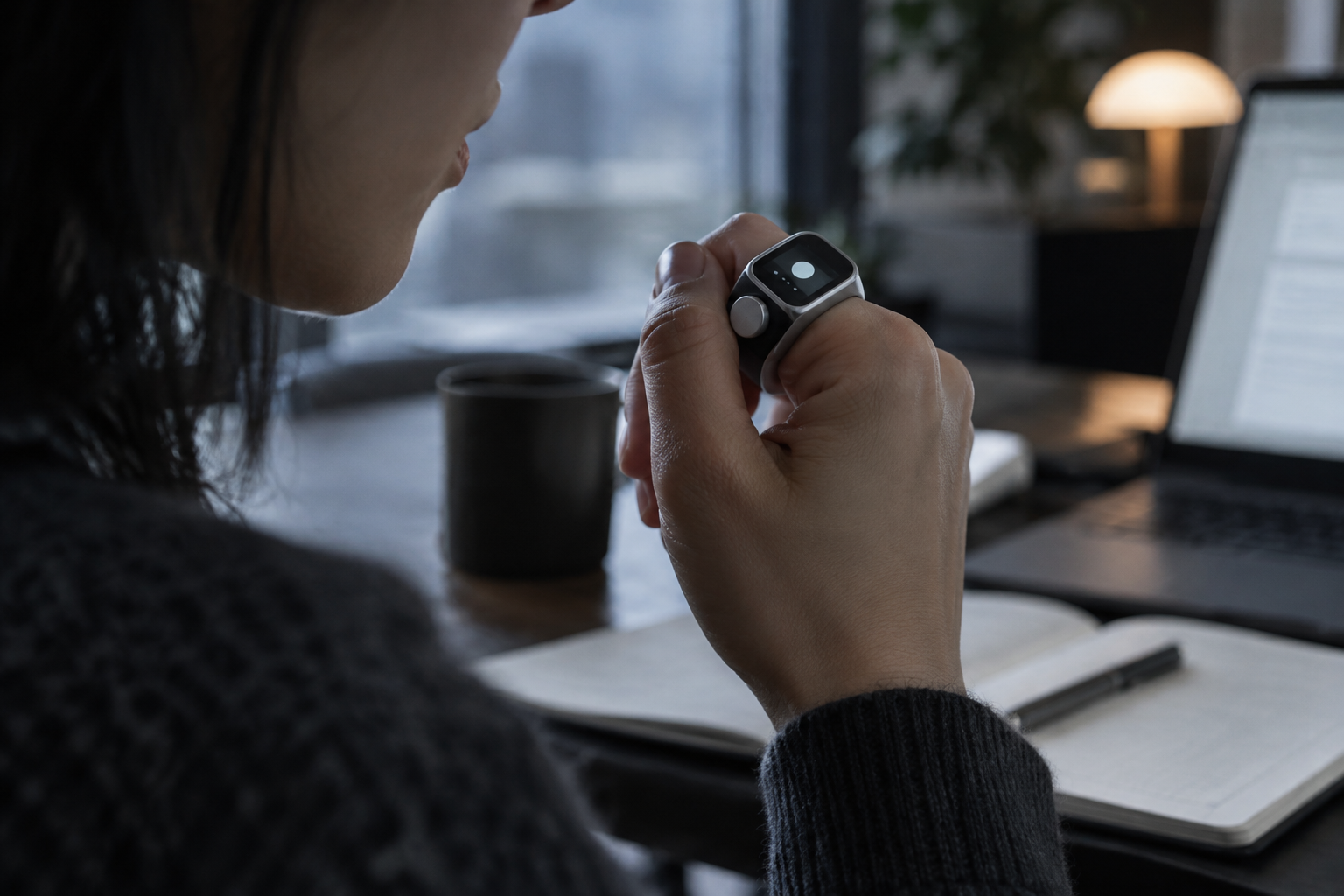
Aina Put a Mic, Screen, and Joystick on a Ring to Command Your AI Agents
Nina Falco · 9h ago · 5 min read
Meta just turned Muse into a full video call companion for US users. With dedicated voice models and upcoming wearable hardware, the company wants you talking to screens again.

By Nina Falco, Front-desk beat reporter · Reported off TechCrunch AI
Sold answering services to dentists. Now she reports on them.
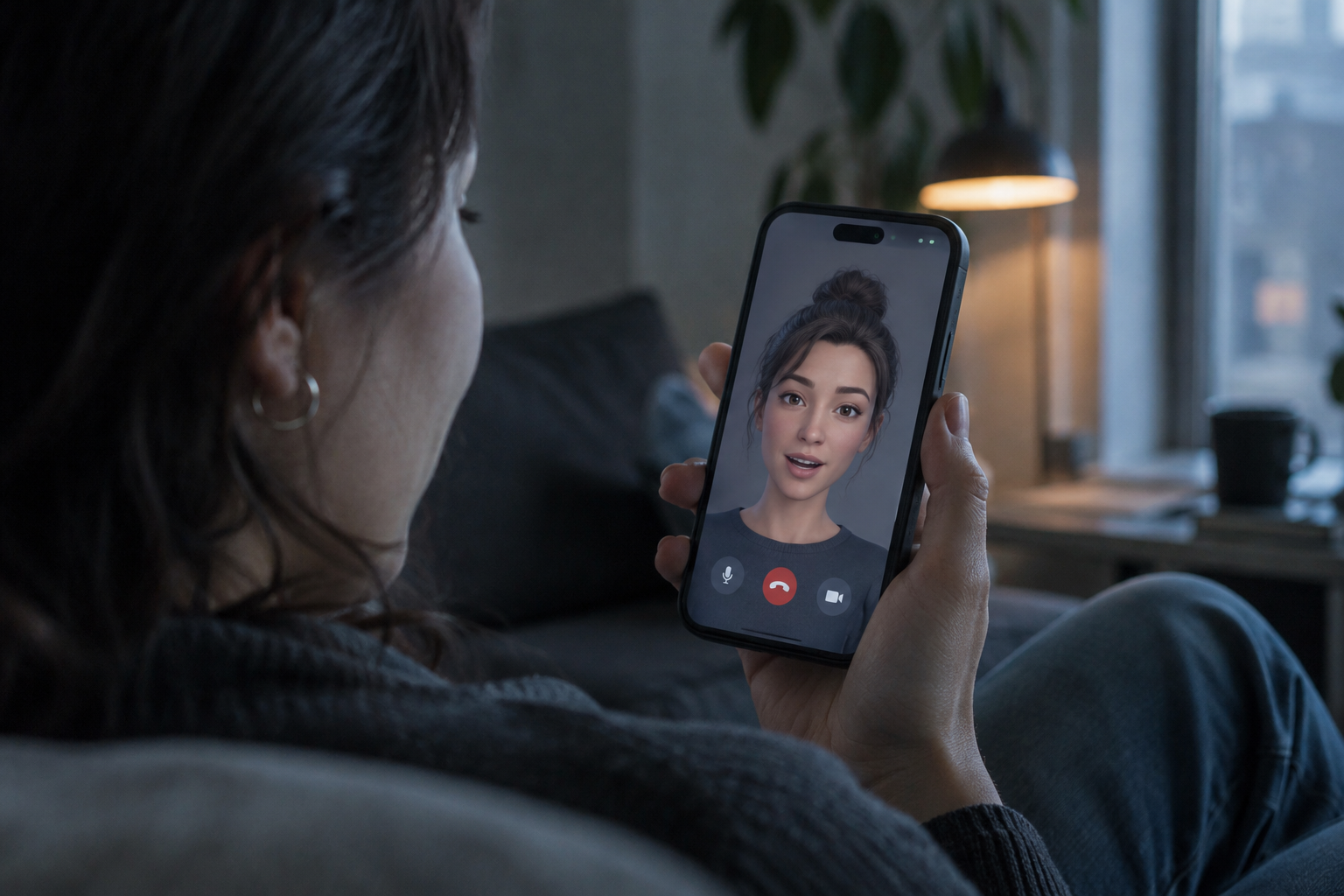
You can now stare into the digital eyes of Meta's synthetic agent while it speaks to you in real time.
On November 5, 2026, Meta opened Muse Voice to every user in the United States. The system moves conversational AI out of the sterile text box and dumps it directly into live two-way video calls. You talk. An animated character talks back, nodding, shifting its weight, and altering its facial expressions to match the acoustic cadence of its own speech.
Voice AI has spent a decade trapped inside invisible speakers or glowing geometric orbs. Meta thinks that was an imaginative failure. The company wants you on a live video feed with an artificial being, and it has built a dedicated dual-engine stack to drag you there.
The nationwide rollout covers three major digital environments: mobile applications, desktop web browsers, and macOS. Every American user with an active account can now initiate a live audiovisual conversation with the Muse agent, moving beyond asynchronous voice memos into full-duplex verbal banter.
Under the hood, Meta split the computing burden between two distinct proprietary architectures. Muse Realtime Voice handles the acoustic pipeline, speech parsing, dynamic turn-taking, and expressive synthesis. Parallel to it runs Muse Realtime Avatar, a graphics model engineered to generate synthetic micro-expressions, lip synchronization, and physical gestures that track directly with the speech output.
Users do not have to accept a generic face. The default persona carries the internal nickname Jolly, an animated creature designed for low-friction, casual dialogue. If Jolly feels too cartoonish, the configuration menu lets users swap skins, trading the default look for stylized human figures, alternate cartoon personas, or various animal avatars.
Alexandr Wang, who serves as Meta's chief AI officer, staged the public debut on X. His personal demo bypassed the standard corporate question-and-answer format. Wang configured his personal Muse as a fluffy white canine and grilled it about his own habit of firing off provocative internet jokes during office hours.
The synthetic dog listened to Wang's verbal confession, assessed the workplace risk, and spoke back with pragmatic advice. It told Wang to attach explicit disclaimers to his personal posts so nobody mistakes executive shitposting for official corporate policy. The delivery carried the vocal inflections of a patient confidant.
The exchange highlighted Meta's design philosophy: this is not an enterprise analytics utility. It is an ambient digital companion designed to chat about your workday, crack jokes, and simulate genuine social presence.
Meta first unveiled the video chat architecture in September 2026 during its annual Connect developer conference. At the time, company executives framed real-time visual conversation as the natural next step for generative agents, but access remained tightly gated behind staging builds and developer previews.
The underlying technical barrier was latency. Running large language models with real-time text-to-speech already strains consumer bandwidth and edge processing budgets. Adding responsive video rendering multiplies the compute penalty. If the avatar’s lips lag thirty milliseconds behind the synthetic voice, the user experiences immediate cognitive dissonance.
By building Muse Realtime Voice and Muse Realtime Avatar as tightly coupled pipelines, Meta managed to compress that interaction window. The avatar does not simply read a finished text block aloud. It responds to voice prompts with immediate acoustic feedback while adjusting its physical posture to match the emotional weight of the dialogue.
Voice-first computing has historically struggled with user retention. Amazon and Apple taught millions of consumers to bark single-phrase commands at kitchen counters to set timers or check outdoor temperatures. Neither company succeeded at turning those devices into genuine conversational partners. Users treat voice assistants like clunky voice-operated light switches because audio alone rarely holds human attention for more than ten seconds.
Meta’s response is aggressive anthropomorphism. The company concluded that users abandon voice assistants because the machines lack eyes, gestures, and body language. If an algorithm smiles when you speak warmly and drops its ears when you sound frustrated, your brain treats the software as an entity rather than an input field.
Inside Menlo Park, the strategic vision hinges entirely on emotional stickiness. Meta’s leadership argues that consumers form durable, long-term bonds with software when they can look into a face while conversing.
Anthropomorphizing Muse with expressive movement and dynamic vocal tone creates a psychological hook that plain voice feeds cannot replicate.
The broader tech sector remains divided on whether users actually want a face staring at them during voice interactions. Competitors like OpenAI and Google have prioritized invisible, interruptible voice engines that live quietly in the background of a phone call or mobile desktop. Their products use undulating lines or abstract spheres, intentionally avoiding the uncanny valley.
Skeptics argue that video calling an artificial intelligence solves a problem nobody asked to have fixed. Mobile users already experience video call fatigue from remote workplace meetings. Staring at an artificial dog to check the weather or edit an email requires extra battery power, intense local rendering, and constant eye contact.
Privacy advocates have also raised flags regarding ambient camera and microphone access. A system built around real-time visual and verbal interaction inherently encourages users to leave their cameras rolling while speaking about personal problems. When the chief AI officer uses his demo to discuss internal executive politics with an animated animal, he signals to everyday users that intimate disclosures are entirely welcome.
Desktop browsers and laptop screens are merely the proving ground. The software architecture deployed this week is designed to migrate into specialized physical hardware before the calendar year closes.
Meta's immediate hardware pipeline centers on three distinct form factors:
The Muse Charm represents Meta's most unusual consumer gamble since its early portal hardware. Instead of forcing users to unlock a smartphone or launch a browser tab, the company wants to place a dedicated, palm-sized companion in pockets and on keychains. The hardware will run the Muse Realtime Avatar on a compact screen, serving as an always-ready physical totem for the voice model.
Task execution will determine whether this ecosystem survives past the novelty phase. Right now, conversing with a virtual dog about social media etiquette is an amusing party trick. If that same animated agent can listen to verbal instructions, navigate third-party software, make reservations, and confirm appointments without dropping the call, Meta will have turned a toy into an operational operating system.
The coming hardware rollout will test whether consumers want an artificial face living in their pockets, or whether voice AI works best when it stays out of sight.
By sticking an animated face on top of a low-latency speech model, Meta is betting that voice assistants failed because they lacked physical presence. If animated eye contact and micro-gestures create stronger user retention than disembodied audio, every enterprise voice builder will have to stop shipping invisible bots and start building rendering pipelines.
Reported off TechCrunch AI. Original reporting and analysis by Nina Falco for Vox Roboti.
It is a conversational feature allowing US users to hold live video calls with Meta's AI agent using speech and animated avatars.
Yes. Users can swap the default Jolly persona for human characters, stylized figures, or animals like dogs.
It runs on two synchronized systems: Muse Realtime Voice for speech audio and Muse Realtime Avatar for facial expressions and gestures.
The feature is live for all US users on mobile devices, web browsers, and Mac computers.
It is an upcoming Tamagotchi-like pocket wearable featuring a small display and microphone dedicated to voice conversations with Muse.
Yes. Meta plans to bring real-time Muse conversational features to its smart glasses lineup following the desktop and mobile rollout.
Nina Falco · 9h ago · 5 min read

Devon Achebe · 1d ago · 6 min read

Nina Falco · 7d ago · 5 min read