Voice AI
Amazon Silently Kills Alexa Voice Switching for Older Echo AUX Jacks
Selma Ortiz · 16h ago · 4 min read
North East Ambulance Service puts ambient voice tools inside frontline ambulances. Thirty-eight paramedics are ditching manual typing to see if AI can chart trauma runs.

By Ray Dalton, Editor-in-chief · Reported off BBC AI
Runs the desk. Allergic to demos that only work on stage.
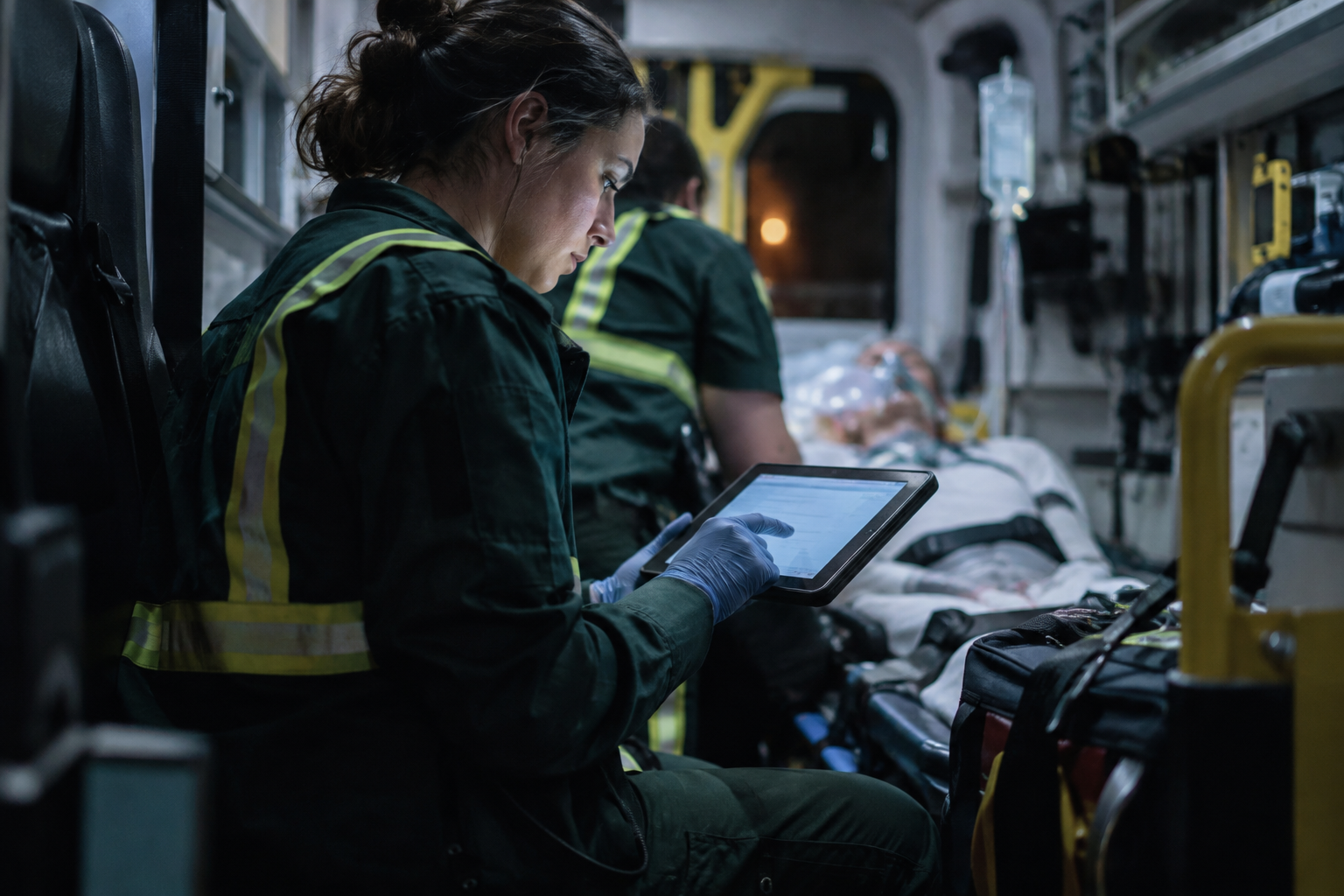
Nobody calls an ambulance because they want a bureaucrat. You call because someone stopped breathing, fell down a flight of stairs, or suffered a sudden cardiac arrest on the kitchen floor. Yet the moment a crew loads a patient into the back of a vehicle, an invisible tax begins ticking away. Every dose of morphine, every drop in blood pressure, and every mumbled complaint about chest pain must be typed into a computer. Paramedics spend huge chunks of their shifts hunched over glass screens, tapping out administrative narratives with rubber-gloved fingers instead of keeping eyes on vital monitors.
North East Ambulance Service wants to kill that paperwork drag. The regional trust has deployed an ambient voice transcription tool across frontline emergency teams in northern England. Instead of typing case sheets at the roadside or in hospital car parks, crews let an algorithm listen to the conversation, parse the medical details, and generate a draft clinical record. If it works, medics get their hands back. If it fails, clinicians end up spending their precious downtime editing bad machine transcripts while patients wait in triage queues.
North East Ambulance Service, known across the English emergency system as NEAS, is running an eight-week pilot to test whether ambient voice technology can survive frontline deployment. The study spans thirty-eight participants, pulling in paramedics as well as operational frontline staff operating across the North East and Cumbria.
The hardware setup requires no proprietary lapel pins, wired microphones, or venture-backed gadgetry. Medics run the software directly through the internal microphones built into the standard Apple iPads already mounted in their vehicle cabs. While clinicians treat patients, the tablet sits in the background, listening to real-time clinical dialogue during live emergency calls.
The system captures the spoken exchange, transcribes the audio stream, and formats the dialogue into a structured clinical summary. Nothing goes straight into the central electronic health database on machine authority alone. Every AI-generated note must pass through a mandatory clinician review. Medics read, correct, and manually approve the text before filing the report into the patient's permanent record.
Pre-hospital emergency medicine is the worst possible acoustic environment for voice recognition. Ambient clinical scribes usually run inside carpeted outpatient clinics where an articulate doctor sits two feet away from a quiet patient. An ambulance crew works in howling wind, pouring rain, roadside traffic, screeching sirens, and cramped vehicle boxes rumbling over cracked asphalt.
Documentation in the UK National Health Service has reached a breaking point. Paramedic crews routinely wait outside crowded emergency departments for hours, trapped in handover bottlenecks caused by administrative backlogs and bed shortages. A medic who spends twenty minutes charting a complicated transfer is twenty minutes late returning to the emergency roster for the next cardiac call.
The technical stakes behind this trial go beyond simple transcription speed:
Previous healthcare voice rollouts focused almost exclusively on primary care consultations. In those environments, a missing symptom or garbled word can be caught during an easy follow-up phone call. In an ambulance traveling at sixty miles per hour with a deteriorating patient, an ambiguous chart entry can derail emergency room triage within minutes.
Clinical leaders inside the ambulance service view the trial as an operational necessity rather than a software experiment. Digital clinical lead Georgina Campbell outlined the official stance on balancing automation against clinical responsibility during field trials:
This trial will help us understand how emerging technology can be used safely and effectively, while maintaining the high standards of care and record keeping that our patients and communities expect.
Frontline emergency staff look at digital tools with healthy skepticism born from years of buggy public-sector IT systems. Paramedics have seen multiple electronic patient report forms promise speed, only to demand twenty dropdown clicks for a single bandage application. If an ambient audio scribe requires three minutes of editing to fix phonetic errors on pharmaceutical brands, crews will abandon it and return to typing summaries by hand.
Operational supervisors want standardisation. Different medics write notes with wildly different levels of detail, jargon, and legibility. NEAS leadership hopes the underlying natural language processing engine will enforce consistency across incident records, ensuring hospital trauma teams receive identical data structures regardless of which crew transported the patient.
The eight-week evaluation window closes in November. Once the trial window shuts, NEAS leadership will review accuracy logs, edit histories, and qualitative feedback from the thirty-eight frontline participants to decide whether to kill the project or expand it.
That November milestone will force the service to confront three technical questions before writing a production check. First, did the iPad microphone capture clear audio when a patient spoke through an oxygen mask or cried in distress? Second, did clinicians spend more time correcting bizarre transcription hallucinations than they would have spent typing the notes from scratch? Third, how does ambient background recording sit with patient consent when someone is having a severe panic attack or dealing with acute trauma on public streets?
If the data shows clean charts and shaved minutes, expect other regional NHS ambulance trusts to copy the deployment. The entire UK health system is starving for productivity gains that do not require hiring thousands of unavailable workers. If ambient voice can tame the chaos of an emergency ambulance cab, it can work anywhere in modern medicine.
Ambient voice scribes conquered quiet private clinics, but high-stress pre-hospital care is the real stress test for conversational AI. If tablet microphones and language models can extract clean clinical records through diesel noise, sirens, and patient distress, speech tools become basic medical gear. If the models fail under chaotic field conditions, ambient AI stays trapped inside comfortable outpatient offices.
Reported off BBC AI. Original reporting and analysis by Ray Dalton for Vox Roboti.
NEAS is testing ambient voice software that records, transcribes, and summarises frontline patient conversations during real emergency responses.
Thirty-eight frontline workers, ranging from active paramedics to operational ambulance personnel, are participating in the eight-week study.
The system records conversations using the standard built-in microphones on Apple iPads already issued to emergency ambulance crews.
No. Every transcript and summary must be checked, edited, and approved by a qualified clinician before entering the patient chart.
The eight-week pilot wraps up in November, after which regional leadership will review results and decide whether to expand it.
Georgina Campbell, the digital clinical lead for the North East Ambulance Service, is directing the frontline evaluation project.
Selma Ortiz · 16h ago · 4 min read
Cass Iverson · 2d ago · 5 min read

Selma Ortiz · 2d ago · 5 min read