Voice AI
Amazon Silently Kills Alexa Voice Switching for Older Echo AUX Jacks
Selma Ortiz · 17h ago · 4 min read
Nvidia released Nemotron 3 Diarization, a free 100M-parameter model that separates eight simultaneous speakers in real time and beats its predecessor by 41 percent.

By Devon Achebe, Infrastructure reporter · Reported off The Decoder
Follows latency, cost and the parts of the stack vendors hide.
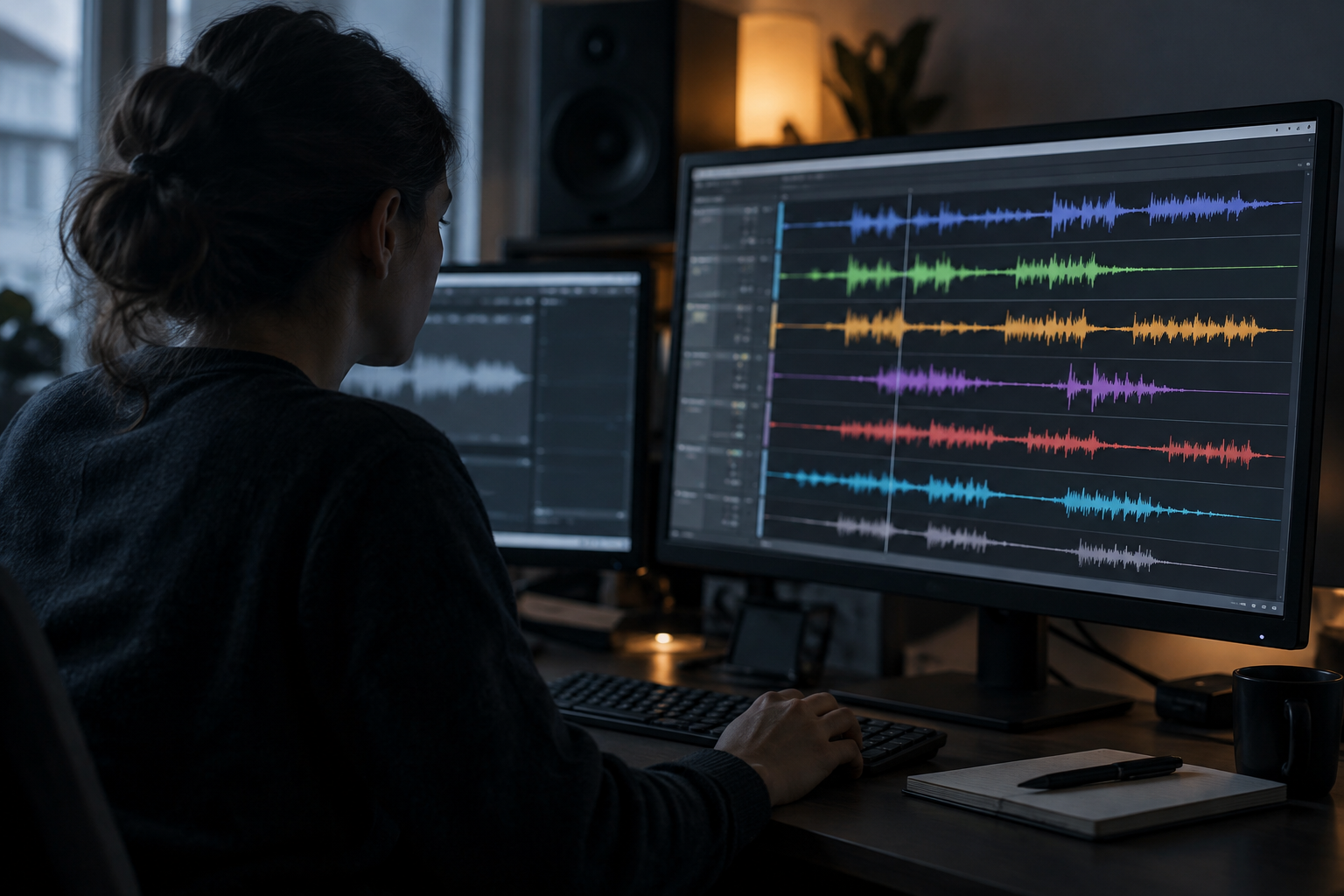
Nvidia dumped the open weights for Nemotron 3 Diarization onto Hugging Face on September 27, 2026. The model lands at roughly 100 million parameters. Its core job is simple on paper and brutal in execution. It listens to raw audio and marks down exactly who spoke, second by second, without requiring a human to clean up the mess.
The system isolates up to eight different voices in a single conversation. It tracks live audio feeds just as easily as stored recordings. Crucially, it detects overlapping speech, flagging the exact moments where two or more people talk at the same time. The model pairs directly with automatic speech recognition frameworks like Parakeet to stamp words with speaker tags, outputting neutral metadata identifiers like "speaker_2" across the timeline.
On the competitive leaderboard, the numbers are unambiguous. Testing on the VoiceArena Diarization-Bench v1 puts Nemotron 3 in the top spot with a Diarization Error Rate of 14.72 percent. The closest rival system recorded an error rate of 19.3 percent. That five-point gap represents an enormous operational margin in speech infrastructure.
Latency controls are built directly into the engine through four selectable buffer tiers:
Running on the 1.04-second buffer across eight distinct benchmark scenarios, Nemotron 3 slashed total diarization errors by an average of 41 percent compared to its direct predecessor, Streaming Sortformer. Shorter buffers inevitably degrade precision, but the architecture keeps tracking voices even when given only fractions of a second to evaluate an acoustic profile.
The benchmark is strict. Overlapping speech counts, and even tiny misalignments at speaker transitions are scored as errors.
Automated transcription has spent a decade hiding an embarrassing flaw. Speech-to-text engines got remarkably good at decoding words, but they stayed hopelessly blind to human social dynamics. Feed a standard model a single speaker delivering a prepared lecture, and you get pristine copy. Put four people in a boardroom, add cross-talk, interruptions, and nervous laughter, and the engine spits out an unreadable wall of text.
Engineers call the fix diarization. It is the technical discipline of solving the "who spoke when" question. Without it, transcripts require human auditors to spend hours manually attributing quotes. With it, software can reliably construct readable dialogue scripts, audit phone calls, and index multi-party depositions.
Doing this after the fact on a completed audio file is difficult enough. Doing it in real time while people are still speaking is an engineering nightmare. Most early production systems relied on offline clustering algorithms. Those setups forced servers to collect the entire audio file, convert it into mathematical representations of acoustic identity, and run iterative math across the entire duration before printing a single speaker tag.
Nvidia previously attacked the streaming challenge with Streaming Sortformer. It was an ambitious attempt to handle continuous speaker sorting with low latency, but it struggled whenever conversations sped up or participants spoke over one another. Heavy reverberation, hollow conference room acoustics, and aggressive background noise regularly broke the system's tracking logic.
VoiceArena established the Diarization-Bench v1 specifically to break these fragile architectures. The benchmark does not reward models for polite turn-taking scenarios. It actively scores overlapping chatter, punishing systems that fail to register two voices talking simultaneously. It also counts microsecond misalignments at speaker handoffs as outright failures, forcing models to pinpoint speaker boundaries with extreme temporal precision.
Developers on Hugging Face noticed the footprint immediately. At 100 million parameters, Nemotron 3 is an architectural lightweight in a market currently obsessed with multi-billion-parameter bloat. Deploying speech pipelines inside live production infrastructure requires lean models that can run concurrently alongside transcription engines without gobbling up entire server clusters.
Practitioners running live deployments are dissecting the trade-offs baked into the buffer tiers. Setting the model to a 30.4-second window produces clean, reliable output, but a half-minute delay is useless for live conversational voice agents or real-time closed captioning. The 1.04-second tier hits the practical sweet spot for telephony and meeting streams, while the 0.32-second tier exposes the acoustic penalty line, trading precision for pure responsiveness.
Engineers also point out the deliberate functional limits of the system. Nemotron 3 does not perform voice biometrics or absolute identity recognition. It does not know that voice one belongs to a customer and voice two belongs to a support agent. It delivers relative, anonymous tags. Upstream applications still have to map those anonymous tokens to actual human identities using external business logic, phone metadata, or voiceprint databases.
Field testing shows that performance drops when rooms get chaotic. Once an environment exceeds eight active participants, or when audio feeds suffer from poor microphone placement and heavy room echo, the error rate climbs sharply above the benchmark baseline of 14.72 percent. Even with those real-world constraints, technical consensus agrees that cutting errors by 41 percent over Streaming Sortformer resets the open standard for streaming speech separation.
Nvidia releasing open weights for a state-of-the-art diarization engine creates immediate downstream problems for commercial speech APIs. Dozens of proprietary transcription vendors build their pricing around per-minute surcharges for speaker separation. When a 100M-parameter model that beats closed alternatives by four to five percentage points becomes freely downloadable, charging premium tolls for speaker diarization gets much harder to justify.
The immediate technical convergence will happen inside open-source speech stacks. Developers are already wiring Nemotron 3 directly into pipelines powered by Nvidia's Parakeet ASR and community distributions of OpenAI's Whisper. That combination yields a fully autonomous, high-accuracy transcription engine that assigns real-time speaker metadata without sending a single byte of confidential audio outside local company infrastructure.
Enterprise legal and healthcare operations will jump on this footprint first. Both sectors handle confidential, multi-party audio, from courtroom depositions to doctor-patient consultations, and both face strict regulatory prohibitions against sending audio streams to third-party cloud APIs. A 100M-parameter diarization model can run locally on an entry-level workstation or an edge appliance, handling multi-speaker transcription behind corporate firewalls.
Hardware vendors building meeting room appliances, video conferencing bars, and smart speaker hardware will begin pulling the model into local firmware. Instead of relying on directional microphone arrays alone to guess who is talking, hardware makers can run Nemotron 3 at a 0.32-second buffer to execute real-time camera tracking, automatically framing whoever holds the floor while maintaining continuous tracking through rapid interruptions.
The pressure now swings back to evaluation platforms like VoiceArena. As models conquer eight-speaker clean feeds, benchmark maintainers will have to construct v2 benchmarks loaded with casual group conversations, street noise, and mobile phone compression to expose the next generation of acoustic failure points.
Nvidia just commoditized speaker separation. Diarization was the last technical bottleneck preventing developers from running complete, high-accuracy meeting transcription engines on cheap local hardware. By releasing a 100-million parameter model that outperforms expensive closed systems and handles real-time cross-talk, Nvidia removes the justification for per-minute cloud diarization markups. Proprietary speech-to-text vendors will either have to cut their prices or watch developers assemble their own zero-cost, locally hosted audio intelligence stacks using Parakeet and Nemotron.
Reported off The Decoder. Original reporting and analysis by Devon Achebe for Vox Roboti.
It is an open-weight AI model from Nvidia that detects who is talking in audio recordings or real-time streams.
The model separates up to eight distinct speakers in a single conversation and flags overlapping speech.
Nemotron 3 Diarization contains roughly 100 million parameters, making it lightweight enough for local deployment.
It offers four buffer options ranging from 30.4 seconds down to 0.32 seconds, with 1.04 seconds balancing speed and accuracy.
No. The system generates anonymous labels like speaker_2, which external business logic must map to specific individuals.
It leads the VoiceArena Diarization-Bench v1 with a 14.72 percent error rate, outperforming the runner-up at 19.3 percent.
Heavy background noise, room reverb, and crowds exceeding eight speakers increase the model's diarization error rate.
It pairs directly with speech recognition systems like Nvidia Parakeet to attach speaker labels to generated text transcripts.
Selma Ortiz · 17h ago · 4 min read
Cass Iverson · 2d ago · 5 min read

Selma Ortiz · 2d ago · 5 min read