
Voice Agents
Google Drops the Fitbit Edge and Tightens the Hardware Trap
Priya Raghunathan · 2d ago · 5 min read
Meta dropped its Muse agent onto the iPad four weeks after mobile launch. With 6.6 million installs and direct wallet hooks, this isn't a chatbot experiment.

By Devon Achebe, Infrastructure reporter · Reported off TechCrunch AI
Follows latency, cost and the parts of the stack vendors hide.
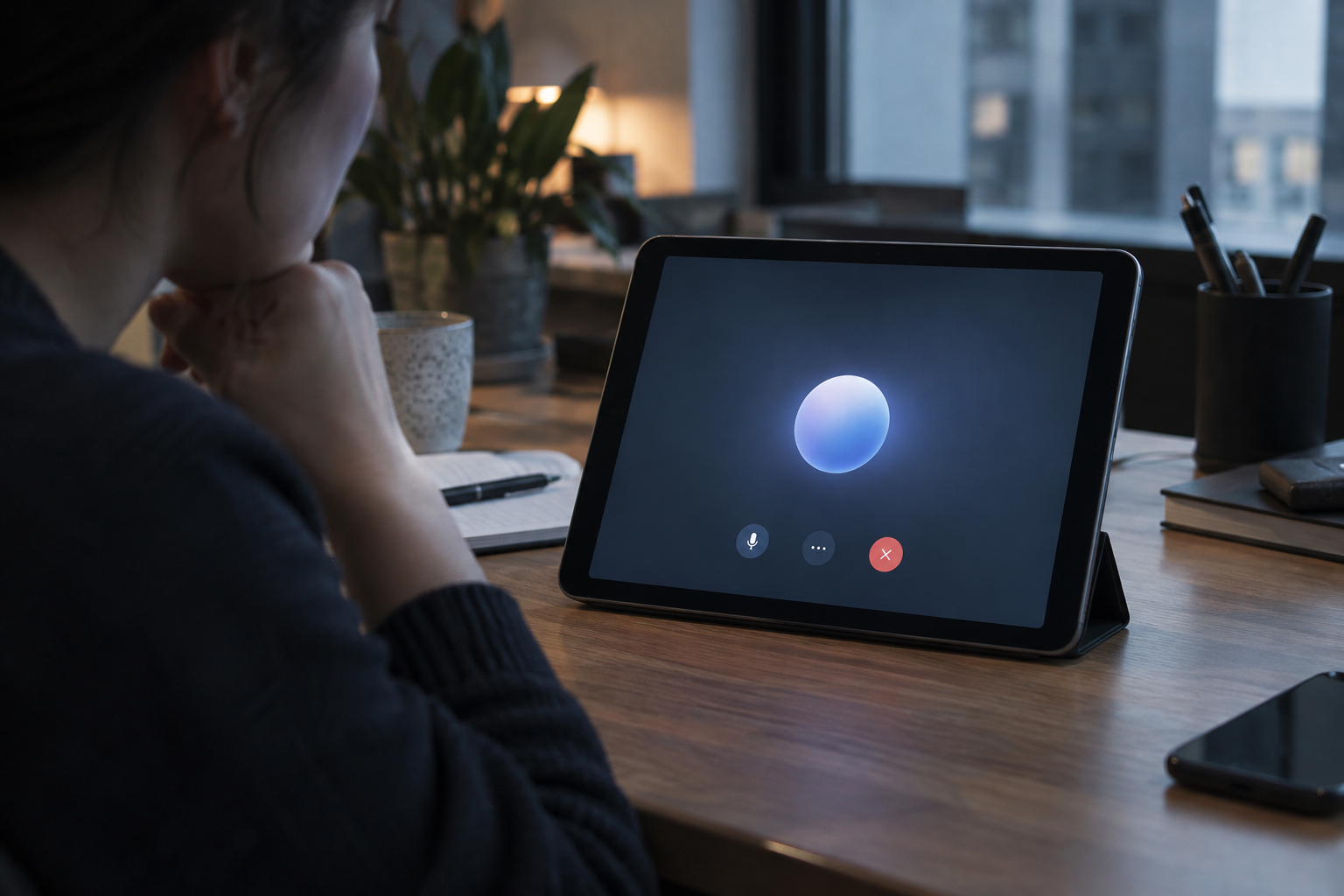
Mark Zuckerberg waited fifteen years to bring Instagram to the iPad. He waited twenty-nine days for Muse.
On October 7, 2026, Meta dropped a dedicated iPad application for its flagship AI assistant. The tablet release landed barely a month after Muse made its mobile debut across iOS and Android on September 8. That kind of turnaround speed does not happen inside Menlo Park unless leadership views the underlying product as an existential priority.
According to analytics firm Sensor Tower, Muse racked up more than 6.6 million installations during those opening four weeks. That number gave Meta enough runway to expand the agent's footprint beyond basic phone queries.
The iPad version does not just stretch a chat window across a bigger piece of glass. It rolls out an expanded roster of deep integrations Meta calls connectors. Users link their personal and work credentials directly into Muse to delegate real digital labour.
On the enterprise side, the updated roster includes:
On the consumer front, Meta struck deals with five major commercial heavyweights: Walmart, Best Buy, Sephora, Gap, and Wayfair. Muse does not merely link users to these storefronts. The agent navigates inventory, selects items, and completes purchases directly on the user's behalf.
For over a decade, Meta treated tablet hardware like an irrelevant distraction. Instagram chief Adam Mosseri spent years telling tablet owners that the iPad user base was simply not large enough to justify a dedicated engineering squad. The mobile web wrapper was supposedly good enough.
Muse broke that tradition because text and utility scale where high-resolution photo grids stall. Porting an interactive conversational canvas to a 13-inch display requires a fraction of the layout engineering demanded by video feeds and camera effects. More importantly, tablet owners use their devices for work, administration, and online purchasing—the exact behaviour Muse needs to capture.
Meta cannot afford to keep Muse trapped as a smartphone gimmick. The tech sector is crowded with consumer AI agents trying to act as digital personal secretaries. Google, Apple, and OpenAI are all racing to build software that manages human schedules, clears email inboxes, pays household bills, and makes buying decisions.
The value of an AI assistant is not measured by how well it writes poetry. It is measured by the number of services you trust it to access.
By integrating connectors, Meta bypassed the conversational trap. Conversational bots that only supply answers remain software features. Agents that hold login credentials for your bank, your design team, and your favourite grocery chain become digital operating systems.
Muse reached 6.6 million users because it promised to automate mundane digital friction. Booking a dinner reservation or managing a calendar invite saves ten seconds. Logging into QuickBooks to reconcile an invoice or ordering school clothes through the Gap checkout page saves an hour. That is where Meta wants Muse to sit.
The fast rollout highlights how hard Meta is pressing on agent architecture, but it also exposed immediate friction with the broader internet.
When autonomous agents try to browse third-party sites to buy products or gather pricing data, merchant servers react defensively. Security firewalls cannot easily differentiate between a personal agent ordering a sweater for a paying customer and a malicious bot farm scraping product data or attempting card fraud. Retailers regularly cut off Muse mid-task, blocking its IP addresses and freezing transactions before checkout.
Meta acknowledged the roadblock on October 6, one day before the iPad release. The company announced it is working with industry peers to draft an open technical standard for agent verification. The proposed framework gives personal AI agents a verifiable digital passport. When Muse hits an e-commerce platform, the site's firewall reads the identity token, confirms the agent is acting under human direction, and allows the transaction to process without captcha interruptions.
Critics argue that an open standard led by Meta is simply an attempt to write the traffic rules for the automated web. If Meta sets the benchmark for what qualifies as an approved personal assistant, it gains outsized leverage over how independent businesses interact with synthetic traffic.
Software engineers also point out the inherent risks of giving a conversational wrapper direct access to production environments. Granting Muse read and write permissions inside GitHub repositories, corporate Asana boards, and company Meta ad accounts turns the assistant into an internal threat vector if prompt manipulation compromises the software.
The tablet app is an aggressive foot in the door, but Meta faces three critical execution hurdles before Muse becomes a daily utility.
First, merchant adoption of the proposed agent identification standard will determine whether consumer shopping succeeds. Walmart, Best Buy, Sephora, Gap, and Wayfair joined early because they want friction-free checkouts. Smaller merchants running standard web application firewalls will not automatically roll out the red carpet for Meta's automated shoppers. Until security providers agree on how to screen agentic requests, Muse will continue breaking on long-tail e-commerce sites.
Second, Meta must keep users comfortable with delegation risk. Connecting an assistant to a throwaway social profile is trivial. Connecting Muse to QuickBooks, enterprise Dropbox folders, and active credit cards requires absolute reliability. A single hallucinated zero on a retail order or an accidental deletion inside an Asana roadmap will send corporate users running back to manual interfaces.
Third, watch the monetization strategy inside the Meta ad account connector. Right now, Muse acts as an administrative layer for marketers looking to adjust spend and track campaign metrics. The moment Meta lets Muse make autonomous decisions on where to allocate ad dollars across its own ad networks, the regulatory scrutiny around self-preferencing will ramp up immediately.
Meta proved it can push agent software to new screen sizes in record time. Now it has to prove that its bot can touch real money and proprietary data without breaking the web around it.
Meta is moving faster than Apple and Google to turn an AI assistant into a universal transaction layer. By connecting Muse directly to bank accounts, enterprise workspaces, and merchant checkouts, Mark Zuckerberg is positioning Meta between consumers and every digital transaction they initiate. If website operators accept Meta's verification protocol, Muse stops being a novelty app and becomes the default operating system for consumer intent.
Reported off TechCrunch AI. Original reporting and analysis by Devon Achebe for Vox Roboti.
Sensor Tower estimates Muse collected over 6.6 million downloads across iOS and Android during its first month on the market.
Muse handles checkout workflows across five retail partners: Walmart, Best Buy, Sephora, Gap, and Wayfair.
Yes. It connects to Asana, Canva, Dropbox, Figma, QuickBooks, GitHub, Klaviyo, Notion, Granola, Zoom, and Meta ad accounts.
A text-heavy agent interface avoids the complex media rendering bottlenecks that stalled photo-heavy apps like Instagram on larger screens.
Merchant security systems mistake automated consumer agents for malicious web scrapers and cut off their site access.
Meta is teaming up with industry partners on an open technical standard that lets legitimate personal agents verify themselves to businesses.
Priya Raghunathan · 2d ago · 5 min read

Nina Falco · 3d ago · 5 min read

Devon Achebe · 4d ago · 4 min read