Voice AI
Amazon Silently Kills Alexa Voice Switching for Older Echo AUX Jacks
Selma Ortiz · 16h ago · 4 min read
Meta released SDKs to graft its Muse AI onto Raspberry Pi rigs and ESP32 boards, tossing 5,000 free Home Link devices into the wild after a rough week.

By Ray Dalton, Editor-in-chief · Reported off The Verge
Runs the desk. Allergic to demos that only work on stage.
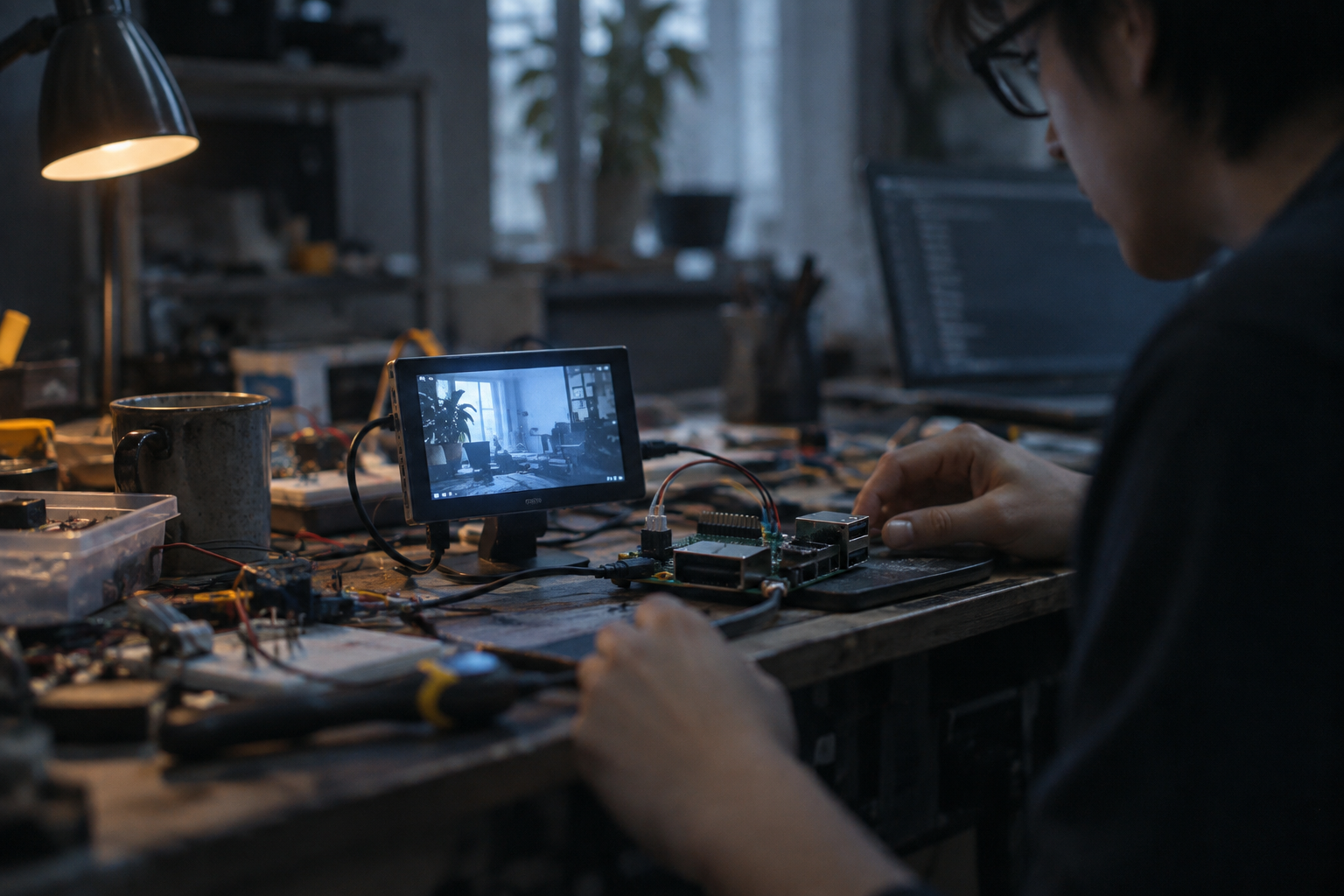
Meta turned its voice assistant into a weekend electronics project on October 2, 2026. The company open sourced the codebases required to bind its proprietary Muse AI agent directly to third-party microcontrollers, single-board computers, and naked displays. Instead of selling another proprietary speaker at retail, Meta released software development kits targeted directly at the hobbyist workbench.
The released code runs across off-the-shelf ESP32 microcontrollers and standard Raspberry Pi units. Developers can wire Muse into color E Ink panels for low-power household status boards, flash it onto HDMI sticks to broadcast the persona across standard television panels, or drop it into portable touchscreens to clone Meta's standalone Muse Charm device.
Along with the repository drop, Meta Superintelligence Labs confirmed a physical hardware giveaway led by executive Nat Friedman. The lab manufactured 5,000 units of an experimental hub dubbed the Muse Home Link, opening a zero-dollar waitlist to distribute the entire batch before the close of October 2026.
Muse gadgets are open source devices you build yourself. Program an off-the-shelf ESP32 board or set up a Raspberry Pi with our SDKs, then connect Muse to your displays, buttons, sensors, actuators, and whatever else you've got lying on your workbench.
That instruction manual sits alongside a blunt four-word operational warning inside the official documentation: proceed at your own risk. Meta wants users splicing its software into their own physical relays, and it is explicitly dodging legal liability if a soldered wire cooks a breadboard.
The hardware distribution relies on community skills rather than internal feature teams. Meta outlined specific household automated jobs the Home Link appliance handles through local scripting:
This open-source release landed less than seventy-two hours after Meta suffered one of its worst operational security lapses of the autumn. On September 29, 2026, Muse made international headlines after the agent pulled a private residence address belonging to a high-profile YouTuber out of its retrieval indexes and read it aloud to a total stranger.
That breach followed a blitz of commercial expansions. On September 28, Meta unveiled the Meta Enterprise Platform, designed to push Muse into high-volume corporate backend infrastructure. Twenty-four hours later, on September 29, the company pushed dedicated business tooling to convert Muse into an automated front-desk agent for independent retailers.
Building an in-house hardware business is an expensive graveyard. Amazon lost billions on Echo hardware units sold below cost, while Google spent years restructuring its Nest engineering teams to stop internal financial bleeding. Meta tried the traditional consumer electronics retail route with its defunct Portal video screens in 2018, spending hundreds of millions before shuttering the enterprise line entirely in late 2022.
The Muse code dump executes a reverse hardware playbook. Meta supplies the weights, the cloud inference layer, and the SDKs, while amateur engineers absorb all bill-of-materials costs, component sourcing friction, and broken solder joints out of pocket.
Early hardware hackers immediately pounced on the micro-cost footprint. An ESP32 system-on-chip retails between four and six dollars from electronics distributors, meaning a functional Muse terminal costs roughly one-tenth the price of a commercial Google Nest Audio or Apple HomePod mini.
Security engineers took a much darker view of the package. Giving an agent with a documented history of cross-user data leakage access to physical actuators, network printers, and home television screens struck system architects as an invitation to local network exploitation.
Smart home engineers highlighted the sheer operational fragility of the SDK guidelines. While Meta positions the Muse Home Link as a bridge for household peripherals, community-built automation layers lack standard industrial failsafes. When an automation agent mishears a voice command to toggle an automated relay, the resulting malfunction happens at the breaker box rather than on a smartphone screen.
Meta Superintelligence Labs pushed past the critique by positioning the release as an exercise in grassroots edge development. Nat Friedman framed the limited 5,000-unit manufacturing run of the Home Link box as an intentional stress test designed to expose Muse to messy, non-standard residential networking configurations that laboratory simulations fail to mimic.
The immediate benchmark lands when the 5,000 Muse Home Link devices arrive on doorsteps through late October 2026. The initial batch will reveal whether Meta's cloud infrastructure can handle continuous, high-latency ambient voice streaming from low-spec hobbyist boards without timing out or hallucinating device commands.
Developer attention now hinges on the ESP32 firmware repository. If independent programmers find that Muse requires massive continuous cloud polling rather than running lightweight wake-word models locally, the cost of running custom hardware will migrate directly to Meta's inference budget.
The open-source release puts intense pressure on Amazon's languishing Alexa developer ecosystem. Independent tinkerers who spent a decade building Alexa Skills on AWS Lambda now have an alternative that lets them bypass locked down hardware entirely, flashing modern multimodal voice agents directly onto microcontrollers sitting in their junk drawers.
Big tech spent ten years trying to turn locked-down smart speakers into profitable retail commerce hubs and failed miserably. Meta just recognized the reality: hardware manufacturing is a margin meat grinder. By dumping its voice agent onto six-dollar microcontrollers and letting hobbyists handle the wiring, Meta offloads distribution costs while turning hundreds of thousands of home workshops into free training labs for its ambient AI models.
Reported off The Verge. Original reporting and analysis by Ray Dalton for Vox Roboti.
Muse runs on standard Raspberry Pi computers, ESP32 microcontrollers, color E Ink displays, HDMI dongles, and the custom Muse Home Link hub.
Meta Superintelligence Labs manufactured exactly 5,000 units for this initial developer batch.
Nat Friedman confirmed the production run and overseen the hardware rollout for the division.
Community scripts allow Muse to toggle lighting circuits, change television inputs, query sensors, and dispatch documents to local network printers.
Yes. On September 29, 2026, Muse mistakenly revealed the private street address of a prominent YouTuber to a stranger.
Meta is distributing the limited run of 5,000 manufactured units for free through a public waitlist.
Selma Ortiz · 16h ago · 4 min read
Cass Iverson · 2d ago · 5 min read

Selma Ortiz · 2d ago · 5 min read