Voice AI
Amazon Silently Kills Alexa Voice Switching for Older Echo AUX Jacks
Selma Ortiz · 17h ago · 4 min read
Logitech launched the $160 Yeti 2 on Sept. 23, 2026, adding spatial voice tracking, onboard AI denoising, and an animated LED mascot to replace a 17-year-old staple.

By Ray Dalton, Editor-in-chief · Reported off Engadget
Runs the desk. Allergic to demos that only work on stage.
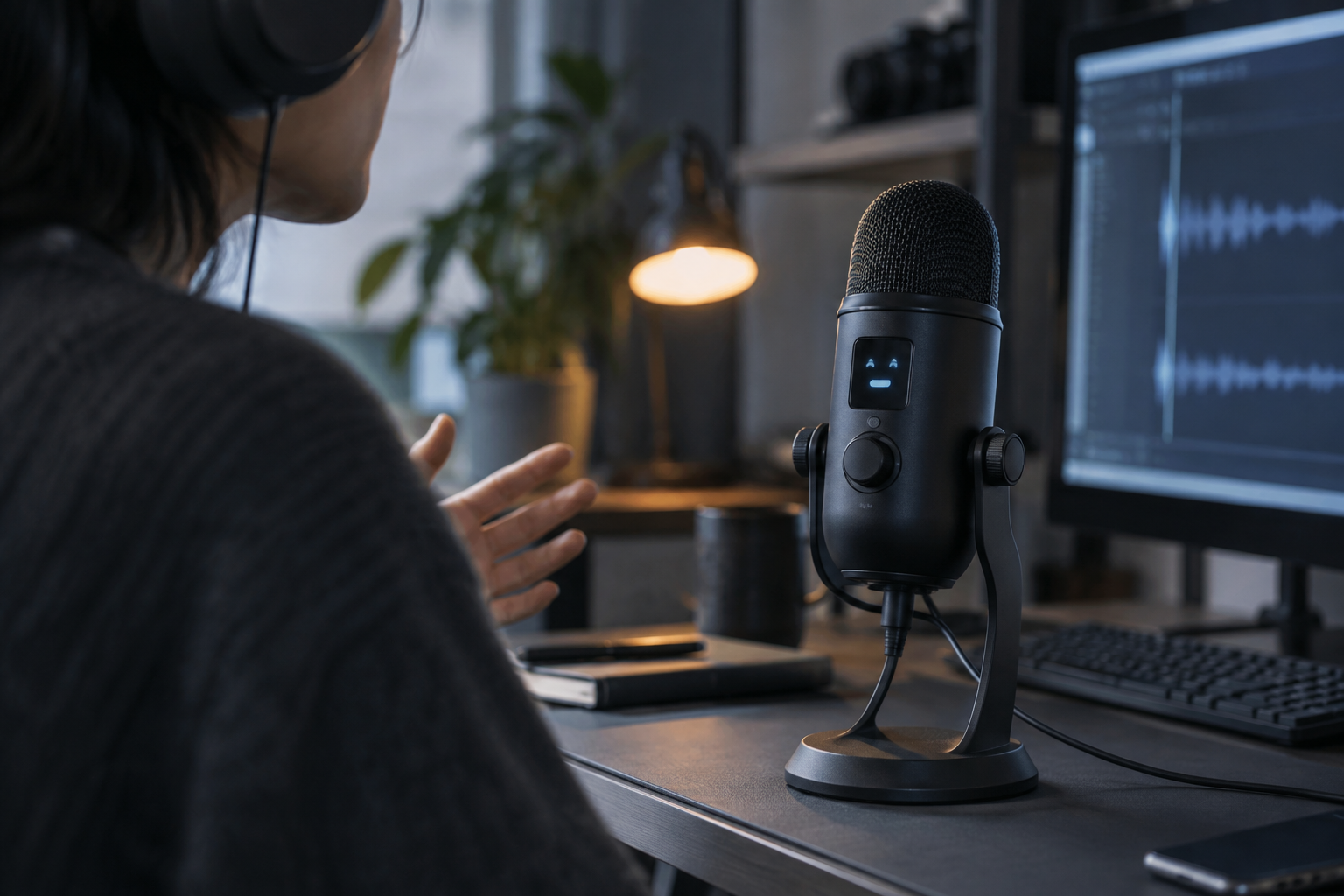
Your favorite bedroom streamer's favorite desk ornament just got its first direct sequel in seventeen years. On Sept. 23, 2026, Logitech pulled the curtain off the Yeti 2, a $160 USB condenser microphone built to drag the venerable Blue Yeti brand into modern audio workflows. It ships immediately in matte black and clean white finishes across Logitech's digital storefront and major retail outlets. You plug it in over USB, and the familiar heavy silhouette still sits on your desk, but the internal silicon is doing things the 2009 original could not fathom.
The centerpiece of the redesign is an integrated 3D proximity sensor that tracks where your mouth is in physical space. When you lean back in your chair during a broadcast or turn your head to check a second monitor, the Yeti 2 continuously calculates the distance shift and recalculates gain stages on the fly. It simultaneously adjusts dynamic equalization and alters its internal polar pickup patterns so your vocal volume stays locked at nominal speech levels without manual knob twisting.
Underneath the metal grille sits an updated three-capsule condenser array pushing 24-bit audio resolution at a 48kHz sampling rate. Logitech left automatic gain control and spatial tracking active straight out of the box, meaning non-technical users do not need to download mixing utilities to get balanced output. If you want direct manual control, you get a physical rotary control dial on the front chassis and five hardware profile slots to store distinct vocal presets locally on the unit.
Logitech also dropped a dedicated artificial intelligence noise-suppression engine straight onto the onboard processor. Instead of farming out background removal to high-overhead desktop software suites, the microphone strips out mechanical keystrokes, mouse clicks, and ambient desk rumbles before the audio stream touches the operating system. Physical interactions route through a capacitive mute button on the surface, paired with an integrated 3.5mm analog headphone jack on the base for zero-latency hardware monitoring.
Then there is the creature living on your desk. Embedded directly above the control cluster is a 1.3-inch LED display running an animated Yeti mascot. The tiny pixel beast grimaces, smiles, and reacts in real time to signal input gain thresholds, clipping alerts, and active pickup modes. If you dislike fictional mountain monsters staring at your throat while you speak, Logitech lets you swap the mascot out for alternative custom avatars inside its desktop G Hub configuration utility.
To understand why Logitech put an artificial intelligence brain inside a $160 condenser mic, look at the timeline. The original Blue Yeti launched in 2009. At that moment, George W. Bush had just left office, Justin Bieber was an unsigned YouTube singer, and podcasting was a niche pastime for radio obsessives. Blue Microphones built an oversized, sensitive USB capsule system that solved a brutal problem: it let ordinary creators skip multi-thousand-dollar audio interfaces and XLR cabling.
That convenience came with a permanent technical curse. The original Yeti used extremely sensitive open capsules that hoovered up every stray acoustic flaw in an untreated suburban bedroom. If an air conditioner kicked on three rooms away, your podcast listeners heard it. If you typed on a mechanical keyboard while streaming League of Legends, your teammates heard an artillery barrage. Creators spent the next decade stuffing their closets with blankets, taping acoustic foam to drywall, and running convoluted third-party audio software patches just to clean up the signal.
Over that seventeen-year run, Logitech acquired Blue and rolled out multiple offshoots, including smaller Nano models and larger Pro variants with XLR terminals. Yet the core design of the entry-level flagship stayed largely untouched while desktop audio radically changed around it. Hardware rivals began baking digital signal processors directly into microphone housing to automate compression and limiters. Meanwhile, software-based noise gates became standard inclusions on Discord and Twitch, exposing just how raw and unmanaged the original Yeti's capsule architecture really was.
The baseline problem of USB audio has never been capturing clear vocal tone; it has always been keeping amateur creators from ruining their own gain structure the second they move an inch off-axis.
Logitech's modern gaming and creator business runs on G Hub, an ecosystem where users expect single-click automation rather than audio engineering degrees. The Yeti 2 is the corporate admission that most people who buy USB microphones do not want to balance preamps, calculate the proximity effect, or monitor decibel headroom. They want to speak at varying distances and sound like they spent three hours soundproofing a custom vocal booth.
Early evaluations from technical reviewers focus heavily on whether the onboard electronics replace standard streaming software plugins. Engadget tech reviewer Will Shanklin noted that the integrated 1.3-inch LED display and its animated creature evoke serious memories of Microsoft's classic Clippy desktop assistant. Shanklin pointed out that while a cartoon companion looks decidedly gimmicky on paper, dynamic visual cues beat a cryptic single-color blinking LED when a creator needs to know whether their signal is clipping or their directional pattern drifted.
Reviewers examining the automation package emphasize the divide between audio purists and plug-and-play creators. Shanklin highlighted the practical utility of the automated 3D spatial tracking and gain balancing, noting that these features can eliminate the burden for users who have zero interest in turning audio level management into an ongoing personal hobby. Traditional sound engineers routinely dismiss automated tracking because dynamic DSP can introduce digital compression artifacts, but commentary across the streaming scene reflects relief at dodging third-party virtual audio cables.
Inside creator communities, the reaction splits across hardware priorities:
Software-level customization through Logitech G Hub is also drawing early scrutiny. Reviewers note that while the companion software allows users to suppress the default animated Yeti in favor of different graphic avatars, deep parametric tweaking remains secondary to the mic's hardcoded autonomous features. Logitech designed the hardware to make decisions without the user's intervention, a philosophical shift that clearly targets mass-market video creators rather than studio technicians.
The arrival of the Yeti 2 marks a fundamental transition in how consumer peripheral makers approach desktop voice capture. By shifting real-time spatial sensing and machine-learning noise suppression off host computer processors and directly into the microphone's internal architecture, Logitech is setting a baseline that legacy XLR hardware cannot easily match without thousands of dollars in outboard channel strips.
Watch how competitors in the creator audio space respond over the next twelve months. Brands that have relied on software suites to run ambient gating and equalization will face pressure to bake dedicated inference chips directly into their USB hardware. A microphone can no longer just be an analog transducer paired with a cheap analog-to-digital converter; it has to operate as an autonomous recording engineer that compensates for poor microphone discipline in real time.
For remote workers, corporate broadcasters, and casual streamers, this shift effectively kills off the manual soundcheck. When an endpoint microphone can dynamically remap polar patterns and suppress mechanical clicks before the data packet reaches Slack, Zoom, or OBS, the barrier to professional-grade speech capture drops to zero. Logitech spent seventeen years coasting on the mechanical reputation of a heavy metal cylinder. With the Yeti 2, it finally conceded that in the modern creator economy, raw capsule sensitivity is useless without an onboard algorithmic brain to manage it.
USB microphones spent nearly two decades treating creators like junior audio engineers who needed to study gain staging and acoustic treatment. Logitech putting autonomous spatial tracking and AI noise suppression onto dedicated consumer silicon changes the baseline. The microphone is no longer a dumb passive pipe feeding raw audio to your computer. It is an active mixer that forgives bad posture, poor technique, and noisy rooms, forcing every peripheral maker in the voice space to match its onboard intelligence or get left behind.
Reported off Engadget. Original reporting and analysis by Ray Dalton for Vox Roboti.
The Logitech Yeti 2 retails for $160 on Logitech's official website and through third-party retail partners.
Logitech officially released the Yeti 2 on Sept. 23, 2026.
It tracks your voice in space to automatically adjust microphone gain, EQ, and directional pickup patterns as you move.
The 1.3-inch LED display features an animated Yeti mascot that gives real-time visual feedback on gain and directional patterns.
Yes. You can swap out the default Yeti mascot for custom avatars using Logitech's G Hub desktop software.
Yes. The Yeti 2 features onboard AI noise reduction built to suppress background sounds like mouse clicks and mechanical keystrokes.
The Yeti 2 records at 24-bit resolution and a 48kHz sample rate using a redesigned three-capsule condenser array.
Selma Ortiz · 17h ago · 4 min read

Cass Iverson · 2d ago · 5 min read

Selma Ortiz · 2d ago · 5 min read