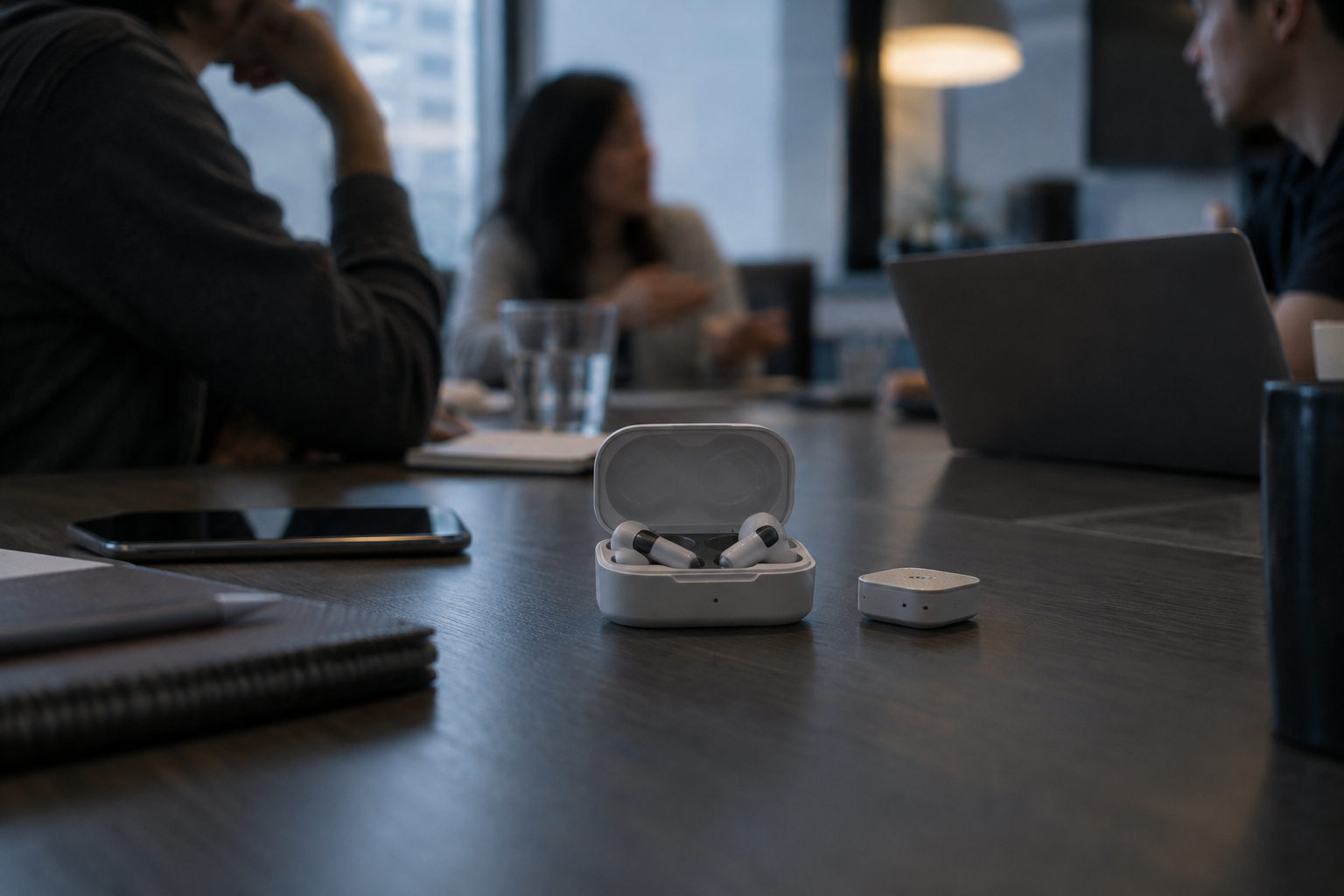
Voice AI
Nothing Ear Note Puts Conversational AI in Your Ears and Your Pocket
Ray Dalton · 19h ago · 5 min read
Google rolled out 66 localized voice profiles across iOS and Android, taking aim at synthetic caricature and testing whether local cadence drives daily retention.

By Cass Iverson, Synthetic voice correspondent · Reported off Google Blog
Audio engineer turned reporter. Hears the artefacts you do not.
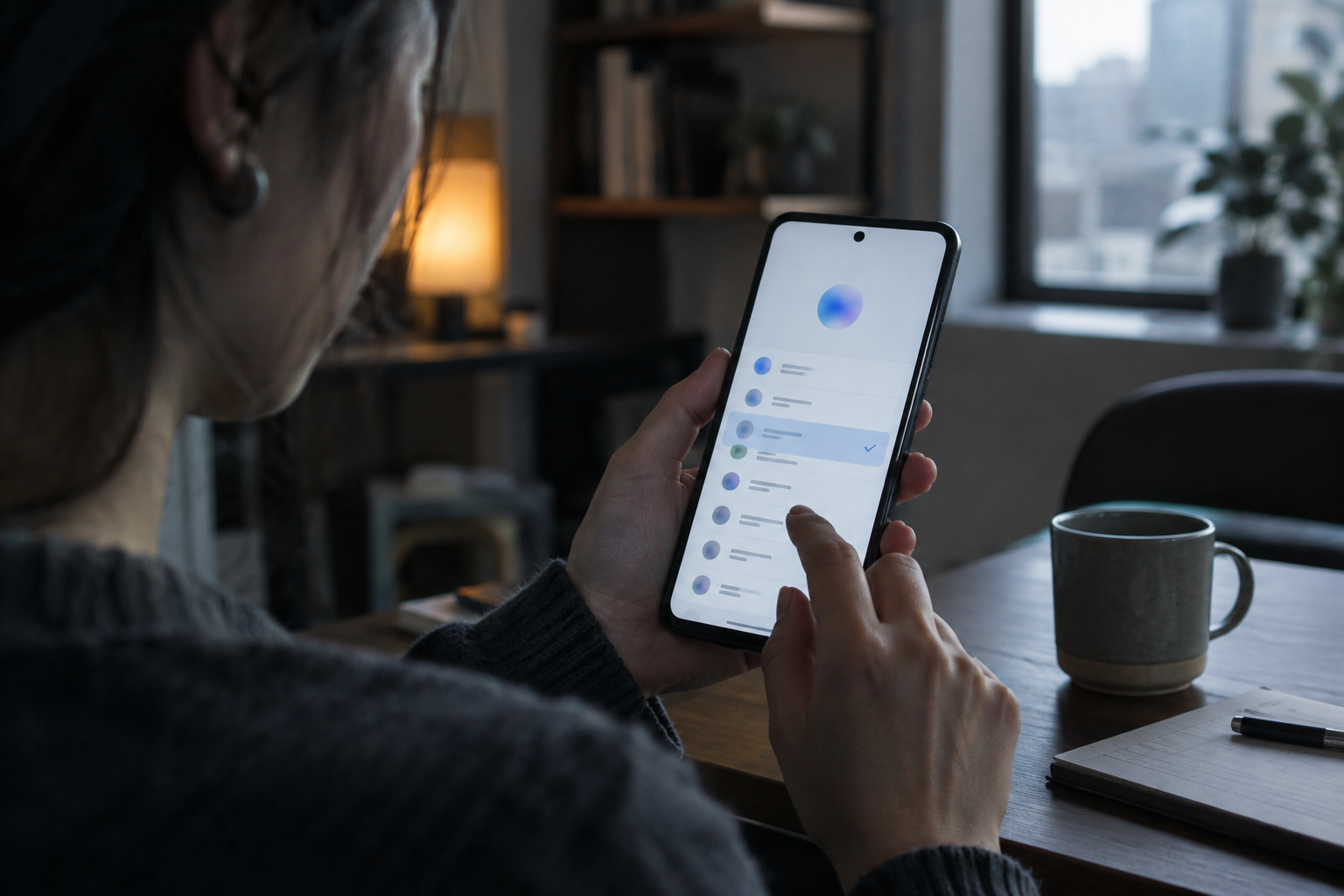
Google decided your phone assistant should finally sound like the corner of the planet you actually inhabit. On November 16, 2026, Neel Joshi, director of product management for Gemini Live, rolled out 66 distinct regional voice options across the standalone Gemini application for Android and iOS.
The catalog spans seven primary linguistic footprints: United States English, United Kingdom English, India English, Hindi, Brazilian Portuguese, Indonesian, and Korean. Each bucket splits into multiple localized tonal variants. The engineering brief targeted speech rhythm, pitch variations, and authentic cadence rather than the cartoonish phonetic inflections that plagued voice engines for a generation.
You do not need a developer token to swap the voice models. Users trigger the change by tapping the three-dot overflow menu inside the real-time Gemini Live interface or by navigating to the designated voice menu inside the general application settings. Once you assign an acoustic profile, it binds to your Google account profile across three distinct input modes: spontaneous conversational exchanges in Gemini Live, interactive bilingual tutoring sessions, and the standard chat screen where the platform's text-to-speech engine speaks long-form answers after you tap the Listen speaker icon.
The update lands alongside companion releases that tie Gemini into Apple CarPlay navigation and connect Google Wallet data feeds to the conversational backend. Google is not treating speech as a novelty overlay anymore. They are wiring acoustic persona directly into transactional mobile software.
This deployment traces back to pledges made on stage at Google I/O, where Mountain View first signaled plans to decentralize its voice persona away from generic Californian neutrals. For the better part of twelve years, consumer text-to-speech ran on sterile, hyper-enunciated acoustic profiles designed to maximize machine comprehension over human comfort. Google Assistant leaned on a numbered series of standardized synthetic actors that sounded acceptable in suburban Ohio and jarring everywhere else.
Generative audio fundamentally rewrote the unit economics of training regional speech models. Legacy voice pipelines required talent agencies to book voice actors for three hundred hours of studio booth phoneme reading to build a single voice font. DeepMind's modern generative speech architectures flipped that workflow by decoupling acoustic identity from language models, allowing engineers to train inflection maps on regional conversational datasets without building separate baseline models from scratch.
That architectural shift became critical once Gemini Live entered production as a direct competitor to OpenAI's Advanced Voice Mode. OpenAI came to market with a tightly curated bench of expressive, Midwestern-slanted character voices like Breeze and Cove. Google countered by leveraging its distributed international training footprint, using YouTube acoustic data and regional telephony telemetry to map out how people actually drop consonants in Jakarta, Leeds, and São Paulo.
Synthetic voices fail the second they cross the line into caricature. If the local cadence feels performative, users revert to silent text immediately.
The international focus also reflects cold device hardware realities. Android claims over seventy percent of global smartphone market share, dominating emerging economies across Southeast Asia and South America where English is a secondary transactional medium. An assistant that speaks Indonesian with an American accent alienates the exact user base Google needs to lock down against open-source local foundation models.
Inside Mountain View, the engineering team framed the launch as an intentional rejection of exaggerated dialect mimicry. Joshi stressed that the acoustic tuning prioritized conversational rhythm and daily legibility rather than vocal theater, acknowledging internally that synthetic accents often descend into patronizing minstrelsy if pitch modulations swing too wide.
Independent speech synthesis researchers point out that regional phonetics represent the hardest edge case in conversational AI deployment. When an assistant attempts a regional cadence like Indian English, it must balance syllable-timed prosody against Google's core speech-to-text tokenizers, which historically favored stress-timed American sentence structures. Botching that balance produces what acoustic linguists call the uncanny valley of speech: a synthetic speaker that sounds like a tourist trying too hard.
Competitors in the agentic voice sector view the massive 66-voice rollout as a brute-force infrastructure flex. While boutique synthetic audio startups like ElevenLabs sell hyper-personalized voice cloning via paid API credits, Google is absorbing the inference cost directly within its standard mobile distribution footprint. Product leads across the voice ecosystem note that shipping tailored accents in Korean, Brazilian Portuguese, and regional English under a single zero-tier toggle forces every competitor to justify why their own assistants still sound like corporate telephone switches.
The immediate battle moves to enterprise adaptation and hands-free hardware endpoints. By binding custom regional voices across Gemini Live, foreign language tutoring, and CarPlay interfaces, Google creates an expectation that AI speech must mirror local sociology. If an enterprise customer deploys a customer support voice agent in Mumbai using standard American acoustic models, retention metrics crater against consumer expectations Google just established for free.
Expect the underlying models to face scrutiny over dialect bias and accent drift during extended sessions. Multi-turn spoken conversations stress-test generative audio latencies; as system prompts grow and context windows fill, voice synthesis engines frequently revert to baseline neutral training pitches to save compute cycles. Google's engineering team will have to prove these 66 regional voices can maintain their localized cadence through a thirty-minute brainstorming argument without slipping back into a Silicon Valley corporate monotone.
The broader target remains hardware integration across Android's OEM ecosystem. Samsung, Xiaomi, and Google's internal Pixel division will use these localized profiles to replace legacy on-device voice recognition modules by the end of 2027. Once an assistant talks with the familiar cadence of your hometown, the barrier to letting it manage your bank accounts, calendar appointments, and messaging workflows quietly evaporates.
Here is what to track as the rollout propagates across international carrier networks:
Acoustic monoculture is dead. By throwing 66 regional accents into consumer smartphones at zero marginal cost, Google just made every single-accent enterprise voice agent feel hopelessly obsolete. If an assistant cannot match the conversational pitch and local cadence of the human holding the device, users simply stop talking to it. Silicon Valley neutral is no longer the default language of technology.
Reported off Google Blog. Original reporting and analysis by Cass Iverson for Vox Roboti.
Tap the three-dot menu inside Gemini Live or open voice preferences in the app settings menu.
Google added 66 regional voice options across seven core linguistic markets.
Yes. Your selected voice plays whenever you tap the Listen icon on written responses.
Options include US, UK, and India English, Hindi, Brazilian Portuguese, Indonesian, and Korean.
Yes. The 66 regional voices launched simultaneously on both iOS and Android Gemini apps.
No. The regional voices are integrated directly into standard Gemini app voice options.
Ray Dalton · 19h ago · 5 min read
Cass Iverson · 4d ago · 6 min read