
Synthetic Voice
Cloudera Hooks Neo4j and Cartesia Into Its Enterprise Data Engine
Cass Iverson · 5d ago · 5 min read
ElevenLabs just dropped its v4 model, scaling synthetic speech to 90 languages and handing developers real dynamic control over human vocal nuances.

By Cass Iverson, Synthetic voice correspondent · Reported off Voice vendor watch
Audio engineer turned reporter. Hears the artefacts you do not.
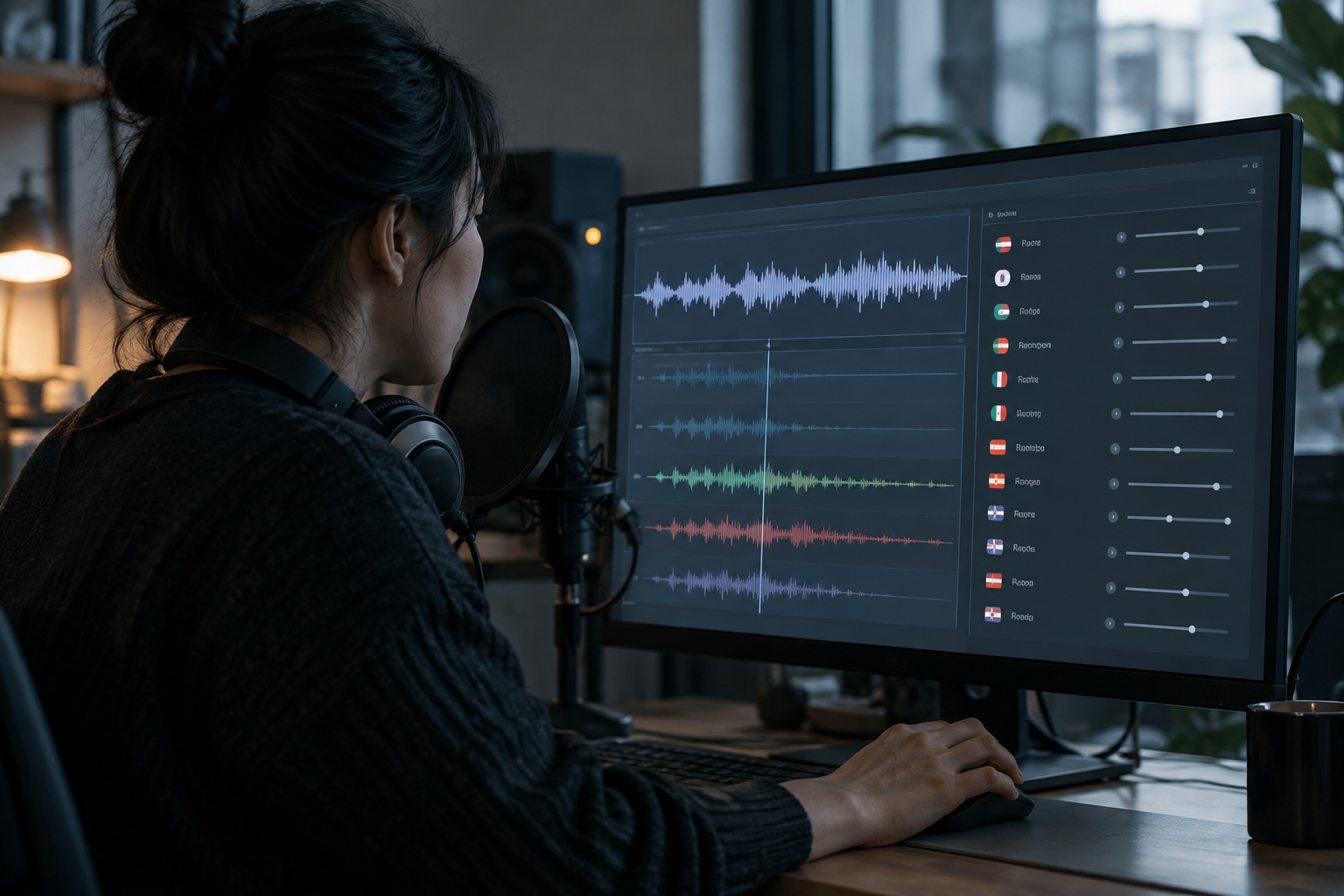
ElevenLabs rolled out its v4 speech model. The release delivers two massive technical jumps: native support for 90 languages and a dramatic overhaul in fine-grained expression control. Until now, synthetic voice engines forced developers to make an ugly compromise. You could either pick a model that sounded remarkably human in English or settle for a multilingual model that flattened regional cadence into plastic corporate mush.
The v4 architecture ditches that compromise. By scaling from the 29 languages offered in Multilingual v2 up to a 90-language footprint, the platform absorbs hundreds of regional phoneme variations, dialectal cadences, and native speech patterns across Asia, Africa, and Central Europe. You are no longer listening to an American actor attempting Polish or Hindi with an awkward nasal twang.
Alongside the linguistic expansion comes actual emotional mechanics. Previous iterations relied on prompt engineering and crude stability sliders that often flipped a voice from comatose to manic without warning. The v4 release exposes tighter steering over inflection, pacing, breath placement, and emotional intensity. Developers can now manipulate tone across single utterances without shattering voice consistency.
The baseline for synthetic audio used to be intelligibility. The new baseline is believable dramatic performance under live API constraints.
The update targets three specific deployment pipelines: high-volume game dialogue, cinematic localization, and interactive telephone agents where flat synthesis immediately breaks user immersion.
Piotr Dabkowski and Mati Staniszewski founded ElevenLabs in 2022 to fix clumsy film dubbing. Within twenty-four months, their small research team altered the entire text-to-speech sector. The company raised an $80 million Series B round in early 2024 at a valuation topping $1.1 billion, backed by Andreessen Horowitz, Nat Friedman, and Daniel Gross.
That capital drove an aggressive model cycle. The first Multilingual model landed in early 2023, attempting to balance cross-lingual cloning with basic intelligibility. It worked, but it stumbled whenever a speaker crossed into complex tonal languages like Vietnamese or Mandarin. Multilingual v2 followed in August 2023, expanding the roster to 29 languages and powering hundreds of automated audiobook pipelines and indie game casts.
Yet the structural limitations of v2 remained obvious to anyone running production workloads. The moment you needed a character to sound terrified, exhausted, or sarcastic, the model resisted. It wanted to read text like a polite podcast host. Sliders existed, but they were blunt instruments. If you reduced stability to inject excitement, the audio frequently dissolved into random squeaks and degraded background hiss.
Meanwhile, the competitive landscape hardened. Open-source models like Kokoro, ChatTTS, and XTTS made basic voice generation free to anyone with an Nvidia RTX 3060. On the enterprise flank, Cartesia built Sonic to deliver sub-100-millisecond latency for real-time agents, while OpenAI began offering conversational voice endpoints directly through their Realtime API. Deepgram launched Aura to claim high-throughput contact centers. ElevenLabs could not rely purely on sounding pleasant anymore; they had to offer industrial reach and theatrical control.
Game developers and localization studios are greeting the 90-language ceiling with immediate operational relief. Maintaining disparate voice providers—one API for European languages, another for Southeast Asian scripts, and a third for Arabic—creates massive routing complexity inside localization software. Consolidating onto a unified engine cuts translation pipeline friction.
Audio directors, however, remain focused on the emotional levers. Character dialogue demands abrupt transitions. A wounded character cannot deliver lines with the same acoustic brightness as a commercial narrator. Studio leads note that having direct expression control solves the endless regenerations that previously plagued automated voice acting workflows.
Studios wasted millions of API tokens rolling the dice on stochastic voice generations just to get one line that sounded genuinely angry.
Voice actors and union representatives view the update with renewed alarm. SAG-AFTRA spent much of 2024 negotiating protections around digital voice replicas in video games. A model that speaks 90 languages while convincingly modulating sorrow, authority, and excitement significantly lowers the barrier for game publishers looking to bypass secondary voice talent for non-player characters and foreign-language localizations.
On the developer forums, the conversation centers on operational overhead. Moving from static phoneme playback to complex expressive models usually exacts a price in latency and compute overhead. Builders running live voice agents want to know if v4 can maintain conversational turn-taking thresholds or if the richer expression requires pre-rendering files asynchronously.
The immediate casualty of the v4 launch will be the regional synthetic voice reseller. For years, regional SaaS wrappers survived by packaging localized text-to-speech models for Turkish, Finnish, or Tagalog and charging a hefty markup to domestic enterprises. ElevenLabs pushing native fidelity across 90 languages erases that moat overnight.
The battle for voice AI now pivots to latency and cost efficiency. Building a model that performs Shakespeare in Japanese is a major research victory, but phone-based customer service agents need a sub-150-millisecond time-to-first-audio. If ElevenLabs can ship v4 performance within their lightweight Flash tier, they can dominate live agent interfaces before hyperscalers like Amazon and Microsoft modernize their legacy voice catalogs.
Expect audio production teams to rewrite their middleware. Unity and Unreal Engine pipelines will increasingly integrate direct neural style tags into dialogue trees, allowing game logic to govern vocal stress based on in-game health, weather, or proximity to enemies. Dynamic speech is moving from a post-production trick to an active runtime variable.
The release sets an uncompromising bar for the rest of the industry. Synthetic voice is no longer about reading text aloud cleanly. It is about whether a machine can convince a human ear that it understands the grief, urgency, or joy behind the words it is spitting out.
Generic robotic voice generation is officially a zero-dollar commodity. By coupling 90 languages with actual vocal inflection instead of sterile line readings, ElevenLabs forces every voice API vendor to compete on performance rather than basic phoneme rendering. If your synthetic voice cannot sound furious, hesitant, or bored on cue across half the planet's linguistic map, you do not have an enterprise product anymore.
Reported off Voice vendor watch. Original reporting and analysis by Cass Iverson for Vox Roboti.
Language coverage jumped to 90 tongues alongside expanded controls for emotional delivery and vocal tone.
The previous Multilingual v2 engine supported 29 languages.
It lets developers dictate pacing, vocal emphasis, emotional intensity, and inflection mid-sentence.
Primary users include automated game development studios, media localization houses, and enterprise contact centers.
The 90-language rollout includes broader regional phoneme sets designed to reduce artificial Americanized accents.
Yes, v4 serves as the new flagship generation engine across the vendor API and web studio.
Cass Iverson · 5d ago · 5 min read

Selma Ortiz · 6d ago · 5 min read
Selma Ortiz · 7d ago · 6 min read