
Voice Agents
Google Drops the Fitbit Edge and Tightens the Hardware Trap
Priya Raghunathan · 2d ago · 5 min read
Armed with fresh backing from Valar and SV Angel, Tab wants its AI to dial call centers, book trips, and spend your money over iMessage.

By Ray Dalton, Editor-in-chief · Reported off Tech Funding News
Runs the desk. Allergic to demos that only work on stage.
Handing a bot your credit card is usually a bad idea. Handing it a phone line and telling it to sit on hold with an airline desk sounds even worse. Tab thinks you will do both anyway, and a roster of seasoned venture capitalists just priced that bet at $300 million.
The startup stepped out of stealth on October 6, 2026, armed with an undisclosed pile of cash and an evaluation that raises eyebrows for a company founded only months ago. The cap table features Ron Conway’s SV Angel, Peter Thiel and Andrew McCormack’s Valar Ventures, and American Spirit. SV Angel made its reputation by getting early into Google, Facebook, and PayPal. Valar spent the last decade and a half backing fintech operators like Wise, N26, and Xero. When those two firms back an autonomous consumer agent, they are not funding a chatbot. They are funding a digital consumer with its own wallet.
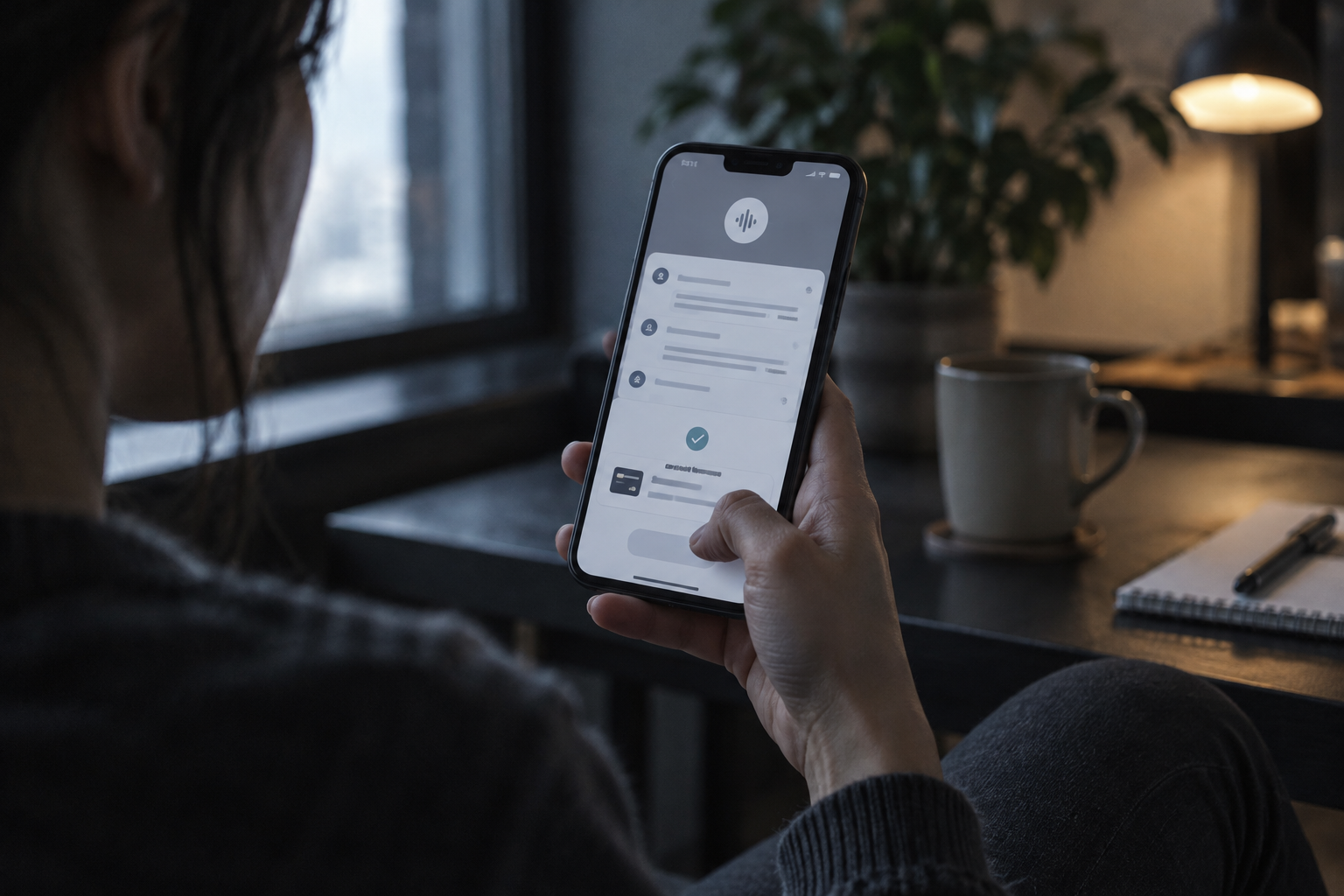
Tab runs directly inside Apple’s iMessage and Meta’s WhatsApp. There is no custom app to download and no new interface to learn. You save a phone number to your contacts, open a chat thread, and talk to it like a personal assistant. Under the hood, the system operates its own virtual computer and sandboxed web browser. It does not just return links. It takes the wheel.
Tell Tab to track down a flight or reschedule a hotel stay, and it navigates the booking portals itself. Tell it a specialty machine screw broke in your basement, and it inspects your uploaded photograph, tracks down the exact supplier part, and queues the purchase. If a clinic or contractor requires a voice call, Tab dials the number, waits through the interactive voice response maze, speaks to the receptionist, and reports the outcome back inside your text thread.
The commerce mechanics require human sign-off before capital changes hands. When an action involves money, Tab generates an itemized invoice detailing the merchant, the item, and the total charge. The software freezes until the user texts back explicit approval.
Ammar Amdani argues that capability is no longer the real moat in consumer software. The race belongs to whoever convinces people to let an algorithm manage their actual lives.
Right now, access remains locked behind a private beta and an invite waitlist. The company relies entirely on organic referrals while readying its next release.
Tab is the brainchild of Ammar Amdani, Brennan Erb, and Stafford Schlitt. The founders bring a calculated mix of machine learning and consumer growth chops. Amdani previously built an e-commerce operation before launching Adapt Ventures. Erb cut his teeth as an early machine learning engineer at Snap before running Hashletes through Y Combinator. Schlitt spent years managing operating and growth funnels across early-stage startups.
Amdani’s working thesis is straightforward. Two generations ago, middle-class households relied on a local doctor, an independent banker, and a neighborhood mechanic who knew their names and protected their interests. Modern consolidation wiped those relationships out. Tab wants software agents to step into that void, acting as protective intermediaries against corporate friction.
The company enters a market that is repricing itself with dizzying speed:
This funding velocity mirrors enormous commercial expectations. Industry analyst Gartner projects enterprise and consumer spending on autonomous AI agents will surge from $29.2 billion in 2026 to $65.5 billion in 2027. Gartner's modeling suggests the broader agent software ecosystem will expand thirteen-fold between 2025 and 2030.
Amdani insists that benchmarks and flashy product demos are already irrelevant. His public argument centers on customer willingness. Writing code that parses a PDF into a spreadsheet or reserves a table is trivial for modern frontier models. Getting an individual to hand that model their debit card credentials, home address, and calendar access is an entirely different operational hurdle.
To counter consumer paranoia, Tab built strict technical guardrails into its core architecture. User interactions and documents are never piped back into external training pipelines for foundation models. More importantly, user card credentials sit in an isolated, encrypted vault that even Tab’s internal operators cannot view. The assistant can view spend limits and trigger programmatic charges, but it never exposes raw credit numbers in plain text.
Critics point out that dialing customer support lines on a user's behalf is a recipe for phone system warfare. Telephony agents that hold on lines for human reps tie up enterprise bandwidth. Call centers are already deploying conversational filters designed specifically to detect synthetic callers and hang up on them. If Tab's voice engine gets flagged as automated spam by carrier fraud algorithms, the product's primary convenience metric collapses.
Fintech observers also question the durability of the transaction interface. Valar’s involvement points toward a roadmap where Tab captures interchange fees or charges platform commissions on coordinated bookings. Yet building an empire on top of third-party SMS networks leaves startups vulnerable to carrier fees, latency spikes, and platform bans.
The immediate test for Tab is escaping its waitlist without degrading voice reliability. Running remote headless browsers alongside real-time voice synthesis and automated audio transcription is notoriously resource-intensive. If computing expenses outpace subscription fees or transactional margins, early unit economics will deteriorate rapidly.
Platform dependency remains the lethal risk on Tab’s balance sheet. Tab lives entirely inside Apple’s iMessage and Meta’s WhatsApp. Both tech giants operate competing consumer roadmaps. Meta already operates Muse across its messaging properties, and Apple continues to overhaul Siri into an autonomous on-device system capable of deep app control. If Apple decides third-party autonomous agents violating its Terms of Service are scraping user threads or circumventing In-App Purchase rules, it can shut Tab's phone numbers down overnight.
Meta demonstrated its willingness to control the stack when it attempted to swallow Manus for $2 billion. If Tab gains significant market traction on WhatsApp, Meta can change its business messaging APIs, throttle response speeds, or impose prohibitive per-message fees on automated agent traffic.
For now, Tab must prove that its mix of telephony and web browsing delivers reliable utility rather than hallucinated airline tickets. Consumers will forgive a bot that fails to summarize a memo. They will not forgive an agent that books a flight to the wrong city or charges their card twice while arguing with an automated airline switchboard.
Autonomous voice agents are moving out of developer sandboxes and straight into consumer payment rails. If Tab succeeds, it proves that users will happily outsource tedious phone calls and purchases to an algorithm living in their text messages. But building an autonomous buyer on top of Apple and Meta messaging rails puts your entire business at the mercy of two platform giants building the exact same thing.
Reported off Tech Funding News. Original reporting and analysis by Ray Dalton for Vox Roboti.
Tab is an AI assistant operating inside iMessage and WhatsApp that calls businesses, browses the web, and makes purchases.
Tab exited stealth on October 6, 2026, at a valuation of $300 million. It did not disclose the capital raised.
Tab is backed by Peter Thiel's Valar Ventures, Ron Conway's SV Angel, and American Spirit.
No. Tab shows the merchant, item, and total cost in chat. It only charges the card after the user approves.
No. Tab states that user chat logs and shared files are never used to train artificial intelligence models.
Tab uses its own phone number to call clinics or businesses, waits on hold, and messages you the outcome.
Tab is currently in a closed private beta that requires joining an online waitlist.
Priya Raghunathan · 2d ago · 5 min read

Nina Falco · 3d ago · 5 min read

Devon Achebe · 4d ago · 4 min read