Voice AI
Amazon Silently Kills Alexa Voice Switching for Older Echo AUX Jacks
Selma Ortiz · 16h ago · 4 min read
An engineer built an interactive replica of Elizabeth Holmes' 2016 workspace to showcase document parsing tech, turning criminal trial exhibits into software marketing.

By Tobias Reinholt, Policy and security writer · Reported off TechCrunch AI
Fraud analyst turned policy writer. Deepfakes, consent, regulators.
Most enterprise software marketing puts people straight to sleep. You get a downloadable PDF, a sterile webinar invite, and three paragraphs of corporate buzzwords about operational synergy.
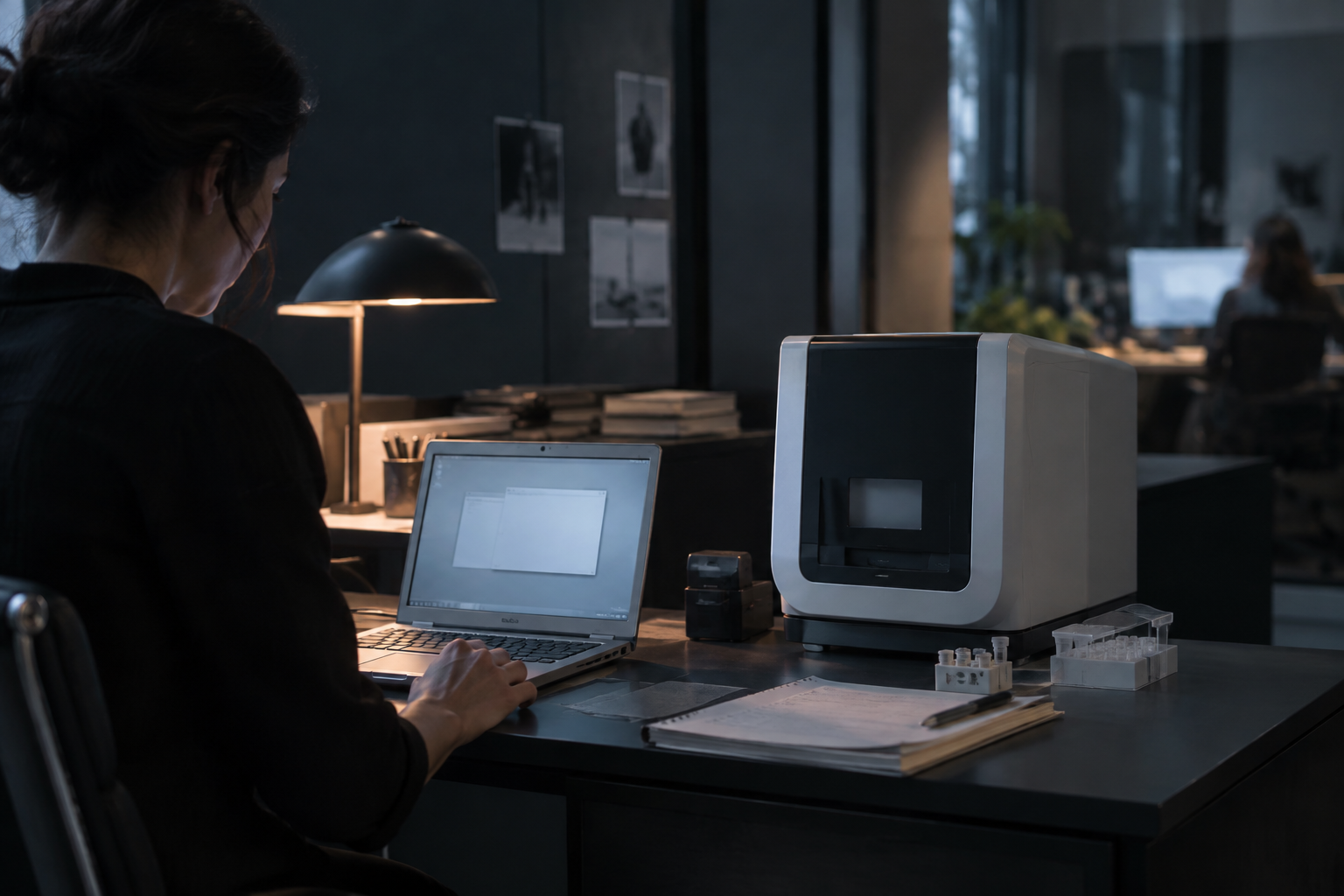
Extend engineer Bo Lau took a different route. On October 8, 2026, Lau launched an interactive web project that places you directly behind the executive desk of Theranos founder Elizabeth Holmes.
You sit in front of virtual hardware running obsolete operating systems. You click through actual criminal trial exhibits pulled from federal court archives. You can even try to run diagnostic tests on the company's fake blood analyzer.
It is surreal, funny, and deeply cynical. It is also one of the sharpest demonstrations of automated document processing the tech sector has seen all year.
Lau constructed an operating digital diorama set in 2016. The project recreates the exact personal computing environment Holmes used before Theranos collapsed under federal scrutiny.
When you load the page, you face two primary screens on Holmes' desk:
Clicking either device unlocks an interface populated with authentic records. Lau did not fabricate emails or invent executive dialogue. Every single file displayed on the laptop screen and mobile device comes directly from the evidentiary record of United States v. Elizabeth Holmes.
You can scroll through Holmes' text exchanges, open internal slide decks, read corporate memos, and inspect test records generated by the Edison hardware. Lau indexed over a thousand distinct trial exhibits, converting messy federal filings into an interactive, clickable desktop software environment.
You can also interact directly with the Edison device. That was the proprietary hardware Theranos claimed could run comprehensive medical tests using a single drop of blood drawn from a pinpricked fingertip. In Lau's simulator, you press buttons on the black box and watch it process records just as Holmes presented it to retail partners and private investors.
The entire installation acts as a functional portfolio piece for Extend. Extend operates as a business-to-business document software company. Its stated mission is to parse, extract, and split difficult, unstructured corporate files with high precision.
Instead of publishing a standard white paper explaining how its data extraction algorithms parse complex PDFs, Extend used its system to ingest the legal record of the century's most famous tech fraud. Lau turned government court dockets into a fully navigable operating system.
To understand why this simulator functions so smoothly, you have to look at the legal mechanics behind United States v. Elizabeth Holmes.
Federal criminal prosecutions generate staggering amounts of paperwork. Under American criminal procedure rules, the discovery phase forces both prosecutors and defense teams to exchange internal communications, forensic extractions, and corporate archives. When those files enter the record as official trial exhibits, they become accessible to the public.
Navigating those records through official government portals is usually an absolute nightmare. The federal court system uses PACER, an antiquated platform designed decades ago that charges fees per page and buries files under obscure docket numbers. Finding a specific email thread between Holmes and former Theranos president Sunny Balwani normally requires hours of sorting through badly scanned, non-searchable PDF attachments.
That administrative friction is where modern AI document pipelines make their living. Companies like Extend build architectures designed specifically to solve unstructured data messes:
"parse, extract, and split your hardest documents with unmatched accuracy"
Extracting thousands of disparate court filings, categorizing them by communication type, mapping timestamps, and assigning them to their respective mock devices requires heavy automated parsing. A human designer manually configuring thousands of PDFs into a functioning mock El Capitan operating system would spend months doing data entry. An automated document extraction pipeline can ingest the folder, detect sender metadata, separate presentation decks from SMS transcripts, and output structured JSON files ready for a web interface in minutes.
Lau took advantage of that ingestion power to bridge the gap between heavy public legal archives and modern browser interfaces. The project converts an intimidating government archive into an immediate consumer experience.
TechCrunch senior writer Amanda Silberling broke down the release on October 8, 2026, pointing out the unexpected utility of turning court discovery into consumer software. Silberling noted that while public access to American judicial exhibits is invaluable, browsing actual government repositories is agonizing for average observers. Lau's desktop setup fixes that distribution problem entirely.
Silberling admitted that Extend's official product positioning sounds like generic enterprise software jargon. But she conceded that if Extend's underlying extraction engine is actually what enabled Lau to structure a mountain of chaotic court exhibits into a zero-latency browser simulator, the utility of the tech speaks for itself.
Lau framed the launch straightforwardly on social media. She invited users to sit down, unlock Holmes' phone, read her authentic communications, and press the buttons on the machine that misled the medical industry. Lau highlighted that every text, slide, and lab printout inside the simulation corresponds to an authentic government exhibit number from the criminal trial.
Within developer communities, the reaction shifted quickly from viewing the project as a meme to analyzing it as an audacious marketing stunt. Most enterprise pipeline companies burn venture capital running LinkedIn sponsored posts that nobody clicks. Lau handed the internet an interactive cultural museum piece powered directly by her employer's data pipeline.
The desk simulator is not just a technology demonstration. It is also an active promotional campaign for an upcoming cultural event.
Extend is using the traffic generated by the Holmes desktop project to promote a live watch party. The event centers on Nathan Fielder's upcoming documentary titled You Can See Everything, which examines the Theranos story and Holmes' public persona.
By linking an interactive software demonstration directly to Fielder's documentary launch, Extend is testing a new playbook for B2B brand awareness. The traditional path requires sales reps to cold-email enterprise buyers with case studies. Lau's path pulls tens of thousands of curious users directly through a piece of dark tech history, proving the software works before the user even realizes they are looking at an enterprise vendor demo.
The project sets an interesting precedent for how public archives and legal records get consumed in the future. As document parsing engines grow faster and cheaper, the barrier to turning massive text repositories into interactive software environments drops to near zero.
Expect other developers to copy this blueprint. Thousands of corporate litigations, regulatory filings, and congressional investigations sit locked inside federal databases, completely ignored because nobody wants to read through TIFF files and raw transcripts. Software teams with capable extraction pipelines now have an open-source playbook for turning that forgotten paperwork into engaging, highly shareable software.
Extend got its attention. Elizabeth Holmes remains in federal custody. And anyone with an internet connection can now sit at her virtual desk, slide open an eight-year-old phone screen, and watch the paper trail of a multi-billion-dollar collapse unfold one exhibit at a time.
Enterprise AI marketing is usually sterile and forgettable. By turning a massive, chaotic federal fraud docket into an interactive consumer operating system, Extend proved that document ingestion engines do not need to hide behind dry corporate slide decks. The campaign demonstrates how automated parsing and data restructuring can transform impenetrable archives into engaging software products that prove technical capability on contact.
Reported off TechCrunch AI. Original reporting and analysis by Tobias Reinholt for Vox Roboti.
It is an interactive website built by Extend engineer Bo Lau that recreates Elizabeth Holmes' 2016 Theranos workspace, complete with her laptop, phone, and Edison testing device.
Yes. Every text message, slide deck, email, and equipment log in the simulator comes directly from public evidence exhibits entered during the United States v. Elizabeth Holmes federal trial.
The browser environment simulates an older slide-to-unlock iPhone with a home button, a MacBook Air running OS X El Capitan, and the proprietary Theranos Edison testing machine.
The project was created by Bo Lau, an engineer working at Extend, an enterprise software company that focuses on parsing, extracting, and splitting difficult unstructured documents.
Extend used the site to demonstrate its document extraction capabilities, build brand awareness, and promote a watch party for Nathan Fielder's documentary You Can See Everything.
Yes. The interactive environment allows visitors to click and operate a digital replica of the Edison machine using historical trial documentation.
Selma Ortiz · 16h ago · 4 min read

Cass Iverson · 2d ago · 5 min read
Selma Ortiz · 2d ago · 5 min read