Voice AI
Amazon Silently Kills Alexa Voice Switching for Older Echo AUX Jacks
Selma Ortiz · 15h ago · 4 min read
Arizona's attorney general wants a freeze on new AI data centre approvals as Washington prepares to stick hyperscalers with the electricity bill ahead of midterms.

By Tobias Reinholt, Policy and security writer · Reported off BBC AI
Fraud analyst turned policy writer. Deepfakes, consent, regulators.
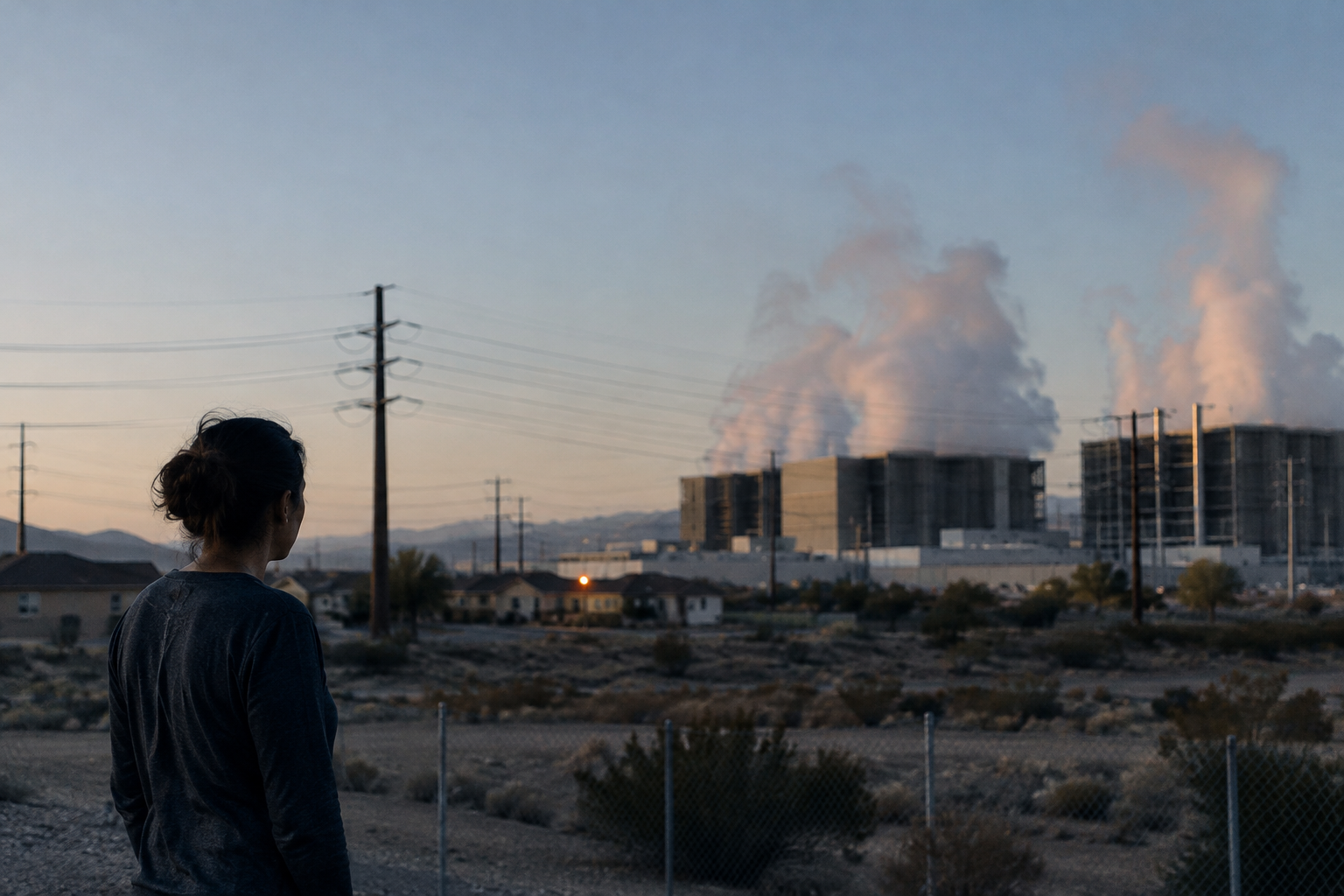
Your voice agent sounds slick because a row of warehouse-sized server farms in the desert is melting the local power grid to keep latency under three hundred milliseconds. That seamless, human-grade conversational AI pitch does not run on thin air. It runs on megawatt-scale substations, thousands of gallons of cooling water, and unrelenting thermal exhaust. Now, the state that welcomed tech builders with open arms wants the bulldozers parked.
In Arizona, the friction between consumer AI demand and basic municipal infrastructure has turned into an open political brawl. State officials, federal lawmakers, and voters heading into midterm elections are drawing lines over who pays for the physical toll of synthetic intelligence.
Arizona's attorney general has formally called for a halt on approvals for new data centres. The state's top legal officer is raising the alarm over uncontrolled electricity use and dwindling water reserves, demanding that local regulators freeze the construction pipeline before regional utilities cave under the strain.
These facilities are not modest server closets. A single modern artificial intelligence compute centre can discharge more thermal heat than 40,000 residential households combined. In an already sweltering desert environment, that thermal load transforms the surrounding geography into an industrial furnace.
Federal lawmakers in Washington have stepped into the fray with a policy draft aimed directly at hyperscalers. The pending legislative proposal would mandate that data centre developers cover the capital costs of the extra electricity infrastructure their projects require, ending the longstanding practice of passing transmission upgrades onto public utility rate bases.
The heat generated by a single hyperscale data facility can easily dwarf the thermal output of 40,000 residential homes.
Field reporting by BBC North America correspondent Shaimaa Khalil revealed the human cost on the ground. Longtime Arizona residents suddenly find their quiet desert subdivisions abutting massive concrete complexes that hum non-stop, radiate heat, and push local electrical distribution networks to the breaking point.
For years, Arizona sold itself as the ideal compute hub. Stable ground, minimal threat of natural disasters, and historically affordable commercial acreage drew tech conglomerates looking to build sprawling server farms. When conversational voice systems, large-scale training runs, and sub-second inference pipelines took off, the compute land grab turned frantic.
Real-time voice models cannot afford buffering. A text model can pause for three seconds while it thinks; an automated telephone agent that stutters or drops packets loses the customer immediately. Maintaining that low latency demands massive clusters running around the clock with zero power throttling.
That continuous load demands enormous quantities of power and water. In the Sonoran Desert, where municipal water supplies already face strict conservation regimes, running evaporative cooling towers to keep GPU racks from burning up is an immediate lightning rod.
Here is how the infrastructure crunch breaks down across the region:
President Donald Trump has positioned this infrastructure as an existential asset. The White House continues to champion the rapid buildout of domestic server facilities, framing massive compute capacity as a prerequisite for winning the technological competition against global rivals.
Donald Trump and his business allies argue that curbing data centre construction will stall domestic innovation and surrender America's technological edge. In their view, these complexes represent critical national infrastructure, major capital investment, and the foundation of the modern economy.
Arizona's attorney general takes the opposite stance, arguing that local livability cannot be sacrificed for corporate compute quotas. The state's top prosecutor maintains that approving more server farms without securing water and power guarantees poses a direct threat to the everyday citizens who actually live in the state.
Neighbourhood residents interviewed by the BBC expressed anger over how fast these campuses appeared. They describe living next to windowless, humming structures that tax local utilities while generating negligible permanent local employment once construction finishes.
Washington legislators pushing the infrastructure fee argue that private AI operators should finance the grid improvements they necessitate. If a tech firm needs half a gigawatt to process conversational queries, taxpayers should not be the ones buying the transformers.
The issue is now locked into the upcoming midterm elections. In a high-stakes swing state like Arizona, candidate stances on data centre approvals, water usage, and electric utility rates will shape congressional and state legislative races.
If the Washington proposal passes, the unit economics of real-time voice inference will shift overnight. Companies will have to pay direct infrastructure fees on transmission capacity, raising the compute cost per minute for voice bots, customer service agents, and automated outbound systems.
Should the attorney general succeed in securing an approval freeze, developers will be forced to hunt for cooler, wetter states. But those regions face their own strained electrical grids, meaning the AI buildout will run into the exact same wall wherever it lands next.
Real-time voice models require continuous, ultra-low-latency compute that cannot be throttled during peak hours. When states like Arizona hit the brakes on data centre construction and Washington tries to stick operators with high-voltage utility bills, the cost floor for hosting inference shifts. If hyperscalers must fund their own substations and water recycling plants, the price of running voice agents will rise, separating well-funded platforms from developers surviving on cheap compute margins.
Reported off BBC AI. Original reporting and analysis by Tobias Reinholt for Vox Roboti.
The attorney general wants approvals halted over growing concerns about the industry's massive water and electricity consumption.
The heat output from just one facility can surpass the amount emitted by 40,000 households combined.
A new federal proposal would require data centre operators to pay for the extra electricity infrastructure their facilities create.
Donald Trump champions data centre expansion, viewing the infrastructure as essential investment for America's technological future.
They have become a midterm flashpoint because facilities strain local water and power resources while neighbouring residential areas.
BBC North America correspondent Shaimaa Khalil travelled to Arizona to interview residents living alongside these large facilities.
Selma Ortiz · 15h ago · 4 min read

Cass Iverson · 2d ago · 5 min read
Selma Ortiz · 2d ago · 5 min read