Synthetic Voice
Cloudera Hooks Neo4j and Cartesia Into Its Enterprise Data Engine
Cass Iverson · 5d ago · 5 min read
Voice banking once demanded days in a soundproof booth and delivered robotic mush. Modern synthetic audio models clone an ALS patient's real voice in minutes.
By Cass Iverson, Synthetic voice correspondent · Reported off Voice vendor watch
Audio engineer turned reporter. Hears the artefacts you do not.
Lose your ability to walk, and the world builds you ramps. Lose your ability to breathe, and medicine puts you on mechanical ventilation. But lose your voice, and society treats you like you ceased to exist in the room.
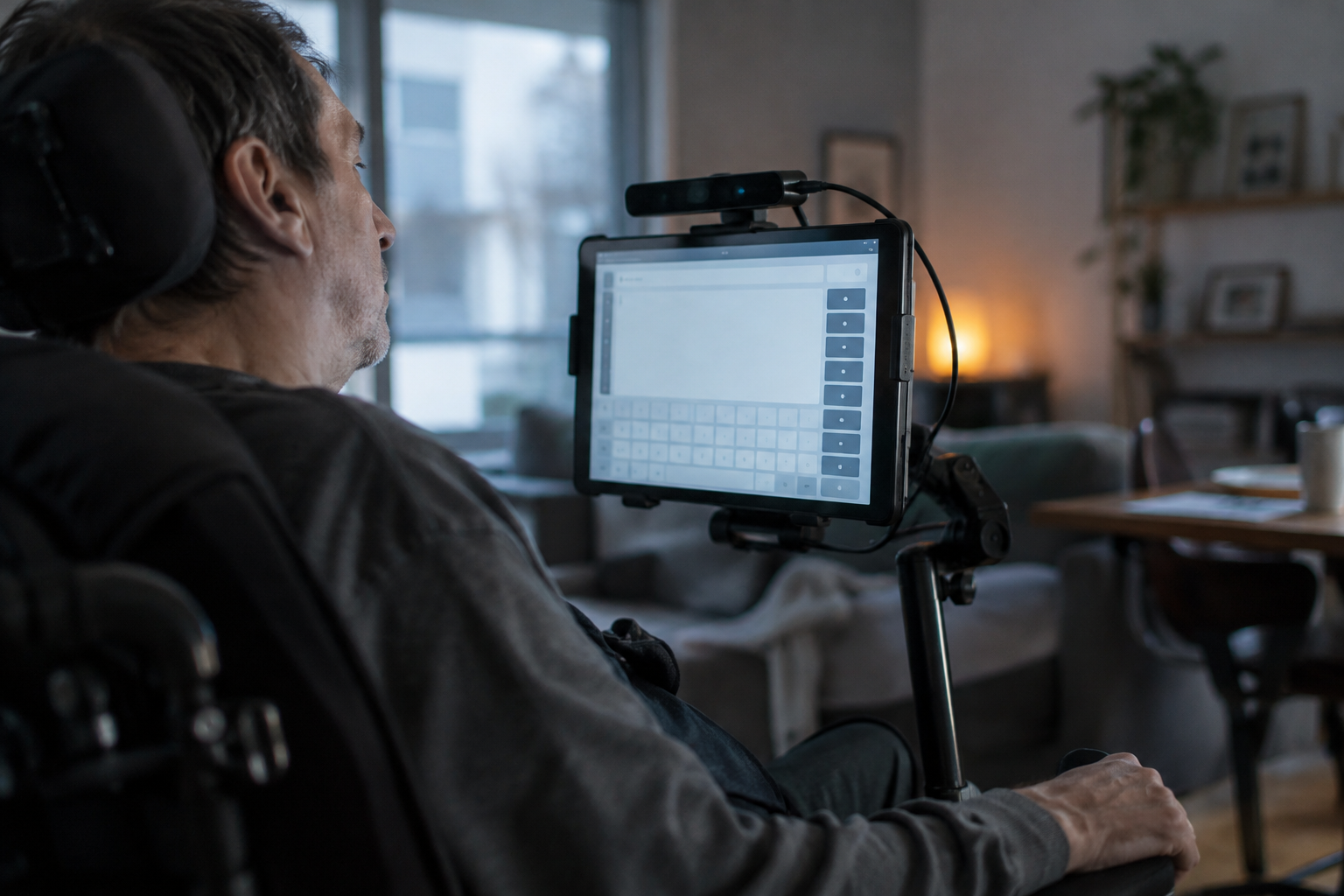
ALS strips away motor neurons with cold efficiency. For decades, bulbar onset—the variation that targets speech and swallowing muscles first—delivered an early sentence of silence. Patients ended up tapping plastic alphabet boards with their knuckles. Later, eye-gaze tracking cameras let them peck letters onto computer monitors at six words per minute. The output was always that flat, robotic drone made famous by mid-century text-to-speech chips.
That compromise is dying. Machine learning developers have turned voice restoration from a clumsy academic experiment into a rapid consumer pipeline. Now, patients preserve their real identity before dysarthria tears their vocal cords apart.
InvestigateTV documented the frontline shift across clinical neurology units. Patients diagnosed with amyotrophic lateral sclerosis are no longer handed pamphlets on generic assistive tech. Instead, clinicians send them home with browser links to train custom neural speech engines.
Modern voice banking platforms capture the subtle acoustic identity of a human speaker using minimal raw data. Five years ago, voice cloning required a patient to sit inside an anechoic booth for twelve to twenty hours. They read aloud dry legal briefs and technical manuals into a condenser microphone. For someone facing progressive muscle fatigue, that physical demand was outright cruel. Many patients ran out of usable vocal stamina before finishing the script.
Today, consumer diffusion models and zero-shot neural vocoders generate an uncanny clone from twenty minutes of clean microphone input. If a patient already started slurring syllables, engineers use legacy audio archives. Family wedding videos, holiday voicemails, and recorded work calls get fed into denoising pipelines. The algorithms strip room echo, isolate the speaker's vocal tract geometry, and reconstruct the cadence.
The hardware does not matter if the voice coming out of the speaker sounds like a microwave timer. A person wants to sound like the parent who tucked their kids in five years ago.
These models do not live solely on expensive cloud racks. The compiled weights download directly to iPad speech-generating devices and eye-tracking tablet rigs. When a patient selects words with their retinas, the audio synthesizer produces their original accent, intonation, and emotional contour in real time.
To understand why this technical leap matters, look at the historical failure rate of assistive communication. Standard speech-generating devices (SGDs) have existed since the 1980s. Medicare and private insurers classified them under durable medical equipment code E2510. The devices were heavy, proprietary boxes running closed operating systems. They cost up to fifteen thousand dollars. The voices installed on them came from static phoneme libraries like DECtalk or Acapela. They were intelligible, but entirely impersonal.
Studies from the ALS Association revealed a grim pattern: patients regularly abandoned their devices. Communicating through a foreign, robotic timbre alienated both the user and their family. The synthetic voice felt like a mask that did not fit.
Two parallel breakthroughs broke the bottleneck:
When Apple dropped Personal Voice into iOS 17 in late 2023, the baseline shifted permanently. Voice preservation went from an elite research trial to an operating system toggle. Non-profit initiatives like Team Gleason and Bridging Voice moved from buying expensive closed-source speech boxes to funding open voice profiles that run across standard tablets. The barrier moved from hardware availability to early diagnostic speed.
Speech-language pathologists point out that timing remains the hardest variable. The window between an ALS diagnosis and the onset of dysarthria is unpredictable. Some patients lose vocal clarity in weeks. Others retain it for eighteen months.
Clinicians stress that voice banking must occur during the diagnostic workup, not after speech begins deteriorating. Once hypernasality and consonant blur set in, synthetic models require heavier algorithmic cleanup. That cleanup risks stripping away the authentic inflection that makes a voice recognizable to loved ones.
Engineers working on assistive generative audio frame the problem around emotional bandwidth rather than sheer utility. A synthetic voice is not just a tool to tell a nurse where the pain is. It is the tool used to crack dry jokes, scold a dog, or calm a spouse. When a synthesized model flattens those emotional dynamics into an even pitch, the human connection frays.
Assistive tech advocates also point to the divide between high-resource families and low-income patients. While the core algorithms are increasingly open-source, the eye-gaze tracking hardware and specialized mount systems required in late-stage ALS remain financially out of reach without aggressive insurance advocacy.
The technological race has shifted from audio fidelity to conversation latency. Even with a perfect synthetic clone, eye-gaze typing restricts a speaker to single-digit words per minute. By the time a patient types a complete response to a dinner-table question, the conversation has moved two topics ahead.
Developers are coupling synthetic voice engines with local predictive large language models. The software anticipates full conversational sentences based on minimal patient prompts, context from ambient microphones, and historical message logs. Instead of typing forty keystrokes to say a familiar phrase, a user confirms a generated suggestion with a single blink or dwell click. The synthetic voice fires the full thought in their native tone without hesitation.
Regulatory bodies and insurers now face the task of catching up. CMS and commercial health plans still categorize assistive hardware under mechanical guidelines drafted in the 1990s. Voice profiles, cloud training subscriptions, and digital preservation platforms do not fit clean reimbursement brackets.
Advocacy groups are lobbying federal payers to reimburse voice banking expenses at the point of initial neurological diagnosis. The technical hurdle of digital vocal preservation is essentially solved. The remaining struggle is administrative: getting the tools into patient living rooms before motor neuron death claims the last clear sentence.
Voice cloning spent years being portrayed as an identity theft vector or an entertainment novelty. Assistive neurology reveals its actual industrial weight. Stripping hardware friction and high recording demands turns speech preservation into fundamental infrastructure for degenerative disease management. When consumer silicon handles voice training at zero marginal cost, the legacy assistive tech market's predatory hardware pricing collapses.
Reported off Voice vendor watch. Original reporting and analysis by Cass Iverson for Vox Roboti.
Modern platforms require around twenty minutes of clear reading. Older studio systems took up to twenty hours.
Yes. Neural engines can isolate vocal traits from older home videos, audio voicemails, and work recordings.
Insurers cover select speech-generating hardware under code E2510, but software cloning subscriptions often require out-of-pocket funding or non-profit grants.
Standard tablets, iPads, and eye-tracking assistive computers run modern synthetic voice models directly on consumer processors.
Late-stage ALS patients use infrared eye-tracking cameras to select words or phrases on an on-screen keyboard.
No. Neural diffusion models replicate the user's specific vocal cadence, local accent, and natural pitch variations.
Cass Iverson · 5d ago · 5 min read
Selma Ortiz · 6d ago · 5 min read
Selma Ortiz · 7d ago · 6 min read