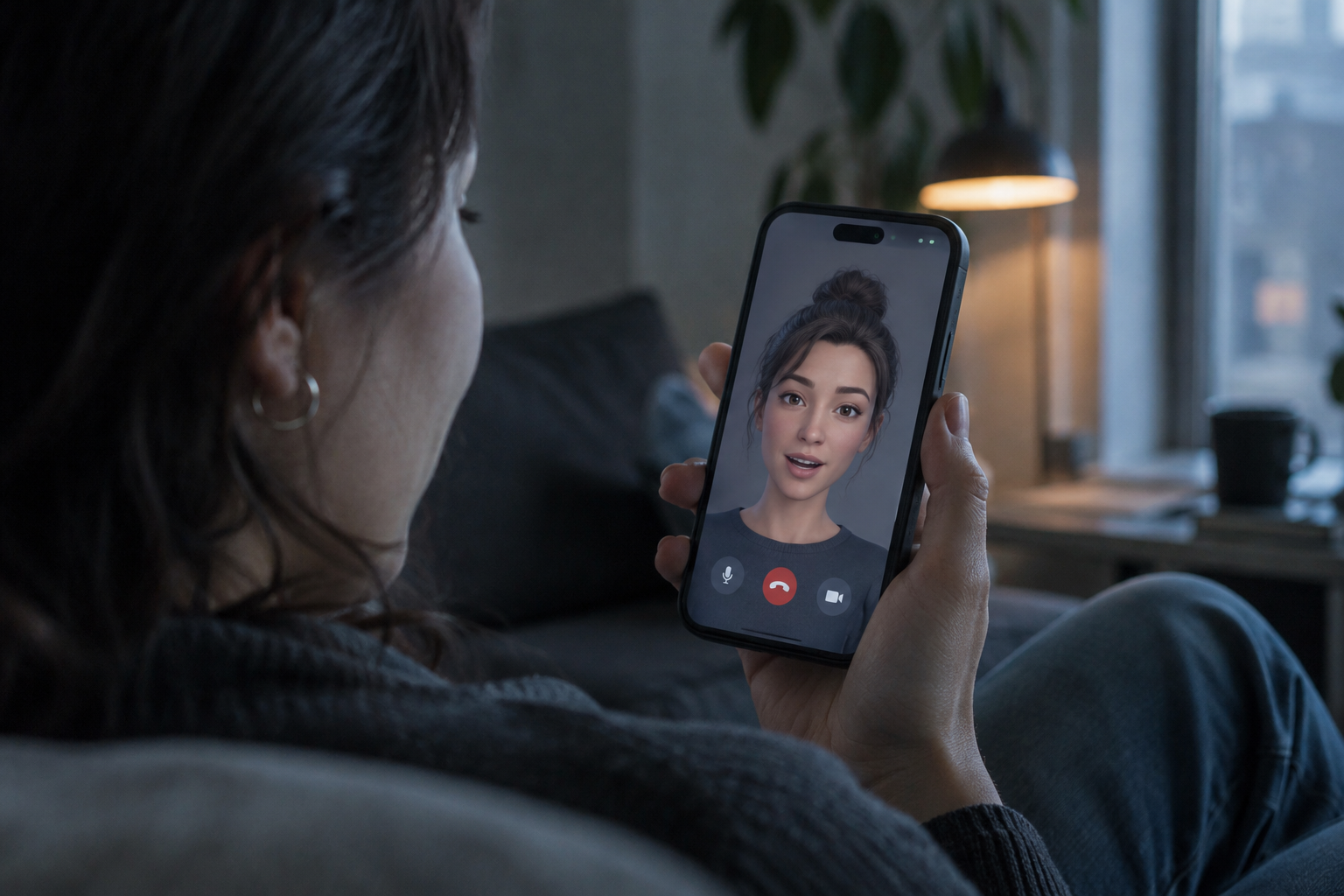
Voice Agents
Meta Hands Muse AI an Animated Face and Opens Real-Time Video Calls Across the US
Nina Falco · 10d ago · 5 min read
Anthropic dropped Claude Meetings on Google Meet, giving its model an active seat on corporate calls to draft plans, tweak spreadsheets, and build decks mid-sentence.

By Devon Achebe, Infrastructure reporter · Reported off TechCrunch AI
Follows latency, cost and the parts of the stack vendors hide.

Most voice bots sit in the corner of your video call like a digital court reporter. They transcribe your words, spit out a generic bulleted summary ten minutes after you disconnect, and leave the real labour on your plate. Anthropic decided that workflow is already obsolete.
On Tuesday, November 10, 2026, the company launched Claude Meetings in beta for Team and Enterprise subscribers. Instead of waiting for the call to wrap up, Claude enters the room as an active, visible participant. It listens to the spoken conversation in real time and immediately starts executing work while humans are still debating the details.
The mechanics are dead simple. Teams invite Claude directly into a Google Meet session. Once inside, the assistant announces itself with an automated disclaimer posted into the text chat, alerting everyone on the line that their audio feed is being processed live.
While attendees talk through strategy, Claude acts on those voice cues instantly. If an executive mentions last quarter's conversion metrics, Claude taps connected enterprise applications to pull those historical numbers into the call chat without being prompted by text. When the conversation turns to execution, the model drafts the operational plan live, writes code, or creates structured timelines.
Anthropic built strict compliance guardrails into the voice system to prevent corporate leaks. Claude will not enter a call with external third parties unless an account administrator explicitly authorizes it. If an outside contractor or client joins an ongoing session unexpectedly, the model severs its own connection and leaves the meeting immediately.
Everything produced during the audio stream—meeting notes, action item assignments, and visual boards—saves directly to the user's claude.ai workspace the moment the call ends. The initiative is launching first on Google Meet, with Anthropic pledging support for additional enterprise conferencing platforms in upcoming rollouts.
Alongside the meeting participant, Anthropic released Claude Whiteboards in beta across paid desktop, web, and mobile tiers. The system translates spoken brainstorms into visual workspaces populated with deadlines and structured milestones:
This release is an aggressive land grab on workplace territory long dominated by Google Workspace and Microsoft 365. Anthropic wants to become the primary operating layer for knowledge work rather than a chat tab you consult on the side.
The launch lands just weeks after OpenAI introduced its own suite of workplace collaboration tools designed to visualize enterprise records and generate corporate slide decks inside ChatGPT. At the same time, Meta entered the workplace race with its Muse AI agent, an assistant capable of assembling custom mini-apps on the fly to solve workflow bottlenecks.
To lock in the corporate core, Anthropic also announced Claude Sheets in beta across web, desktop, and mobile for paid tiers. The tool allows teams to construct and co-edit complex spreadsheets alongside the model. Teams can speak a high-level prompt—such as drafting an annual hiring budget or building a multi-channel campaign tracker—and Claude constructs the full grid.
The work that comes out of a meeting usually starts after everyone hangs up, but with this new feature, teams can turn discussions into actions in real time.
Unlike traditional spreadsheet imports that require static file uploads, Claude Sheets supports live multi-tab structures, formulas, formatting rules, and dropdown selectors. When the model adjusts numerical entries or formulas, it outlines each specific cell edit so team members can audit what changed across the balance sheet.
Anthropic paired these releases with the general availability of Claude Data, the corporate analytics interface formerly known as Claude Dashboards. Claude Data links directly to enterprise data warehouses and customer relationship management systems. Workers can verbally query their underlying revenue figures, and Claude outputs dynamic dashboards, written narrative reports, or synthesized video explanations.
To anchor all these components, the company unveiled interactive app connectors for major enterprise vendors. Full versions of Atlassian, HubSpot, and Adobe now render natively inside the Claude interface. Workers can run an entire marketing or product workflow within Claude without hopping between distinct browser tabs.
Anthropic is betting that business users are tired of post-call transcription lag. The company's argument is that the most expensive part of any meeting is the manual work required after everyone clicks the red leave button. By processing audio streams natively as an active participant, the software eliminates the translation gap between verbal strategy and concrete execution.
IT administrators, however, are examining the security surface. Voice audio represents an enterprise's rawest unstructured data. Private acquisitions, personnel shifts, and pricing disputes get voiced aloud long before they appear in an email thread. Anthropic's hard-coded rule that ejects Claude whenever an unapproved external participant enters shows that the company understands enterprise hesitation around open microphones.
Competitors are watching the platform battle closely. Microsoft has pushed Teams Copilot as a conversational observer, but it primarily acts as an answering machine for missed moments. Anthropic's approach treats speech not as text to be summarized, but as raw operational input to trigger external software actions.
By pulling live data out of warehouses via Claude Data and feeding it into live Whiteboards while people speak, the system turns the video call into an active operating console rather than a talking shop.
The immediate battleground is integration depth. While Claude Meetings is restricted to Google Meet at launch, enterprise adoption hinges on supporting Zoom and Microsoft Teams, where the bulk of enterprise voice traffic resides.
As Claude Meetings spreads into wider corporate deployments, Anthropic will face scrutiny over execution errors. If an assistant misinterprets a verbal revenue target and edits a live Claude Sheet or Atlassian ticket with incorrect figures, corporate teams will have to spend time cleaning up the ledger. The outlined change history inside Claude Sheets is Anthropic's hedge against that specific headache.
Expect OpenAI and Google to respond by wiring their own live audio models directly into meeting software. OpenAI's recent push toward visual enterprise tools signals that ChatGPT will not remain confined to a browser sidebar for long. Google already owns the Meet infrastructure and can run its own Gemini agents across every tier of Google Workspace without requiring third-party bot permissions.
For enterprise teams, the line between discussing work and performing work has evaporated. Once you let an autonomous voice agent into the room to alter your spreadsheets and update your CRM while you talk, the meeting itself becomes the assembly line.
Transcription bots are obsolete. Anthropic just showed the enterprise that recording what people say is useless compared to acting on what they say while they are saying it. By turning speech into real-time database queries, live spreadsheet edits, and visual project plans, Claude Meetings forces every vendor in the voice AI space to evolve from a passive listener into an active software operator. If your meeting bot cannot modify your CRM mid-sentence, you are running legacy tech.
Reported off TechCrunch AI. Original reporting and analysis by Devon Achebe for Vox Roboti.
It is an enterprise tool that puts Claude into video calls to execute tasks from live spoken conversation.
It only supports Google Meet at launch, with support for additional platforms planned for later rollouts.
No. Claude leaves calls automatically if an unauthorized external guest joins, unless an admin explicitly permits it.
The meeting tool is currently available in beta for Claude Team and Enterprise accounts.
It converts spoken ideas from meetings into organized visual project boards with timelines, deadlines, and exportable slide decks.
It edits cells alongside team members, supports multi-tab setups and formulas, and outlines every change it makes.
Anthropic renamed it Claude Data and made it generally available for connecting to CRMs and data warehouses.
Interactive connectors let users run full versions of Adobe, Atlassian, and HubSpot directly within their Claude conversations.
Nina Falco · 10d ago · 5 min read
Nina Falco · 10d ago · 5 min read
Devon Achebe · 11d ago · 6 min read