
Synthetic Voice
Cloudera Hooks Neo4j and Cartesia Into Its Enterprise Data Engine
Cass Iverson · 7d ago · 5 min read
ElevenLabs wants to start IPO prep by 2028. That gives the synthetic voice frontrunner four years to build a durable enterprise moat.

By Cass Iverson, Synthetic voice correspondent · Reported off Voice vendor watch
Audio engineer turned reporter. Hears the artefacts you do not.
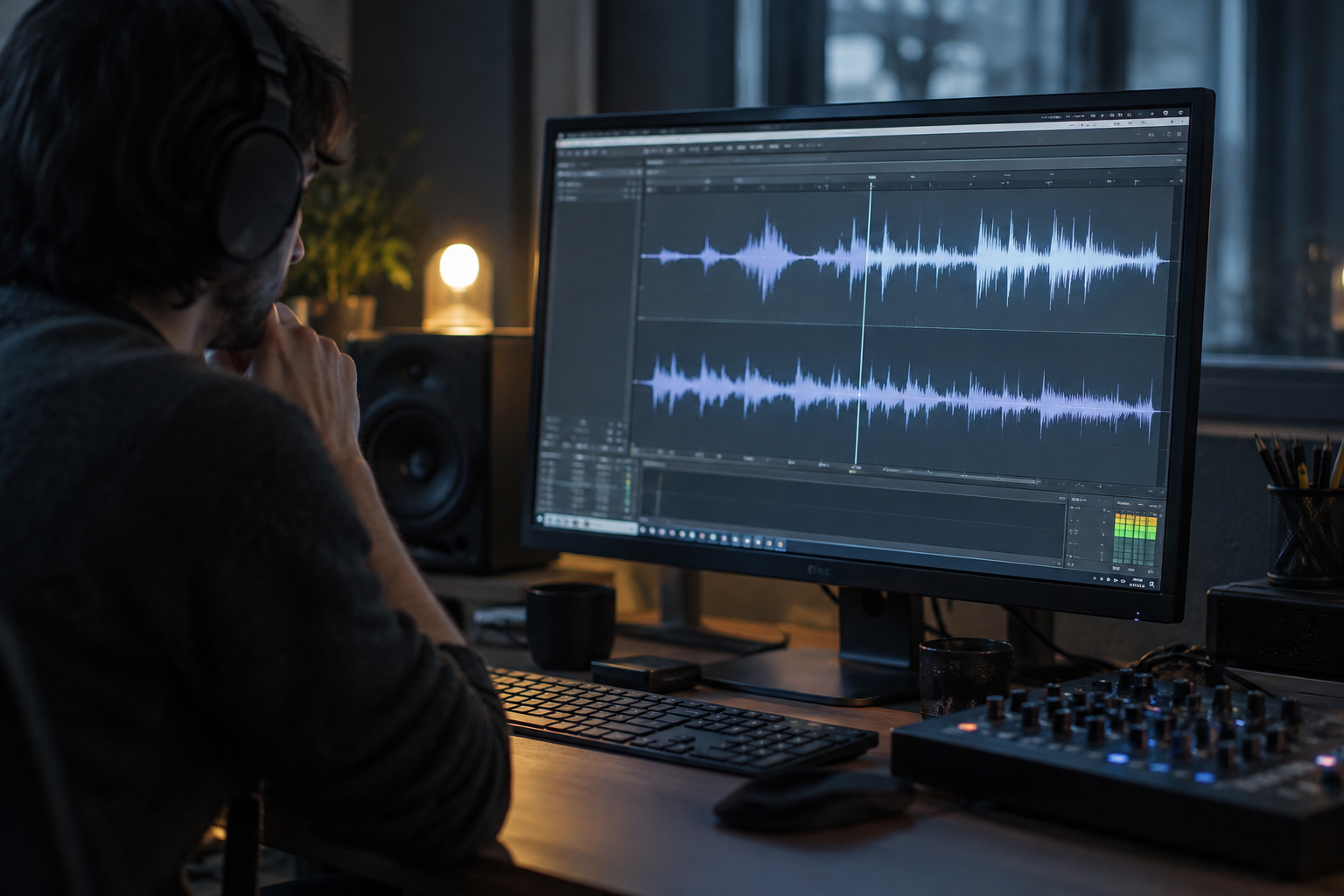
Mati Staniszewski just put a date on the calendar. The ElevenLabs chief executive told Bloomberg that kickstarting initial public offering preparations in 2028 looks like a realistic target for his voice generation platform. That gives the London-founded startup roughly four years to transform its consumer-grade audio novelty into an institutional-grade balance sheet.
Setting a benchmark four years out is an unconventional move for a venture-backed generative AI darling. Most founders in this cycle either pretend public markets do not exist or claim they will ring the opening bell the moment revenue passes a hundred million dollars. Staniszewski is doing the opposite. He is signaling to current employees, late-stage investors, and early enterprise customers that ElevenLabs intends to build a standalone public entity rather than fold into Microsoft, Amazon, or Google.
Taking an AI voice platform to the public markets requires surviving an exceptionally brutal technological transition period. The hardware costs alone break smaller operations. Server clusters dedicated to real-time neural audio synthesis run hot, depreciating rapidly as Nvidia cycles through chip generations from Hopper to Blackwell and beyond. ElevenLabs is banking on enterprise subscriptions and audio licensing outrunning compute depreciation over the next 48 months.
The four-year horizon is an admission that raw voice cloning is not enough to satisfy public market auditors.
By declaring 2028 as the baseline year to begin formal listing mechanics, the company commits itself to an audited operational sprint. That roadmap involves building out legal safeguards against audio intellectual property lawsuits, expanding into non-English markets, and embedding its real-time conversational agents into enterprise back-ends.
Staniszewski co-founded ElevenLabs in 2022 alongside Piotr Dabkowski, an ex-Google engineer. The pair set out to solve synthetic speech rendering, using deep learning architectures to capture emotional inflection, pacing, and human vocal artifacts that legacy text-to-speech tools consistently butchered. The company picked up early backing from Andreessen Horowitz, Nat Friedman, and Daniel Gross, quickly claiming unicorn status as valuations across generative audio surged.
Early adoption exploded on social platforms. Creators jumped on the tool to narrate TikTok videos, translate YouTube content, and build custom audiobooks. That viral phase brought rapid top-line growth, but it brought an avalanche of headaches as bad actors weaponized voice clones for political disinformation, financial scams, and non-consensual voice replication. ElevenLabs responded by locking down specific voice-cloning features behind paid tiers, rolling out automated watermarking systems, and deploying AI speech classifiers to trace generated audio back to specific user accounts.
While consumer users drove early brand recognition, enterprise contracts represent the real margin profile needed for an S-1 filing. ElevenLabs shifted product resources toward developer APIs, low-latency conversational bots, and multinational dubbing engines. The company began signing licensing agreements with media houses, publishing conglomerates, and gaming studios that need thousands of hours of spoken dialogue delivered across dozens of languages without booking studio time.
That enterprise shift pitted ElevenLabs against deep-pocketed infrastructure incumbents. The market is not an open field:
Surviving that pressure cook requires pricing power. Unlike pure text generation, where open weights like Meta's Llama models drive token costs toward zero, voice synthesis retains higher technical barriers. Natural latency, interruptibility, emotional range, and acoustic realism are difficult to optimize simultaneously at scale. ElevenLabs established a technical lead in expressive synthesis, but sustaining that lead until 2028 requires continuous capital deployment.
Market observers see the 2028 date as a pragmatic reality check for software venture capital. Private tech valuations inflated wildly during the 2023 generative AI boom, leaving many software startups with private valuations that public market fund managers refuse to underwrite. Institutional asset managers on Wall Street evaluate software companies on predictable net retention rates, operating cash flow margins, and defensible intellectual property moats.
Media executives view the target date through the lens of rights management. Talent agencies and voice actors spent the past two years protesting unauthorized synthetic training data. Major Hollywood guilds made generative voice provisions a centerpiece of union negotiations. For an AI voice provider to file for an IPO, its corporate balance sheet cannot carry unquantified copyright liabilities. Analysts point out that ElevenLabs needs the intervening years to normalize commercial revenue-sharing models with voice talent, establishing an ironclad chain of custody for all vocal training inputs.
Competitors quietly view the long timeline as an opportunity. Several infrastructure startups argue that real-time voice will commoditize long before 2028. Foundational model creators like OpenAI are directly integrating native speech-to-speech capabilities into their multimodal frontier models. When a single large language model natively consumes and produces expressive audio without passing through external synthesis pipelines, specialized voice vendors face acute pricing compression. Detractors argue that pure-play audio companies must either capture dedicated enterprise workflows or risk being squeezed into low-margin translation pipes.
Staniszewski and his leadership team counter that voice is not just a feature pinned onto a chat prompt. Their position holds that industry-specific audio production requires fine-grained emotional control, custom character pacing, multi-speaker dubbing alignment, and enterprise-grade permission structures that broad multimodal models cannot deliver out of the box. An IPO track presupposes that specialized vertical audio infrastructure will retain high customer loyalty despite generalist model advances.
The immediate agenda for ElevenLabs centers on international enterprise expansion and platform diversification. Between now and the projected 2028 preparation window, the company must build out localized voice libraries across European, Asian, and Latin American linguistic markets. Achieving fluency in tonal and low-resource languages is essential to winning enterprise contracts with global localization agencies and broadcast syndicates.
Governance and compliance will also command significant capital. As the European Union's Artificial Intelligence Act takes full effect and United States federal regulators look closely at voice spoofing vulnerabilities, ElevenLabs will have to fund extensive compliance teams. Creating tamper-proof audio watermarks and provable provenance logs is no longer an optional technical experiment; it is a mandatory prerequisite for passing the scrutiny of public stock exchange listing committees.
The capital structure of the company will almost certainly evolve before any stock exchange debut. An institutional liquidity path targeted for 2028 typically requires an intermediate mezzanine round or secondary share sales to let early employees and seed backers take chips off the table. Managing that internal equity pressure while pouring capital into next-generation model training will dictate whether ElevenLabs arrives at 2028 with clean unit economics.
If the startup hits its milestones, a 2028 listing could become the defining public market test for dedicated generative media companies. If it stumbles, it will demonstrate that raw voice synthesis ultimately belongs as a feature tucked inside hyperscale cloud bundles.
A 2028 IPO timeline is a reality check for the synthetic voice market. It proves that turning neural audio into a viable public enterprise takes years of gritty balance-sheet repairs, IP clearinghouses, and enterprise contract building. If ElevenLabs pulls this off, it establishes synthetic speech as an independent market sector. If it fails, voice remains just another feature inside big tech cloud subscriptions.
Reported off Voice vendor watch. Original reporting and analysis by Cass Iverson for Vox Roboti.
ElevenLabs CEO Mati Staniszewski stated that starting IPO preparations in 2028 is a good goal for the synthetic voice company.
The platform was founded in 2022 by Mati Staniszewski and Piotr Dabkowski, former employees of Palantir and Google respectively.
The company needs time to establish reliable enterprise contracts, resolve AI voice copyright questions, and prove sustainable gross margins to public market investors.
The company provides synthetic speech generation, voice cloning, multinational dubbing, and real-time conversational voice agents for developers and enterprises.
Major risks include rising GPU infrastructure expenses, competition from multimodal models created by hyperscalers, and strict synthetic media regulations.
Yes. It competes with native multimodal speech tools from frontier model labs as well as enterprise speech platforms from Microsoft and Amazon.
Cass Iverson · 7d ago · 5 min read

Selma Ortiz · 8d ago · 5 min read
Selma Ortiz · 9d ago · 6 min read