Synthetic Voice
ElevenLabs Eyes a 2028 IPO Run as Synthetic Voice Scales Up
Cass Iverson · 15h ago · 5 min read
ElevenLabs stepped onto Bloomberg to signal the end of novelty voice cloning. The next phase targets enterprise pipelines, live conversational agents, and zero-latency audio.

By Cass Iverson, Synthetic voice correspondent · Reported off Voice vendor watch
Audio engineer turned reporter. Hears the artefacts you do not.
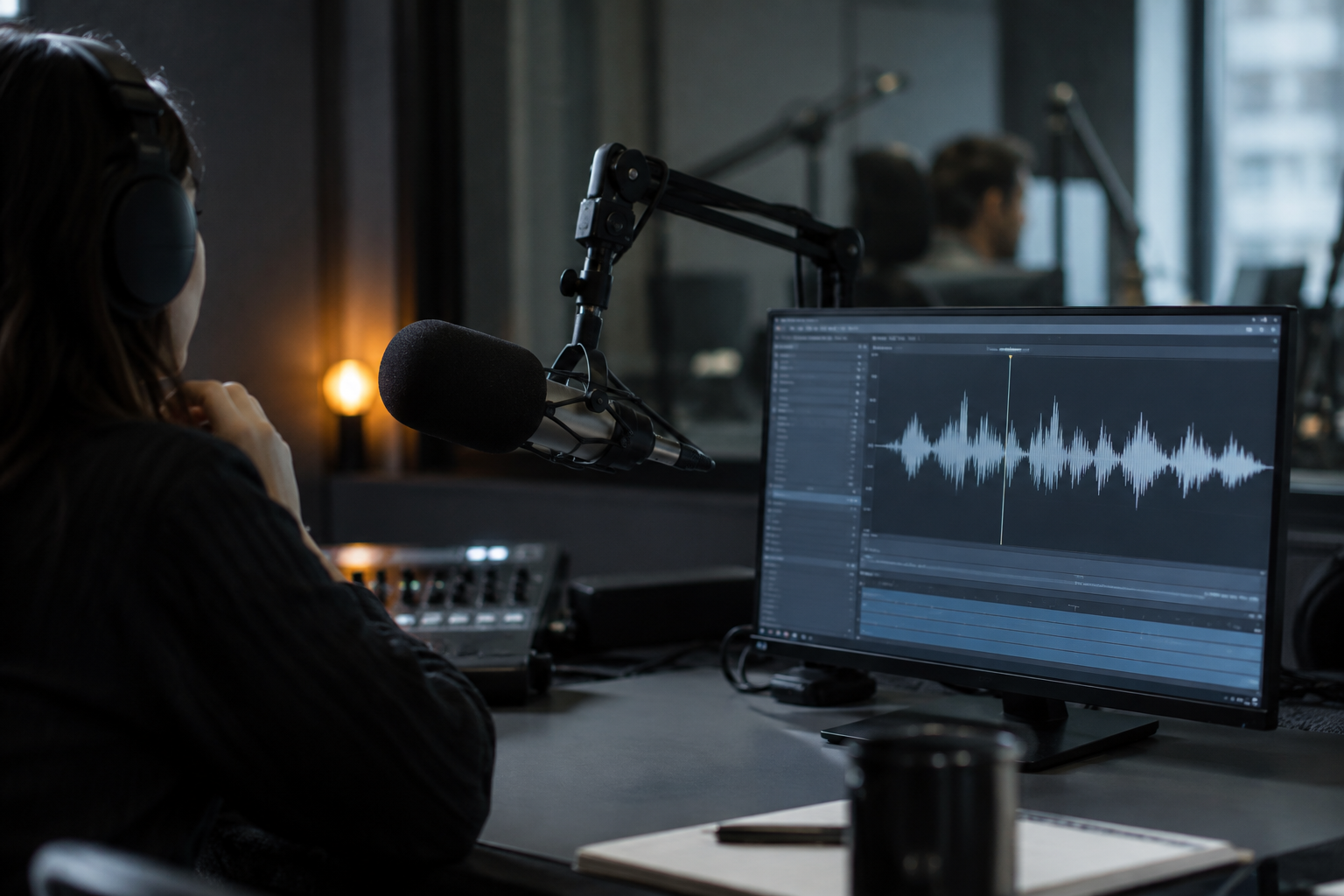
Bloomberg brought ElevenLabs into its broadcast studio to dissect the immediate horizon of synthetic voice technology. The premise was simple: voice cloning has cleared its novelty phase, and the enterprise market now demands real operational utility.
ElevenLabs used the platform to outline where synthetic speech moves next. The transition shifts development focus away from simple one-way text-to-speech rendering toward bidirectional, real-time conversational pipelines designed for automated enterprise workflows.
Broadcast conversations like this do not happen in an analytical vacuum. ElevenLabs sits at the center of the synthetic audio sector, having scaled from an early seed-stage research outfit into a multi-billion-dollar market anchor within two years of commercial launch.
The discussion highlighted a fundamental pivot across the synthetic voice sector. Generative audio providers are abandoning the race for pure mimicry to solve the brutal latency and context-retention bottlenecks that cripple corporate customer support desks.
During the broadcast, the focus centered on infrastructure requirements for production-grade voice agents. High-fidelity timbre matters little if an automated agent stalls for 800 milliseconds before handling an interruption from an irritated caller.
Voice AI is leaving the parlor-trick phase; the real fight is conquering sub-200-millisecond conversational latency inside production enterprise environments.
The core points covered on air reflect several structural realignments across the synthetic speech ecosystem:
Bloomberg's spotlight reflects an investor community anxious to see whether generative audio can produce durable B2B margins. The media appearance signals that ElevenLabs intends to frame itself as enterprise infrastructure rather than a playground for social media creators.
Former Google machine learning engineer Piotr Dabkowski and former Palantir strategist Mati Staniszewski founded ElevenLabs in 2022. The Polish childhood friends launched the company around proprietary deep learning architectures designed for zero-shot synthetic speech synthesis.
In January 2023, ElevenLabs launched its public beta platform. The system stood out instantly by generating remarkably natural inflection, pacing, and emotional nuance from tiny audio reference samples without bespoke per-voice training runs.
Venture capital followed the rapid organic adoption. Andreessen Horowitz, Nat Friedman, and Daniel Gross co-led an early $19 million Series A round in mid-2023, validating the startup's underlying research velocity.
By January 2024, ElevenLabs secured an $80 million Series B round co-led by Andreessen Horowitz, former GitHub chief executive Nat Friedman, and Sequoia Capital. That financing minted the startup as a market unicorn with a post-money valuation surpassing $1.1 billion.
Early growth also triggered immediate operational headwinds. Malicious actors weaponized the platform's free tier within weeks of launch to generate deceptive audio impersonating public figures, forcing the founders to restrict custom voice creation behind paid verification gates.
Regulatory authorities took notice across multiple continents. The US Federal Communications Commission banned AI-generated voices in robocalls under the Telephone Consumer Protection Act in early 2024, raising compliance stakes for commercial vendors.
ElevenLabs responded by releasing native safety tools. The company introduced an AI Speech Classifier capable of verifying whether an uploaded audio clip originated from its own synthesis engines, laying early groundwork for enterprise provenance verification.
The technological race simultaneously grew crowded. Competitors like PlayHT, Cartesia, Deepgram, and Amazon Web Services poured capital into optimizing inference engines to compress synthesis latency down toward native human reaction speeds.
OpenAI added direct pressure in mid-2024 by previewing its Advanced Voice Mode for ChatGPT, built on native multimodal models capable of processing and generating speech tokens without intermediate text translation.
ElevenLabs broadened its footprint in response. It launched its Reader mobile application to monetize consumer document narration while expanding its Conversational AI platform to capture high-volume call center automation contracts.
The market reception around ElevenLabs' forward-looking statements splits along sharp philosophical lines between enterprise buyers, creative unions, and platform engineers.
Financial analysts tracking generative software point out that enterprise buyers care about reliability over theatrical expressive range. Corporate IT directors routinely reject hyper-expressive synthetic models if their inference calls produce hallucinated audio artifacts or unpredictable response delays.
Creative industry representatives maintain persistent skepticism toward synthetic voice vendors. The Screen Actors Guild and voice talent federations have warned repeatedly that uncurated voice libraries dilute professional rates and harvest human vocal identities without perpetual residual structures.
ElevenLabs argues that its Voice Library payout model directly compensates original voice actors through usage-based royalties, presenting the framework as a sustainable commercial bridge between software developers and professional voice artists.
Infrastructure engineers note that the real engineering war is being fought on network edge hardware. Systems architects building automated contact centers emphasize that cascaded speech stacks—combining distinct automatic speech recognition, large language model logic, and text-to-speech engines—accumulate unacceptable delay.
Open-source developers point to alternative models like Kokoro, Chatterbox, and Bark as evidence that synthetic voice synthesis is commoditizing rapidly. They contend that closed-source API vendors face margin compression unless they integrate specialized workflow orchestration around their raw voice models.
Enterprise technology leaders reviewing the broadcast observe that voice AI has reached an inflection point similar to cloud databases in 2012. Raw synthesis power is no longer rare; defensibility now requires rock-solid system integration, SOC 2 Type II compliance, and global telecom interoperability.
The operational roadmap for ElevenLabs and its direct peers hinges on solving three stubborn technical hurdles: ambient interruption handling, cross-lingual emotional fidelity, and unit inference costs.
First, conversational turn-taking requires radical overhaul. Current automated phone agents routinely trip when human callers interject with simple monosyllabic acknowledgments like 'yeah' or 'uh-huh', mistaking ambient feedback for conversational surrender.
Engineers at ElevenLabs and rival labs are deploying specialized acoustic interruption detectors trained on full-duplex conversational audio. These systems allow agents to separate conversational barge-ins from passive listening noises within 50 milliseconds.
Second, the enterprise shift will punish brittle API pricing. High-concurrency enterprise contact centers handle tens of thousands of simultaneous calls, making existing per-minute API fees economically unviable for mundane tier-one inbound routing.
Voice AI providers must drive down inference costs by optimizing quantized weights for specialized inference hardware like Groq LPU systems and Nvidia Blackwell GPUs, reducing the cost per synthetic minute by an order of magnitude.
Third, regulatory oversight will formalize audit standards. The European Union AI Act establishes strict disclosure mandates for synthetic media, forcing platforms to embed cryptographically secure watermarks directly into raw generated waveforms.
Corporate procurement officers will soon refuse voice vendors that cannot furnish mathematically verifiable audit trails tracing every synthetic phone call back to authorized system models.
ElevenLabs' appearance on Bloomberg marks the closing bell for voice AI's speculative honeymoon. The coming quarters will measure survival not by viral audio samples, but by industrial contracts, telecom uptime metrics, and sub-second latency records under heavy production load.
The novelty phase of voice cloning is dead. Silicon Valley spent two years proving neural nets could imitate a human accent from a three-second sample. That is now table stakes. The real commercial battlefield is telecommunications plumbing: sub-200-millisecond latency, robust barge-in detection, and rock-solid enterprise compliance. If synthetic voice vendors cannot survive live phone interruptions and slash API inference costs for global call centers, they will remain expensive toys. ElevenLabs knows this. Their public roadmap proves that the synthetic audio race is no longer an audio audition—it is a hard-nosed enterprise infrastructure war.
Reported off Voice vendor watch. Original reporting and analysis by Cass Iverson for Vox Roboti.
The company is prioritizing full-duplex conversational voice agents, sub-200-millisecond latency pipelines, and scalable enterprise contact center automation.
ElevenLabs was founded in 2022 by former Google machine learning engineer Piotr Dabkowski and former Palantir strategist Mati Staniszewski.
The company achieved a valuation of over $1.1 billion following its $80 million Series B funding round in January 2024.
Delays over 200 milliseconds break natural human conversational timing, causing awkward pauses and conversational collisions on live customer support calls.
ElevenLabs deployed an AI Speech Classifier tool designed to detect whether specific audio samples were generated using its proprietary platform.
The US Federal Communications Commission banned the use of AI-generated voices in telemarketing robocalls under the Telephone Consumer Protection Act.
ElevenLabs provides a Voice Library payout system that distributes usage-based royalties to original voice actors when their models are utilized.
Cass Iverson · 15h ago · 5 min read

Cass Iverson · 7d ago · 5 min read

Selma Ortiz · 8d ago · 5 min read