Synthetic Voice
Cloudera Hooks Neo4j and Cartesia Into Its Enterprise Data Engine
Cass Iverson · 5d ago · 5 min read
De Marque is wiring ElevenLabs synthetic voice tools into its global distribution stack. The move drops production costs to zero and threatens traditional studio narration.
By Selma Ortiz, Product and labs writer · Reported off Voice vendor watch
Tests every model on ugly, real calls. Writes reviews vendors dread.
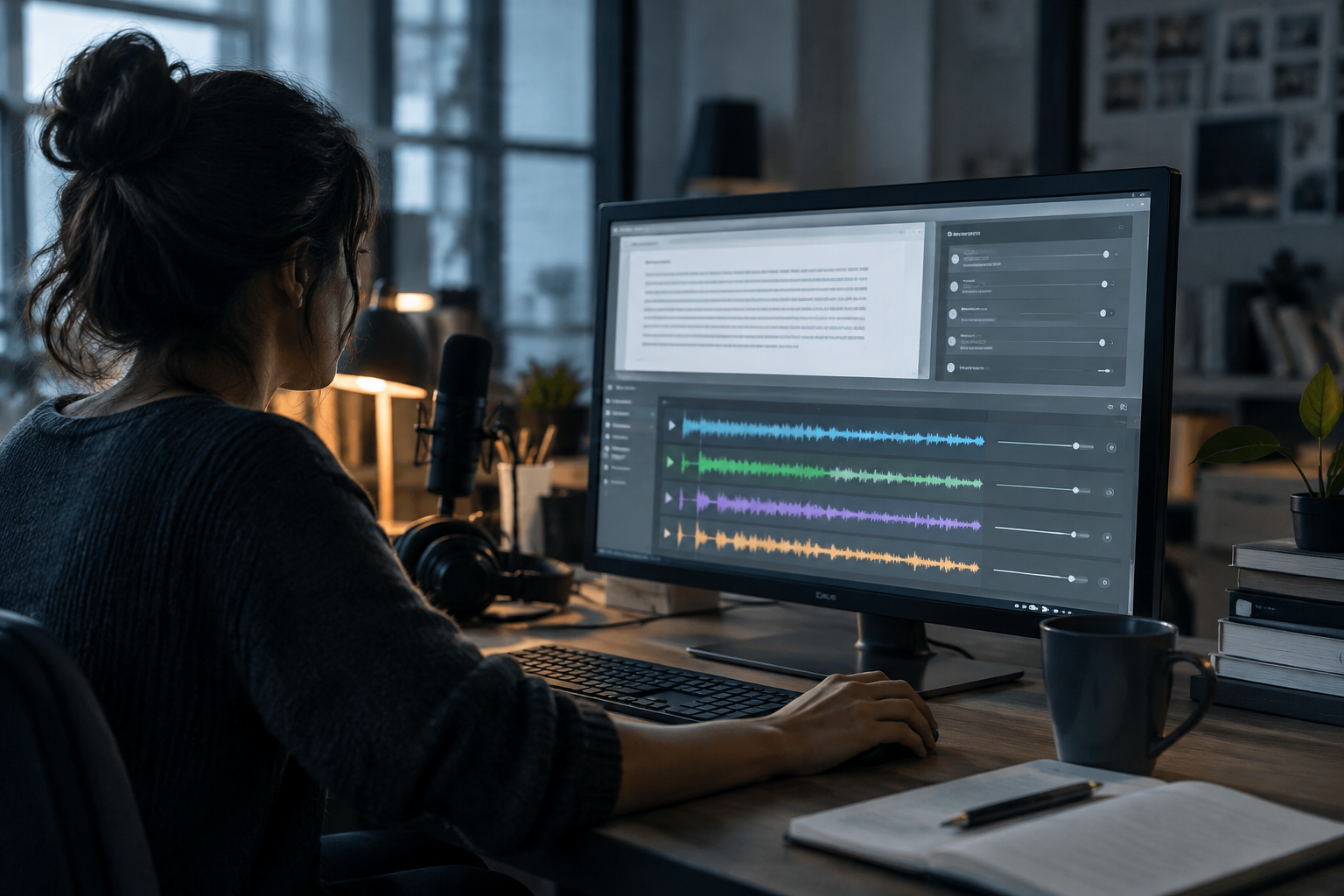
Most books never get read out loud. The studio math simply kills them before they reach a microphone.
Studio time costs real cash, professional voice actors expect living wages, and mastering engineers do not work for exposure. For three decades, the audiobook market belonged exclusively to bestsellers, celebrity memoirs, and whatever genre titles had guaranteed pre-orders. Everything else sat flat on the page, locked out of an audio format growing by double digits every single year.
That artificial scarcity ended this week.
Global digital distributor De Marque has struck a formal integration deal with synthetic voice developer ElevenLabs. The agreement plugs ElevenLabs' generative speech pipeline directly into De Marque's distribution network, enabling client publishers to manufacture complete audiobooks without booking a sound booth or hiring a narrator.
Instead of coordinating talent schedules across weeks of production, publishers using De Marque can select synthetic voice models, generate full-length spoken audio directly from text files, and package the output for commercial sale. The integration automates the file preparation, formatting, and technical validation required by global audiobook retailers.
Finished audio generated through the ElevenLabs integration routes directly into De Marque's existing pipeline. That network feeds municipal libraries, regional distributors, independent digital storefronts, and streaming services across dozens of international markets.
Publishers retain control over vocal assignment, pacing adjustments, and catalog selection. The feature roll-out targets backlist titles first—the millions of older copyright-protected books that publishers own outright but could never afford to produce as commercial audio recordings.
By packaging synthetic generation inside the distribution layer, De Marque eliminates the technical friction of exporting audio from third-party tools, formatting chapters manually, and uploading files through external content delivery networks.
De Marque runs the quiet plumbing of global publishing. Founded in Quebec City in 1990 by Marc Boutet, the firm built its reputation on infrastructure rather than consumer flash. It runs the Cantook distribution platform, which moves digital files for thousands of publishers to retailers and public libraries across North America and Europe.
Over the last decade, De Marque expanded by buying critical nodes in international book distribution. The company acquired French digital distributor Feedbooks, picked up Spanish-language eBook titan Libranda from Grupo Planeta and Penguin Random House, and established operational footholds in Barcelona, Paris, and Montreal. When De Marque changes its feature set, tens of thousands of midlist authors and small presses feel the downstream effects instantly.
Until now, audio production was an expensive gamble. A standard 80,000-word book produces roughly ten finished audio hours. In a conventional production house, that ten-hour file carries rigid costs:
Independent publishers running print runs of two thousand copies cannot justify spending four grand on an audiobook that might sell two hundred units. As a result, roughly 90 percent of all published backlists have never existed in spoken format.
ElevenLabs, launched in 2022 by Piotr Dabkowski and Mati Staniszewski, changed the performance threshold for computer speech. While older text-to-speech tools sounded like automated dispatchers, ElevenLabs introduced context-aware neural models capable of pacing sentences, handling subtext, and pausing for dramatic rhythm.
Big tech attempted this playbook inside closed gardens. Apple Books rolled out synthetic voice narration for self-published authors in early 2023, while Google Play Books built a browser-based auto-narration tool for authors uploading EPUB files. But those systems locked the resulting audio inside their proprietary ecosystems. De Marque is different. It is an open distribution pipeline that ships audio files anywhere that accepts standard distributor feeds.
Voice actors view the expansion as an immediate existential problem. Narrator trade groups and performance unions have spent two years warning that synthetic audio pipelines cut entry-level performers out of the business, denying newcomers the midlist volume work that pays the bills between marquee projects.
The economic squeeze is obvious: independent presses running on single-digit profit margins will not pay two thousand dollars to a human when an algorithm can spit out a passable audio file for twenty bucks.
Narrators argue that automated books lack true literary interpretation. A machine cannot understand grief, sarcasm, or historical context; it simply computes probability distributions across phonetic sequences. The nuance that turns a performance into art disappears.
Publishers counter that synthetic audio does not replace existing human work. Instead, it monetizes catalogs that would otherwise remain silent forever. Small presses operating in regional languages or niche academic fields point out that human voice talent does not exist for every localized dialect or specialist monograph. For them, synthetic audio creates inventory out of thin air.
Streaming services and digital libraries welcome the volume. Subscription models require massive catalog depth to keep monthly subscribers paying. More audio files in the pipeline mean better customer retention, even if the narration comes from a server rack instead of a recording studio.
Retail gatekeepers remain conflicted. Some retailers fear catalog pollution, where automated systems dump tens of thousands of low-effort titles into search results, degrading user experience and crowding out premium human productions.
The immediate consequence will be a raw volume explosion. Independent presses holding rights to extensive backlists will run batch operations through De Marque, converting text catalogs into audio assets by the thousands. Within eighteen months, digital library catalogs will host more synthetic audio titles than human recordings.
Contract battles are next. Subsidiary rights agreements negotiated a decade ago granted publishers standard audio rights, but never defined machine synthesis. Author agencies are already redrafting contract riders to prohibit synthetic audio without explicit consent and separate royalty structures. Legal battles will erupt over whether a general audio grant includes automated AI narration.
Quality control will shift entirely to metadata. Retailers will face intense consumer pressure to label synthetic audio explicitly. Listeners will demand clear visual badges separating human performances from ElevenLabs models. Retailers that fail to filter search results will see consumer pushback and rising return rates from listeners who feel deceived by robotic delivery.
Human narrators will migrate upmarket. The midlist and backlist belong to software now. Elite voice actors will concentrate on celebrity non-fiction, complex literary fiction, and multi-cast productions where human emotional range still commands a price premium.
The economics of reading just changed permanently. Audio is no longer a luxury format reserved for books with massive marketing budgets. It is now a default software export, generated with a click and shipped instantly across the world.
Audio production was once an expensive luxury reserved for commercial blockbusters, leaving almost the entire historical catalog of published books permanently silent. By wiring generative voice synthesis directly into global distribution plumbing, De Marque and ElevenLabs have turned audio into a zero-marginal-cost byproduct of digital text. The move destroys the entry-level narration economy, forces retailers to police catalog flooding, and ensures that within two years, synthetic voice will outnumber human voices in digital libraries worldwide.
Reported off Voice vendor watch. Original reporting and analysis by Selma Ortiz for Vox Roboti.
De Marque integrated ElevenLabs synthetic voice technology into its Cantook platform, allowing publishers to create and distribute automated audiobooks without human recording studios.
Human audiobook production typically costs between $2,500 and $5,000 per finished ten-hour book, driven by narrator wages, studio fees, and audio mastering costs.
The audiobooks will flow through De Marque's distribution network into public library systems, streaming services, and independent digital book retailers globally.
Most backlist titles do not sell enough copies to justify spending thousands on human narrators. Synthetic voices allow publishers to monetize dormant catalogs at near-zero production cost.
Yes. Performer unions and narrators argue automated speech removes essential midlist work that sustains voice actors, while reducing the artistic quality of storytelling.
Yes, but Apple restricts its synthetic narration to its own storefront. The De Marque integration delivers synthetic audiobooks across an open, multi-retailer distribution pipeline.
Cass Iverson · 5d ago · 5 min read

Selma Ortiz · 6d ago · 5 min read
Selma Ortiz · 7d ago · 6 min read